
FBI Probes Argentina Football Federation for Money Laundering
The FBI has launched an investigation into the Argentine Football Federation over alleged money laundering involving hundreds of millions of dollars.


The FBI has launched an investigation into the Argentine Football Federation over alleged money laundering involving hundreds of millions of dollars.
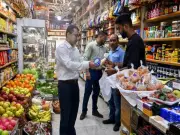
El Nino poses a key risk to India's FMCG sector, with a weak monsoon potentially dampening rural demand, according to a Phillip Capital report.

Housing sales across eight major Indian cities rose 0.7% year-on-year to 1.71 lakh units in January-June 2026, according to a report by a leading consultant.
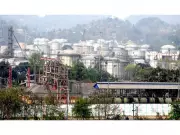
India's OMCs are expected to report Q1FY27 losses due to elevated crude prices, a weaker rupee, and inventory losses, despite record refining margins, says Equirus Securities.

Shared lists with real-time sync. No signup needed — just open and shop together.
Recommended
India's growth momentum could weaken in H2 FY27 as demand risks rise and GST cut benefits fade, warns a Nuvama report, citing El Nino, weak multipliers, and slowing top-line growth.
Ajanta Pharma outlines five key trends transforming obesity care in India, including a shift to cardiometabolic risk management and expanded patient support.
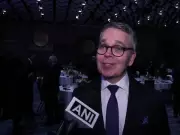
Tourism Australia MD Robin Mack praised PM Modi's visit, citing 10% annual tourism growth from India. Leaders highlight clean energy, trade, and investment opportunities.
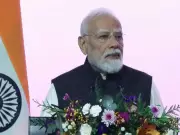
Australian business and tourism leaders hailed PM Modi's address at the Australia CEO Forum, highlighting opportunities in tourism, critical minerals, clean energy, and green gas collaboration.
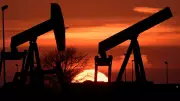
Oil prices rose over $1 in post-settlement trade after the US launched fresh military strikes against Iran, raising supply concerns.
Shared lists with real-time sync. No signup needed — just open and shop together.
Recommended
Harohalli is a leading contender for Bengaluru's second airport, CM Shivakumar confirms, with a southern location preferred.
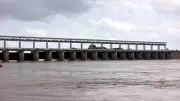
Almatti dam in Karnataka received nearly 11 tmcft of water in a single day, with Krishna and Cauvery basin dams also getting copious inflows, according to DHNS.
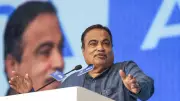
Union Minister Nitin Gadkari announced that the Delhi-Mumbai Expressway will be fully completed within two years, aiming to reduce travel time between the two cities to just 12 hours.
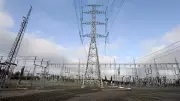
India's peak power demand is forecast to touch 300 GW next year, with current capacity at 284 GW, sufficient to meet all demand, says minister.

IMF cut India's GDP growth forecast for FY2027 to 6.4% from 6.5%, citing varying impacts of war and tech value chain exposure.
Shared lists with real-time sync. No signup needed — just open and shop together.
Recommended
IMF lowered India's FY2027 growth forecast to 6.4% from 6.5%, citing varied impacts of geopolitical tensions and technology value chain positions.

India remains among the fastest-growing major economies with FY27 GDP projected at 6.4%, driven by strong private consumption and services activity, according to the IMF's July 2026 WEO Update.

Policymakers at a FICCI-CRF seminar stressed the need for catalyzing private investment through reforms and Centre-State coordination to achieve Viksit Bharat 2047.

Surjit Bhalla dismisses GDP manipulation claims as baseless, says India's market size is overrated and comparable to California's economy alone.
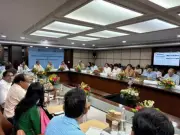
Centre asks Odisha to strengthen fisheries value chain, expand processing infrastructure, and promote high-value aquaculture to boost seafood exports and support Blue Economy.
Shared lists with real-time sync. No signup needed — just open and shop together.
Recommended
At a UN HLPF side event, leaders called for ending fragmented water governance, urging transversality across ministries and financing to accelerate SDG 6.

India's power grid faces a new challenge: not energy shortage, but timing. Solar boom creates daytime surplus and evening deficit, requiring massive battery storage and flexible management, says EAC-PM paper.

Temasek plans to increase AI exposure to 15% of portfolio by 2031 from 6% now, as net portfolio value hits record S$518 billion ($400 billion) in FY2025-26.

Global crude oil prices rose more than 5% after US launched fresh strikes on Iran and President Trump called off the interim peace deal, raising inflation fears.
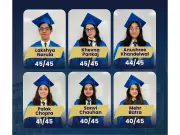
Amity Global School, Gurugram achieves outstanding IBDP May 2026 results, with two students scoring a perfect 45/45 and the school average significantly above the world average.
Shared lists with real-time sync. No signup needed — just open and shop together.
Recommended
Household food expenses to remain high as tomato prices surge 31% and LPG costs rise 10%, offsetting lower potato prices, says Crisil's Roti Rice Rate report.
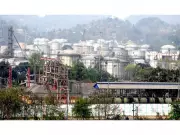
Prolonged US-Iran tensions could push India's crude import basket above USD 75 per barrel, raising import bills, inflation, and current account risks, experts warn.

India must deepen BRICS cooperation to counter US pressure, with ties to China and Russia essential for strategic autonomy, says M K Bhadrakumar.

Improved July monsoon rainfall is expected to support kharif sowing recovery, with cumulative rainfall 20% below LPA as of July 6, 2026, says ICICI Bank report.

dsm-firmenich awards EUR50,000 each to five projects investigating nutrients and bio-actives for healthy longevity in Asia Pacific, where one in four will be over 60 by 2050.
Shared lists with real-time sync. No signup needed — just open and shop together.
Recommended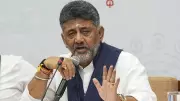
Karnataka has surpassed the World Bank's upper middle income threshold, a milestone CM Shivakumar calls a proud moment for inclusive growth.
