
Centre eases onion procurement norms; farmers skeptical
The Centre relaxes onion procurement norms for Nafed and NCCF, but Nashik farmers remain skeptical about implementation and pricing, demanding transparent APMC-based procurement.


The Centre relaxes onion procurement norms for Nafed and NCCF, but Nashik farmers remain skeptical about implementation and pricing, demanding transparent APMC-based procurement.

Maharashtra CM Devendra Fadnavis announced that no new work orders will be given to contractors who delay projects. He emphasized timely completion within 3.5 years and reviewed key infrastructure projects.
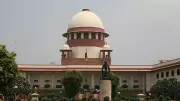
The Supreme Court upheld Karnataka's 5% additional royalty on iron ore, overturning the High Court's decision in favor of BMM Ispat Ltd.

Kerala's White Paper reveals KIIFB's borrowings, classified as state debt by CAG, leave the state with Rs 56,000 crore obligations, undermining its off-budget rationale.

Shared lists with real-time sync. No signup needed — just open and shop together.
Recommended
Major Gaurav Arya breaks down Trump's economic offensive targeting Iran and India, including sanctions on Iran's crypto network, energy market battles, proposed tariffs, and high-stakes trade negotiations.
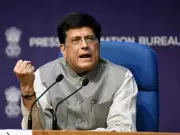
Union Minister Piyush Goyal said India will remain the world's fastest-growing economy for over two decades, citing strong investor confidence and citing examples of Hyundai and JCB success.

Gold futures surged Rs 926 to Rs 1,59,445 per 10 grams on MCX as investors sought safe-haven assets amid global economic uncertainty.

The rupee traded in a narrow range against the US dollar in early trade on Thursday, as forex traders noted that the prolonged West Asia crisis poses a major risk for India due to its heavy reliance on energy imports.

Queens Club of India in Raipur gets major PPP push to become a world-class hospitality and wellness hub with indoor sports, gym, swimming pool, and premium residences.
Shared lists with real-time sync. No signup needed — just open and shop together.
Recommended
A major power outage in North Goa, including hospitals and coastal areas, was caused by a central grid failure. Minister Dhavalikar cites equipment shortage and grid dependency.

Gujarat cabinet approves a new services commissionerate and a Rs 100 crore growth fund to boost IT, tourism, and logistics, aiming for balanced economic growth.

Rajasthan Vidyut Utpadan Nigam Ltd (RVUNL) recorded its highest-ever thermal power generation of 7,171 MW on June 2, surpassing the previous peak of 6,833 MW from January 2025.

India's statistics ministry released a uniform framework for district-level economic output estimates with a new base year of 2022-23, aiming to improve data consistency and comparability across states and Union Territories.

India's services PMI rose to a six-month high of 59.8 in May, driven by robust domestic demand, signaling strong economic momentum.
Shared lists with real-time sync. No signup needed — just open and shop together.
Recommended
Locals near Hosur demand construction of a flyover at Batlapalli, awarded over a year ago, as a new bus stand threatens to worsen traffic congestion.

The Union Cabinet approved a Rs 39,290 crore package for aviation fuel stabilisation, coastal highways, and transport modernisation, including a Rs 10,000 crore ATF fund and vehicle scrappage scheme.
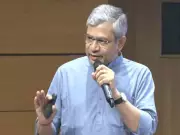
The Union Cabinet capped ATF at Rs 75.60/litre for domestic operations and announced a Rs 10,000 crore price stabilization fund to support airlines amid the West Asia crisis.
RBI refutes claims it sold $12 billion in gold to support the rupee, clarifying that physical gold stock remains unchanged at 880.52 tonnes. PIB also labels the Bloomberg report as fake.

Cheung Kong Graduate School of Business opens its first permanent Beijing campus, bridging China's past and future. The 30,000 sqm facility hosts 275 new EMBA students.
Shared lists with real-time sync. No signup needed — just open and shop together.
Recommended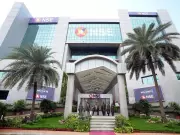
Indian equity benchmarks opened lower on Wednesday, with Sensex and Nifty falling amid continued FII outflows and geopolitical tensions in West Asia. IT stocks were the worst performers.
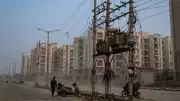
Residents in newer sectors of Noida face frequent power cuts due to aging infrastructure and delayed budget disbursals, affecting daily life and summer comfort.
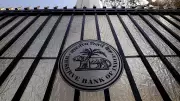
A report suggests the RBI sold gold in recent months to bolster forex reserves amid pressure on the rupee and rising import costs. The move indicates strategic reserve management.

IOAGPL's Dharwad asset head cites delays in PNG connections due to slow permissions for land digging and road cutting. Talks with district administration planned to expedite approvals.

India will introduce a Producer Price Index (PPI) on June 15, 2025, with a 2022-23 base, phasing out the Wholesale Price Index (WPI) over five years to better track factory gate inflation.
Shared lists with real-time sync. No signup needed — just open and shop together.
Recommended
A 23-year-old excavator operator died after a large rock fell on his machine at a stone quarry in Tenkasi district. Police are investigating safety violations.

The Maharashtra cabinet approved a $2 billion road improvement project funded by AIIB and NDB, aiming to upgrade 1,500 km of roads in two phases to boost economic growth.

With a likely DAP shortage ahead of kharif sowing, Maharashtra farmers are forced to switch to costlier alternatives, leading to reduced fertiliser use and concerns over crop yield.

IndiGo has announced suspension of its Manchester flights from August 3, citing escalating operational costs and airspace restrictions. The airline will offer refunds or rebooking options to affected passengers.

India's trade pact with Oman is proving to be more than a free trade agreement. Amid tensions threatening the Strait of Hormuz, the CEPA offers zero-duty access, alternative ports, and strategic resilience.
Shared lists with real-time sync. No signup needed — just open and shop together.
Recommended
Iran's annual inflation surged to 77.2% in May, the highest since WWII. War, US sanctions, and structural issues deepen the economic crisis, with prices of essentials rising 113.8%.
