
India Hit by High Oil Prices Like All Nations: IATA DG
IATA DG says India, like all countries, is affected by soaring oil prices. Fuel costs are projected to rise nearly 40% to USD 350 billion in 2026 from USD 252 billion in 2025.


IATA DG says India, like all countries, is affected by soaring oil prices. Fuel costs are projected to rise nearly 40% to USD 350 billion in 2026 from USD 252 billion in 2025.
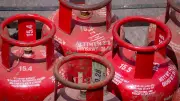
The government stated that Indian households pay the lowest LPG prices globally, even as the cost of supplying a domestic cylinder exceeds Rs 1,600 due to rising global rates.

Seven of the top 10 most-valued Indian firms lost Rs 1.25 lakh crore in market cap last week, with Reliance Industries suffering the biggest decline amid bearish equity trends.
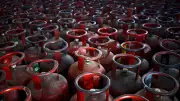
The government defends LPG price hike, stating Indian rates remain among the world's lowest despite a 46% surge in global benchmark prices, balancing household needs and availability.

Shared lists with real-time sync. No signup needed — just open and shop together.
Recommended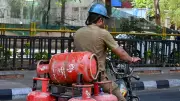
The price of domestic LPG cylinders has been increased by Rs 29. Check the latest city-wise rates for 14.2 kg cylinders in major Indian cities.
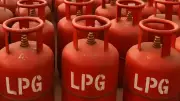
Domestic LPG prices increase by Rs 29 per cylinder from June 7, with a 14.2-kg cylinder costing Rs 942 in Delhi. This is the second hike in three months, driven by global energy costs and Middle East conflict.

Domestic LPG cylinder prices have been increased by Rs 29, effective immediately. The new price for a 14.2 kg cylinder is now Rs 1,032 in Delhi. Check revised rates across cities.

PM Modi met the Economic Advisory Council, emphasizing reforms, ease of living, and doing business amid global headwinds and strong GDP growth.

Kerala government approves Rs 3,200 crore for land acquisition for the 62.7 km Thiruvananthapuram Outer Ring Road, benefiting over 6,500 landowners. NHAI invites bids for the Rs 8,004.72 crore project.
Shared lists with real-time sync. No signup needed — just open and shop together.
Recommended
Kerala University of Fisheries releases two policy documents for sustainable fisheries transformation, including coastal development, aquaculture innovation, and blue economy growth.

PM Modi met the Economic Advisory Council to discuss measures for economic growth amid global uncertainty. RBI kept repo rate unchanged at 5.25%, revised GDP growth to 6.6% for FY26-27, and raised inflation forecast to 5.1%.

India's investor base reached 26 crore unique accounts on NSE in June, adding 1 crore in under four months. Growth driven by digitisation, simpler KYC, and rising market participation beyond big cities.
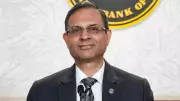
India's economy grew 7.8% in Jan-Mar quarter, with strong investment and farm output offsetting global headwinds. FY26 growth revised to 7.7%.
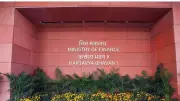
The Indian government is prepared to announce additional policy steps to protect the economy from the West Asia conflict, focusing on supply availability and currency stability.
Shared lists with real-time sync. No signup needed — just open and shop together.
Recommended
Nagpur corporator Gautam Ambade bathed in a waterlogged road to protest the wastage of potable water from a leaking valve, blaming OCW and NMC for negligence.
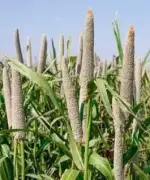
Farmers in Rewari district claim over Rs 24 crore in pending payments under the Bhavantar Bharpayee Yojana for bajra, demanding immediate release of dues and compensation for crop losses.

India's GDP grew 7.8% in Q4 FY26 and 7.7% for the full year, beating estimates. However, the US-Iran war poses risks, with RBI lowering FY27 forecast to 6.6%.

As the world nears its first trillionaire, economists warn of extreme wealth concentration, social unrest, and the need for new policies to address inequality.

Odisha Deputy CM KV Singh Deo emphasized the need for a distinct brand identity for state mangoes to boost farmers' income and agricultural exports at the Mango Festival in Bhubaneswar.
Shared lists with real-time sync. No signup needed — just open and shop together.
Recommended
Pakistan's forex reserves are approaching the $18 billion target for FY26, but a widening trade deficit, debt repayments, and rupee depreciation pressure raise economic stability concerns.
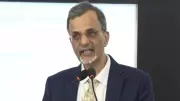
CEA V Anantha Nageswaran said India can achieve over 7% growth in FY28 through macroeconomic stability and supply measures, provided external conditions improve, after RBI cut FY27 forecast to 6.6%.

India's economy grew 7.8% in Q4 FY26, pushing full-year growth to 7.7%. Other top stories include K Annamalai's new political movement, Ritabrata Banerjee's rebel faction, and Iran-Russia updates.

India's GDP grew 7.8% in Q4 FY2025-26, beating expectations. Full-year growth stood at 7.7%, slightly above government estimates of 7.6%. Sectoral data shows strong performance in services and manufacturing.
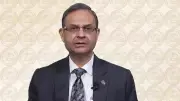
RBI Governor Sanjay Malhotra cautioned that a projected deficiency in the south-west monsoon could impact rural demand and private consumption, though government initiatives may cushion the effect.
Shared lists with real-time sync. No signup needed — just open and shop together.
Recommended
India's real GDP growth for the financial year 2025-26 has been reported at 7.7 per cent, according to official data released on Friday. The strong growth reflects resilient economic activity.
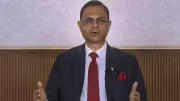
The RBI kept the repo rate unchanged at 5.25% while lowering India's FY27 GDP growth forecast to 6.6% due to escalating West Asia tensions and global uncertainties.
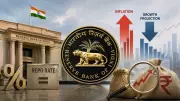
RBI MPC keeps repo rate unchanged at 6.50% in June 2026 meeting. Inflation forecast raised to 4.8%, GDP growth lowered to 6.5%. Governor Malhotra cites global uncertainties.
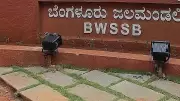
BWSSB will set up the Bengaluru Global Water Innovation Network, including a Centre of Excellence with a Technology Innovation Hub to address water challenges.
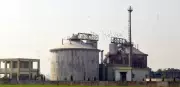
Residents of Kot Khalsa and adjoining areas in Amritsar have been suffering from sewer backflow and contaminated water for weeks, with no resolution in sight.
Shared lists with real-time sync. No signup needed — just open and shop together.
Recommended
Goa's TCP department processes 88,249 sqm land proposals under Section 39A, with 34,527 sqm approved. Bardez leads with 69% of total area, including large tracts in Tivim and Nadora.
