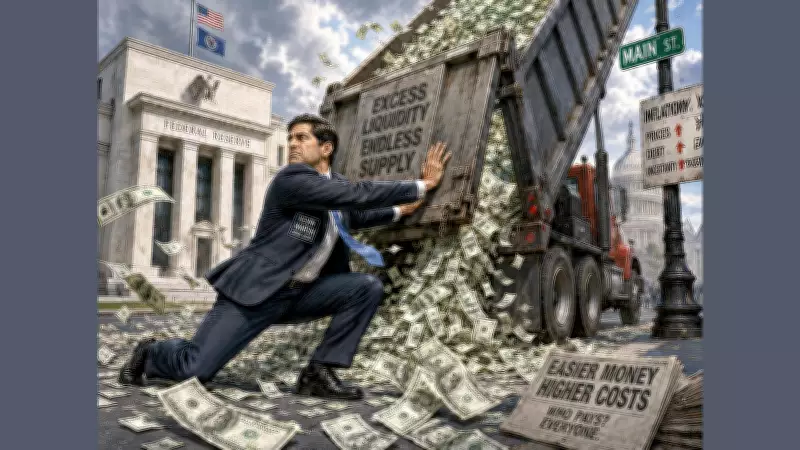
The era of cheap US money is ending, according to a recent analysis. For years, the United States has relied on low interest rates and quantitative easing to stimulate its economy, but this strategy is no longer sustainable. Rising inflation and the Federal Reserve's aggressive rate hikes have signaled a fundamental shift in global finance.
Why Cheap Money Is Over
The US Federal Reserve has increased interest rates multiple times in the past year, pushing them to their highest level in decades. This has made borrowing more expensive for businesses and consumers, curbing the flow of cheap money that once fueled global markets. According to economists, the era of easy monetary policy is ending as central banks worldwide prioritize fighting inflation over growth.
The shift is partly due to persistent inflation, which remains above the Fed's 2% target. Despite rate hikes, inflation has proven sticky, forcing the Fed to maintain a hawkish stance. This has reversed the trend of cheap US dollars flooding international markets, which had supported emerging economies and global trade.

Impact on Global Markets
The end of cheap US money has significant implications. Developing countries that borrowed heavily in dollars now face higher debt servicing costs. The strong dollar, driven by higher US rates, has also weakened other currencies, making imports more expensive and fueling inflation abroad.
According to the International Monetary Fund, global financial conditions have tightened sharply. Many nations are experiencing capital outflows as investors shift money back to the US for higher returns. This has led to currency crises in some emerging markets, such as Argentina and Turkey.
What This Means for the Future
The shift marks a departure from the post-2008 era of ultra-loose monetary policy. The Fed's pivot suggests that cheap money was a temporary fix, not a permanent solution. Going forward, economies must adapt to a world where capital is more expensive and scarce.
Some analysts argue that this could lead to a more stable global economy in the long run, as it discourages excessive risk-taking and debt accumulation. However, the transition period may be painful, with higher unemployment and slower growth in many countries.
Conclusion
The era of cheap US money is over, and the global economy must adjust to a new reality. With interest rates remaining high and inflation still a concern, the days of easy credit and rapid growth are behind us. As the Fed continues its tightening cycle, the world watches for the next phase of economic evolution.