

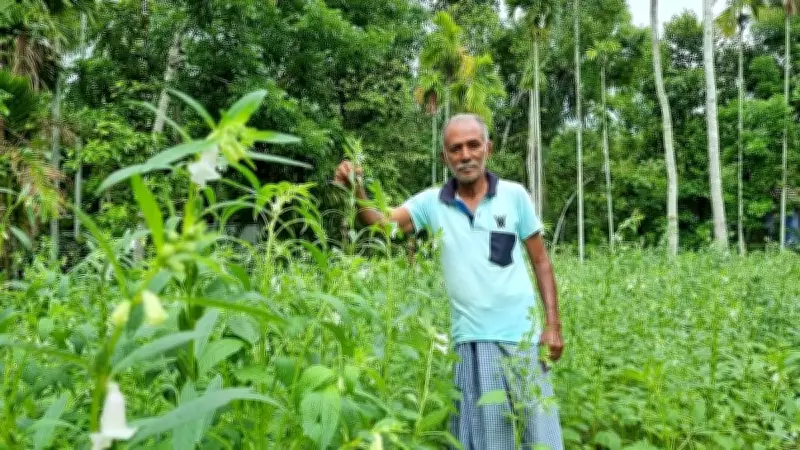
The revival of sesame cultivation in Kerala's Onattukara region has received a major boost with its inclusion in the National Mission on Edible Oils - Oil Seeds (NMEO-OS), advancing India's goal of self-reliance in edible oil production. The initiative, supported by the Geographical Indication (GI) tag awarded to Onattukara sesame, aims to expand cultivation and increase yields.
Revival of Traditional Cultivation
Onattukara, a region spanning parts of Alappuzha and Kollam districts, has a long history of sesame farming. However, cultivation declined over the decades due to competition from other crops and lack of market support. Recent efforts by local farmers and the Kerala Agricultural University have revived interest, with area under cultivation increasing from 500 hectares in 2020 to over 1,200 hectares in 2025.
The GI tag, granted in 2022, has helped differentiate Onattukara sesame as a premium product known for its high oil content (up to 50%) and distinct flavor. According to Dr. S. Rajeev, a researcher at Kerala Agricultural University, "The GI tag has given farmers a market advantage, and inclusion in NMEO-OS will provide critical financial and technical support."

National Mission on Edible Oils - Oil Seeds
The NMEO-OS, launched by the central government in 2024, aims to reduce India's dependence on imported edible oils by boosting domestic production of oilseeds. The mission provides subsidies for seeds, irrigation, and post-harvest infrastructure, as well as price support mechanisms. Onattukara sesame is one of several traditional varieties included in the mission to promote region-specific cultivation.
Under the mission, farmers receive ₹5,000 per hectare as input subsidy, along with access to high-yielding varieties and training. The target is to bring an additional 800 hectares under sesame cultivation in Onattukara by 2027, with an expected production increase of 1,200 tonnes annually.
Economic and Environmental Impact
The revival is expected to generate significant economic benefits for local farmers. Sesame cultivation requires less water than paddy or sugarcane, making it suitable for the rain-fed agriculture typical of Onattukara. Average yields have improved from 400 kg per hectare to 600 kg per hectare through better practices, and the GI tag fetches a premium of 15-20% in the market.
Environmental benefits include soil health improvement, as sesame is a drought-tolerant crop that requires minimal chemical inputs. The mission also promotes organic farming practices, with over 30% of Onattukara sesame now certified organic.
Challenges and Future Prospects
Despite progress, challenges remain. Climate variability, particularly erratic rainfall, poses risks. Additionally, competition from cheaper imported sesame and other oilseeds pressures prices. To address this, the government has introduced a minimum support price (MSP) of ₹7,500 per quintal for GI-tagged sesame, ensuring stable returns.
Looking ahead, plans include establishing a sesame processing cluster in Onattukara with oil extraction units and packaging facilities. This will create jobs and reduce post-harvest losses. According to the state agriculture department, the initiative aligns with the 'Vocal for Local' campaign and could serve as a model for other traditional crops.
The inclusion of Onattukara sesame in NMEO-OS marks a milestone in India's push for self-reliance in edible oils. With sustained support, the revival could inspire similar efforts across the country.






