As the 2026-2027 academic year gets underway, parents across India are shifting their focus from traditional metrics like school fees and board exam results to a more fundamental question: is my child's school preparing them for the world of tomorrow, or for a world that has already passed?
Why Traditional Academics Are No Longer Enough
According to the World Economic Forum, 65% of children entering primary school today will ultimately work in job categories that do not yet exist. A student who scores high marks but lacks independent critical thinking, collaboration under pressure, and confident self-expression cannot be considered truly prepared for the future.
This reality demands that parents look beyond grades and evaluate schools on a broader set of competencies that will equip children for an AI-driven, rapidly changing economy.

Key Skills for the Future-Ready Child
AI Literacy
Children must learn not just to use technology, but to collaborate and coexist with artificial intelligence. Schools that teach computational thinking and responsible technology use give students a critical edge in navigating an AI-augmented world.
Critical Thinking
In an age where information is abundant but wisdom is scarce, schools that encourage inquiry and analysis over rote memorization develop skills that algorithms cannot replicate.
Creativity
AI can optimize processes, but it cannot create original ideas. Schools that integrate project-based learning and design thinking foster the creative capacity that remains uniquely human.
Communication and Collaboration
Often dismissed as 'soft skills,' the ability to communicate effectively and collaborate in teams is what turns ideas into reality. These skills determine whether a concept is implemented or remains on paper.
Values-Based Leadership
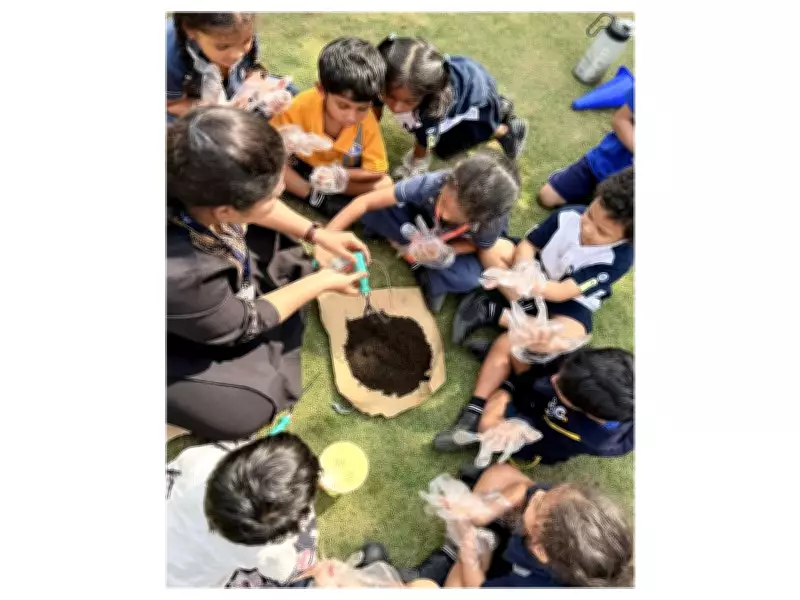
Experiential learning builds better leaders. Schools that provide opportunities for students to take on leadership roles through councils, houses, and community responsibilities teach that leadership is not a title but an act of accountability, empathy, and purpose.
Spotlight on Ortus International School
Ortus International School has designed its 2026-2027 academic year around this philosophy: education is not just about building confidence, but about pairing that confidence with empathy and compassion. The school treats every classroom activity, leadership opportunity, and even the experience of failure as part of the true curriculum.
While board exam results remain important, the ultimate goal is raising capable, well-rounded adults. This academic year, parents are urged to hold schools to that higher standard.
For more information, visit the school's website at https://ortus.co.in.
(ADVERTORIAL DISCLAIMER: The above press release has been provided by India PR Distribution. ANI will not be responsible in any way for the content of the same.)