India's space economy is expected to expand five-fold to USD 45 billion over the next eight to ten years, while the country's biotechnology sector has grown to USD 193 billion from USD 10 billion in 2014, Union Minister Jitendra Singh said, highlighting the government's push to build technology-led growth engines.
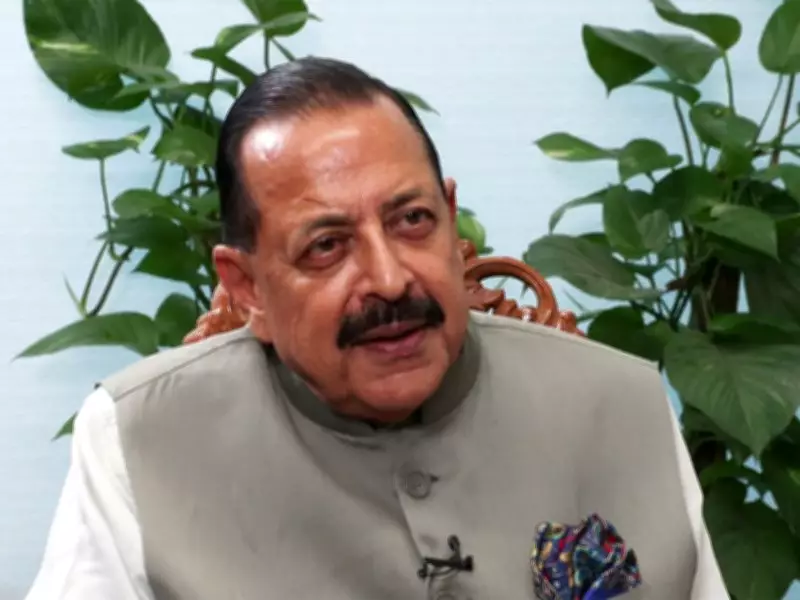
In an interview with ANI, Singh said India's space sector has emerged as one of the country's fastest-growing industries.
"Our space economy was next to nothing. Today, it's around USD 9 billion, and it's accelerating at such a rapid pace that it appears we will reach USD 45 billion in the next eight to ten years," he said.

The minister also pointed to the rapid expansion of the biotechnology sector, attributing it to policy support and industry participation.
"Our biotechnology economy was only USD 10 billion in 2014 when this government came to power," Singh said, adding that the BioE3 policy was designed to create "an interface for biotechnology for employment, for the economy, and for the environment."
"The result is that the same USD 10 billion is now USD 193 billion," he said.
On India's human spaceflight ambitions, Singh said the government is targeting a major milestone next year under the Gaganyaan programme.
He said a final test mission carrying the humanoid robot Vyommitra is planned before the end of this year. "Once our test flights are complete, we will make a big effort to launch one final test rehearsal before the end of this year," he said.
"I think next year, as part of Gaganyaan, we will also be able to send an Indian human to space," Singh added.
The minister also outlined the government's long-term energy transition strategy, saying the push towards nuclear and renewable energy predates the current geopolitical uncertainties in West Asia.
"When we reach 2047 and reach 100 gigawatts, approximately 10 to 11 per cent of our overall electricity requirement will be from nuclear energy. 70 to 75 per cent will be from renewable sources," he said.
Singh said India is also exploring emerging technologies such as ocean energy while pursuing its net-zero target for 2070.
"If we are to achieve self-reliance in fuel, we will have to reduce petrol imports and reduce our dependence on imports," he said.
The minister's remarks come as India seeks to expand its capabilities in strategic sectors such as space, biotechnology and clean energy to support long-term economic growth and energy security.