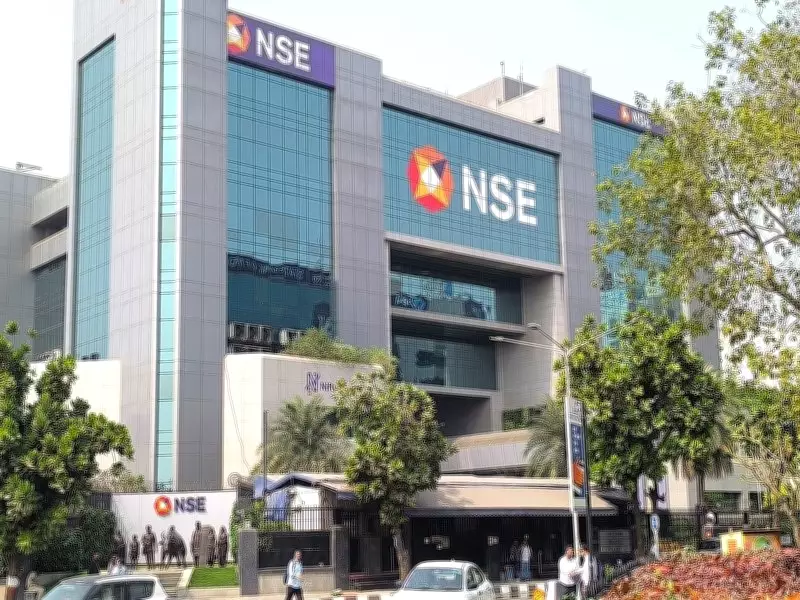
The National Stock Exchange (NSE) is poised to launch a landmark initial public offering (IPO) expected to raise nearly Rs 30,000 crore through an offer-for-sale, potentially becoming India's largest-ever public issue. According to an analysis by Zerodha's Daily Brief, the IPO will spotlight the exchange's dominant position in the country's capital markets and its significant dependence on derivatives trading revenues.
NSE's Central Role in India's Financial Ecosystem
Describing the NSE as 'the beating heart' of India's financial market infrastructure, the analysis notes that the exchange sits at the centre of a rapidly expanding investor ecosystem. As of March 2026, India had nearly 13 crore registered investors, up from just over 9 crore two years ago. The report highlights that 'India is now the fourth-largest equity market in the world by market capitalisation' and that 'India added about 4 crore new investors in just two years.'
Revenue Structure and Options Trading Dependence
The analysis reveals that NSE generated approximately Rs 16,600 crore in operating revenue during FY26, with nearly 79 per cent coming from transaction charges. Equity options alone contributed around Rs 10,000 crore, accounting for roughly 60 per cent of total revenue. The report states: 'The mega-earner, however, were equity options, which singularly generated Rs 10,000 crore - or 60 per cent of NSE's total revenue. Much of that was the result of a single instrument: the Nifty 50 weekly options contract.'

This heavy reliance makes NSE highly sensitive to regulatory changes. The analysis points to the Securities and Exchange Board of India's (SEBI) derivatives market reforms in October 2024, which reduced weekly expiries and increased lot sizes, leading to a decline in trading volumes. 'These measures reduced retail speculation, as intended. Derivatives volumes fell sharply, and NSE's revenue fell with them,' the analysis says. Revenue from operations declined from about Rs 17,100 crore in FY25 to Rs 16,600 crore in FY26, while profit fell from approximately Rs 12,200 crore to Rs 10,000 crore.
Profitability and Efficiency
The report underscores NSE's strong profitability. Despite spending around Rs 6,000 crore during FY26, the exchange reported a profit of nearly Rs 10,000 crore, translating into a margin of about 51 per cent. 'For a company with Rs 16,600 crore in revenue, that is exceptionally lean,' the report says, noting that employee expenses stood at Rs 790 crore. 'This just isn't a people business. NSE's product is a matching engine: software that processes millions of orders per second.'
Role of NSE Clearing Ltd
Another key takeaway is the role of NSE Clearing Ltd (NCL), the exchange's subsidiary that guarantees settlement of trades. The report says NCL clears about 88 per cent of all cash market trades and 91 per cent of equity derivatives in India. 'It is the silent guardian ensuring the sanctity of every trade on the NSE,' the report says.
Dividend Payout and Financial Health
According to the analysis, NSE distributed Rs 8,660 crore as dividends in FY26, representing a payout ratio of 84 per cent, while continuing to hold investments worth Rs 64,771 crore on its balance sheet.
Conclusion
Summing up the exchange's business model, the report says: 'NSE has as privileged a place as the financial markets can offer. It earns whether markets go up or down, and whether individual trades are profitable or not.' It adds that unless there is a major collapse in India's financial markets, 'few things can touch this giant.'