Maruti Suzuki Achieves Record Rail Dispatches in 2025, Boosting Sustainability
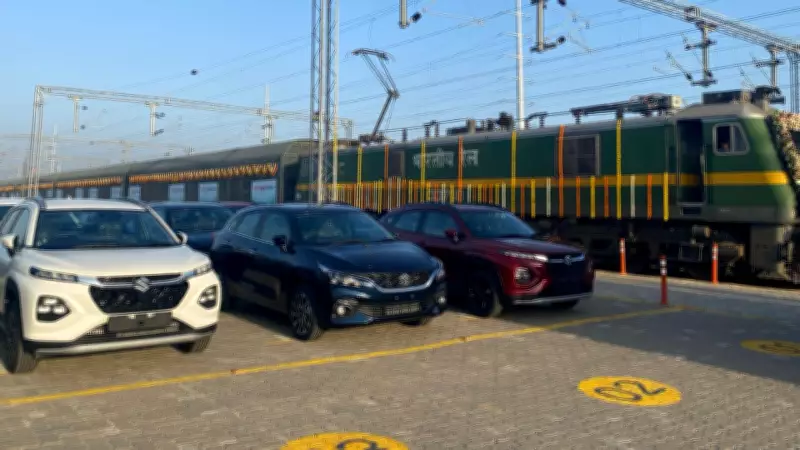
Maruti Suzuki India Limited has announced a significant milestone in its logistics operations, dispatching more than 5.85 lakh vehicles by rail in the calendar year 2025. This represents an impressive 18% increase compared to the previous year, 2024, underscoring the company's commitment to eco-friendly transportation methods.
Environmental and Fuel Savings from Rail Transport
The increased reliance on rail transport has yielded substantial environmental benefits. According to the company, this shift helped avoid an estimated 87,904 metric tonnes of carbon dioxide equivalent emissions. Additionally, it resulted in savings of over 687 lakh litres of fuel during the year, highlighting the efficiency of rail logistics in reducing the automotive industry's carbon footprint.
Dramatic Growth in Rail-Based Logistics Over a Decade
Maruti Suzuki's use of rail for outbound logistics has expanded sharply over the past decade. The share of rail in total vehicle dispatches has risen more than fivefold, from just 5.1% in 2016 to approximately 26% in 2025. In absolute terms, rail-based dispatch volumes have grown over 7.5 times, increasing from nearly 77,000 units in 2016 to more than 5.85 lakh units in 2025.

Pioneering Role and Infrastructure Development
Maruti Suzuki has been an early adopter of rail-based vehicle transportation in India, becoming the first automobile manufacturer to secure an Automobile-Freight-Train-Operator licence in 2013. Since the fiscal year 2014–15, the company has transported over 28 lakh vehicles by rail from 22 dispatch points, serving more than 600 cities across the country through a hub-and-spoke model.
Currently, Maruti Suzuki operates over 45 flexi-deck rakes, each capable of carrying around 260 vehicles per trip. In 2025, rail dispatches from the company's in-plant railway sidings at its Gujarat and Manesar facilities accounted for 53% of its total rail movement.
Key Infrastructure Milestones and Future Goals
The company also operates India's first in-plant railway siding at its manufacturing facility in Gujarat, which enables the movement of up to three lakh vehicles annually to 15 locations nationwide. This fully electrified siding is expected to reduce annual carbon emissions by around 1,650 metric tonnes and cut road usage by up to 50,000 truck trips per year, saving nearly 35 million litres of fossil fuel annually.
In 2025, Maruti Suzuki strengthened its green logistics efforts with two landmark events: the inauguration of India's largest automobile in-plant railway siding at its Manesar facility, and the dispatch of vehicles by rail to the Kashmir valley via the world's highest railway arch bridge over the Chenab River—a first by any automobile manufacturer.
Leadership Insights and Sustainability Vision
Mr. Hisashi Takeuchi, MD & CEO of Maruti Suzuki India Limited, commented on the achievement, stating, "The year 2025 marks our highest-ever rail dispatch, with over 5.85 lakh units. Our mid-term goal is to increase rail-based vehicle dispatches to 35% by FY 2030-31, contributing to India's net-zero ambition by 2070."
He added, "Maruti Suzuki India Limited has adopted a comprehensive 'Circular Mobility' approach to sustainability, aiming to reduce its carbon footprint across the entire vehicle lifecycle—from design and production to logistics and end-of-life vehicle management."
The continued shift towards rail logistics has helped Maruti Suzuki reduce carbon emissions, lower dependence on road transport, ease congestion, and cut fuel consumption, reinforcing railways as a key pillar of its long-term sustainability strategy.