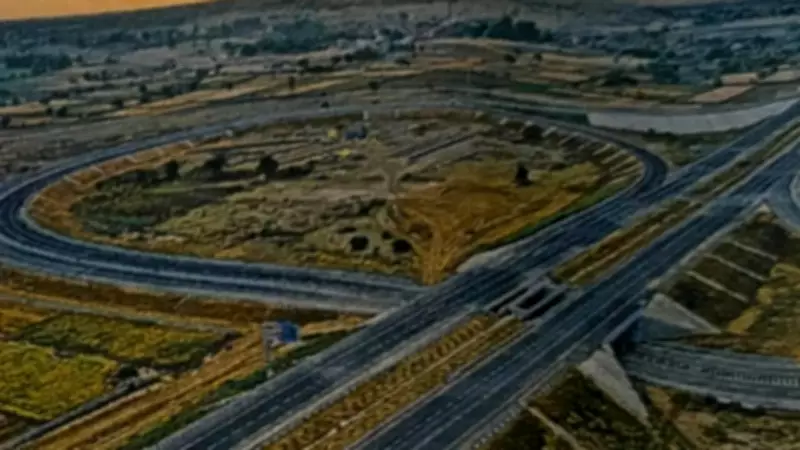
The National Highways Authority of India (NHAI) has initiated the process of aggregating land across 17 districts in Uttar Pradesh for the Shamli-Gorakhpur high-speed corridor. This greenfield access-controlled expressway, spanning 742 kilometers, is planned as a key west-to-east corridor that will significantly reduce commute time and distance between northern states and the northeastern parts of the country. The estimated cost of the project is close to Rs 40,000 crore.
Project Details and Collaboration
Both the western and eastern regional offices of NHAI will collaborate to execute the project. Gautam Vishal, Regional Officer of NHAI UP West, stated that the detailed project report has been examined to finalize the alignment. The expressway will briefly pass through Haridwar in Uttarakhand and extend from the Haryana border to the Bihar border, providing a four-lane wide carriageway as an alternative to existing routes.
Route and Connectivity
Motorists from Panipat can reach Shamli to enter the expressway and exit at the Kushinagar border to head towards Bettiah in West Champaran, Bihar. NHAI also plans to provide another expressway connecting eastern Uttar Pradesh with Siliguri in West Bengal via Bihar. The alignment will run close to the Indo-Nepal border wherever possible to attract vehicles traveling to and from Nepal.

The 742-kilometer route will connect Shamli, Muzaffarnagar, Saharanpur, Haridwar, Bijnor, Moradabad, Rampur, Bareilly, Pilibhit, Shahjahanpur (under NHAI west region), and Lakhimpur Kheri, Sitapur, Bahraich, Shrawasti, Balrampur, Sant Kabir Nagar, Gorakhpur, and Kushinagar (under NHAI east region).
Execution and Timeline
The western office will execute a 348-kilometer stretch, while the eastern office will handle 394 kilometers. Upon completion, this will be the longest expressway in Uttar Pradesh. Exit ramps will be provided to link major towns and destinations. Officials have issued Section 3A notifications in five districts to initiate land acquisition through district administrations.
The main carriageway will be four lanes wide, while structures like flyovers, railway overbridges, and major bridges will be six lanes wide. The expressway is expected to be ready for vehicular use by 2030. Officials are also evaluating spur routes and additional linkages with other important corridors.