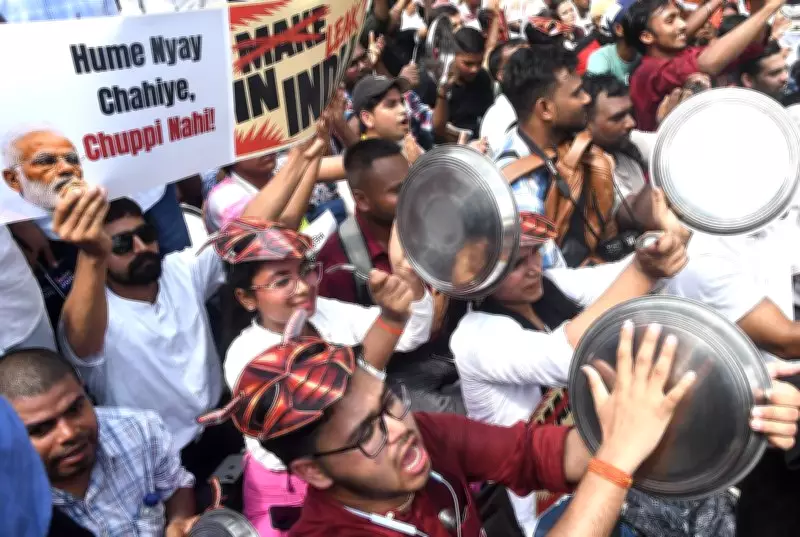
For 17-year-olds Tanav and Ria and 18-year-old Rasika, Saturday was not just another day at Jantar Mantar in Delhi. It was a day of learning to be responsible Indian citizens. The three teenagers were among protesters who gathered against the NEET paper leak. While speeches and demands for accountability dominated the stage, their story unfolded quietly in the crowd.
First-Time Protesters Find Common Cause
It was the first time the three friends joined a protest together. Rasika, however, had already attended her first protest on June 6 at the same site. Tanav, a JEE aspirant who has completed Class XII, had not initially planned to spend his day at the protest. Ria and Rasika, both CUET-UG aspirants, were more determined to join. Rasika had attended the CJP’s June 6 protest, but Saturday marked the first time the three arrived together.
For them, the issue was personal. The three were familiar with earlier student-led movements, including protests against the CAA and NRC in Delhi. They said they had followed those developments through news reports and believed they would have considered participating had they been old enough. “Even after knowing what happened to Umar Khalid, we would too have opted to join the CAA-NRC protest,” they said.

Accountability and Future Concerns
The three students said they were not protesting only for those affected today. They were also thinking about their own futures. If examinations can be compromised through leaks, they questioned what assurance students preparing for future tests have. If young people are expected to be accountable for their performance, then institutions and governments must also be held accountable when systems fail. The protest was a new experience, but not an uncomfortable one.
Ria and Rasika said they felt safe throughout the day. Security arrangements, police presence and the overall atmosphere reassured them. Tanav shared the same view. For the two girls, the experience challenged the assumptions often associated with large public gatherings.
Questioning Motives Behind Skepticism
What frustrated them most was not the protest, but the questions they sometimes encountered for taking part. Rasika said students participating in protests are often asked whether they truly understand the issues they are raising their voice for. “People often ask whether they know the full forms of NEET or CBSE,” she said. The problem, according to her, is not answering such questions but the assumption behind them. “I am here to support an issue. I know what I am talking about. My problem is not the question. My problem is the intention behind it,” she said.
For Ria, the issue goes far beyond politics. “A lot of emotions are attached to these examinations. Families spend money, students spend years preparing and application fees are paid. Why shouldn’t there be accountability?” she asked.
Energy and Resonance with Student Struggles
Tanav, who is in love with arts and wants to pursue it professionally, said several young people understand these concerns because they live with the pressure of competitive examinations every day. What struck him most about the gathering was its energy. “It is very intensifying. People are high on energy and we are able to resonate with the conversation these guys are having,” he said.
The three friends said they connected with most of the issues being discussed from the stage because they reflected conversations students often have among themselves. For years, they had watched activists and public figures through mobile screens. At Jantar Mantar, they were suddenly standing a few metres away from people they had only watched online. When asked if they would join similar protests in future, their reply was immediate – yes.