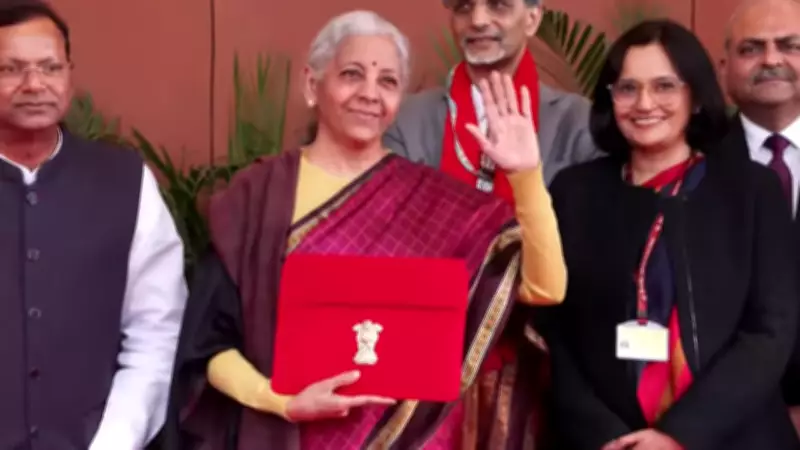
With mere hours remaining before Finance Minister Nirmala Sitharaman presents the Union Budget for 2026–27, anticipation is reaching a crescendo across India's vast educational landscape. This landmark presentation will mark her ninth consecutive budget and the Modi government's second comprehensive fiscal roadmap during its third term, carrying profound implications for schools, colleges, and training institutions nationwide.
A Sector at the Crossroads of Demography and Technology
Today's budgetary announcements hold exceptional significance for an education sector positioned at the critical intersection of demography, technological advancement, and employment generation. Over the past five years, government spending on education has demonstrated consistent growth, with combined allocations for school and higher education climbing steadily from ₹84,219 crore in FY21 to an impressive ₹1,28,650 crore in FY26.
From Infrastructure Expansion to Learning Outcomes
Last year's allocation of approximately ₹1.28 lakh crore to the Ministry of Education represented a 6.22 percent increase from previous funding levels, reinforcing the government's commitment to implementing the transformative National Education Policy (NEP) 2020. Schools received unprecedented financial support through enhanced funding for Samagra Shiksha, PM-POSHAN, and PM-SHRI Schools initiatives.

Digital infrastructure saw substantial advancement as BharatNet extended broadband connectivity to government secondary schools, while the Bharatiya Bhasha Pustak Scheme promoted digital textbooks in Indian languages to foster more inclusive learning environments.
Higher Education's Ambitious Expansion
India's higher education sector continued its remarkable expansion trajectory. Five Indian Institutes of Technology established after 2014 received crucial infrastructure upgrades, with 6,500 new seats added across institutions. IIT Patna was specifically earmarked for major developmental initiatives, while the PM Research Fellowship expanded to support 10,000 scholars at IITs and the Indian Institute of Science.
A groundbreaking ₹500-crore Centre of Excellence in Artificial Intelligence for Education signaled the government's first substantial step toward AI-enabled teaching methodologies. Medical education witnessed parallel revitalization with 10,000 additional seats this year, contributing toward an ambitious five-year target of 75,000 new positions.
The Quality Imperative: Beyond Infrastructure
While educational infrastructure continues to develop, the crucial question remains whether Budget 2026 will pivot decisively toward enhancing learning quality, teacher preparedness, and graduate employability. The progressive NEP 2020 framework faces implementation challenges that extend beyond physical expansion.
According to the Economic Survey 2025-26, education has been identified as central to India's growth narrative, with enrollment rates showing encouraging trends. Current Gross Enrolment Ratios stand at 90.9 percent for primary education and 90.3 percent for upper primary levels, reflecting broad access to basic education.
India's premier institution count has grown substantially to include 23 IITs, 21 IIMs, and 20 AIIMS, with international IIT campuses established in Zanzibar and Abu Dhabi. The innovative Academic Bank of Credit now encompasses 2,660 institutions, issuing digital IDs to over 4.6 crore individuals and enabling flexible entry and exit from educational programs. Approximately 153 universities have implemented bi-annual admissions systems, supporting NEP 2020's ambitious target of achieving 50 percent higher education GER by 2035.
The Human Element: Teachers and Curriculum
Beyond numerical achievements, NEP 2020's true potential lies in promoting multidisciplinary learning, enhancing teacher quality, and developing industry-oriented education. These aspirations require sustained investment in faculty training, curriculum modernization, and assessment system reforms—elements that often receive inadequate attention despite their fundamental importance to educational outcomes.

The AI Disruption: Anxiety and Opportunity
A growing unease permeates student communities regarding artificial intelligence's impact on future careers. Entry-level positions in information technology, services, and media sectors are increasingly vulnerable to automation, while new opportunities emerge in data science, design, ethics, and human-AI collaboration domains.
India's challenge involves not resisting technological advancement but preparing younger generations to work effectively alongside intelligent systems. Last year's AI Centre of Excellence represented an important initial step, with education leaders now hoping Budget 2026 will advance this commitment through scaled teacher training programs, AI literacy integration in schools, and industry-academia collaboration initiatives.
Without such forward-looking measures, India risks producing graduates whose qualifications misalign with rapidly evolving labor market demands.
Bridging the Skills-Employability Divide
The government's growing emphasis on skill-based education, evidenced through five National Centres of Excellence in Skilling, reflects increasing concern about workforce preparedness. However, significant gaps persist between theoretical education and workplace requirements, particularly beyond elite institutions.
Stakeholders anticipate Budget 2026 will strengthen support for apprenticeship programs, micro-credentials, and regional skill development hubs. Teacher capacity-building represents another critical priority, as educational reform cannot progress faster than the educators responsible for implementation.
Simultaneously, demands are mounting for better-targeted funding toward digital infrastructure and higher education financing mechanisms as India positions itself as a global talent supplier.
A Defining Moment for India's Educational Future
As Parliament prepares for the budget presentation, expectations across the education ecosystem demonstrate remarkable alignment. Schools seek improved learning outcomes, universities require enhanced research support and relevance, students demand employable skills, and teachers aspire for better training and professional respect.
While education funding has grown steadily, the more complex phase involves translating expenditure into measurable impact. Budget 2026–27 arrives at a pivotal moment when India's demographic advantage remains intact but faces increasing uncertainty. If today's announcements successfully connect NEP 2020 implementation with AI readiness, teacher development, and real-world skill acquisition, this budget could fundamentally shape the country's workforce trajectory for decades.
Within hours, the financial figures will be revealed. What matters more profoundly is whether they embody a clear, actionable vision for millions of young Indians preparing to navigate an increasingly uncertain future.