UPSC Key Analysis: Critical Topics for January 29, 2026
The Indian Express UPSC Key for January 29, 2026, provides an in-depth look at essential current affairs and policy issues crucial for the Civil Services Examination. Authored by Roshni Yadav and Khushboo Kumari, this edition covers a range of topics from aviation safety to environmental regulations, offering aspirants valuable insights for both Prelims and Mains.
Aviation Safety and the Ajit Pawar Plane Crash
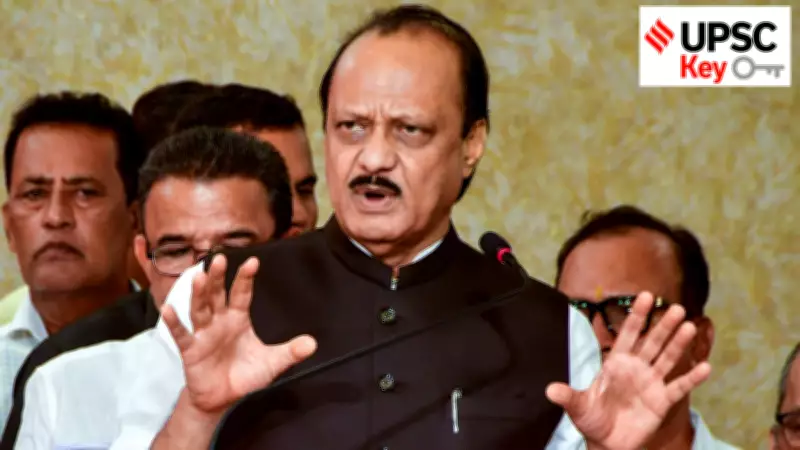
The tragic death of Maharashtra Deputy Chief Minister Ajit Pawar in a chartered aircraft crash at Baramati airport has highlighted significant safety gaps in India's civil aviation sector. This incident underscores the importance of understanding regulatory frameworks and oversight mechanisms for UPSC aspirants.
Key Points to Consider:

- The Aircraft Accident Investigation Bureau (AAIB) is leading the probe into the crash, emphasizing its role in classifying and investigating safety occurrences.
- Parliamentary Standing Committee reports had previously warned of oversight lapses in the private and charter aircraft segment, pointing to systemic issues in safety management.
- Challenges include maintenance standards, operational controls, and the need for enhanced surveillance by the Directorate General of Civil Aviation (DGCA).
This topic is relevant for Prelims under current events and for Mains in discussions on government policies and sectoral development.
New Solid Waste Management Rules 2026
The Ministry of Environment, Forest and Climate Change has notified updated Solid Waste Management Rules, placing stricter responsibilities on bulk generators. This shift aims to promote a circular economy and improve waste processing across urban and rural areas.
Highlights of the New Rules:
- Mandatory segregation into four streams: wet, dry, sanitary, and special care waste.
- Bulk generators, defined by criteria like floor area or waste generation, must ensure environmentally sound waste management.
- Introduction of penalties for non-compliance and provisions for local authorities in hilly regions to levy fees from tourists.
Understanding these rules is vital for Mains papers on environmental conservation and government interventions, as well as for Prelims questions on current affairs.
Urbanization and Its Political Implications
Amrita Shah's editorial discusses the evolution of urban policies in India, from the Jawaharlal Nehru National Urban Renewal Mission (JNNURM) to contemporary schemes like the Smart Cities Mission. With over 500 million Indians living in cities, urbanization shapes political and economic landscapes.
Key Takeaways:
- Urban development often prioritizes global capital attraction, leading to gentrification and inequality.
- Schemes such as AMRUT and PMAY-U aim to improve infrastructure but require better coordination for inclusive growth.
- This topic connects to Mains questions on governance, social justice, and sustainable development.
India-EU Free Trade Agreement and Its Impacts
The recently concluded India-EU FTA has sparked discussions on trade benefits, particularly in the automotive and pharmaceutical sectors. While tariffs on European cars may reduce, the actual impact on prices could be limited due to assembly practices and currency fluctuations.
Notable Aspects:
- Tariff reductions apply mainly to completely built units (CBUs), not locally assembled cars, affecting market dynamics.
- In pharmaceuticals, the deal balances EU demands for intellectual property protection with India's need to maintain affordable generic medicines.
- This agreement is significant for Mains papers on international relations and economic policies.
UGC Regulations on Caste Discrimination in Higher Education
The UGC's new regulations aim to address social discrimination in universities, marking a shift from earlier policies that overlooked such issues. Despite protests, these rules highlight the need for equity in education.
Core Features:

- Inclusion of OBCs in definitions of caste discrimination and equity committees.
- Focus on making discrimination visible to enable solutions, though concerns about false complaints persist.
- Relevance for Mains on social justice and constitutional principles, as well as Prelims on current events.
Global Affairs: US Operations and Discombobulator Technology
The US military's use of discombobulator systems in Venezuela, as part of Operation Absolute Resolve, illustrates modern warfare tactics involving non-lethal weapons. This includes acoustic devices and electronic warfare to disorient targets.
Implications for UPSC:
- Understanding such technologies is crucial for Mains papers on international politics and security.
- It also ties into broader themes of global conflicts and their impact on India's interests.
By integrating these topics, aspirants can enhance their preparation for the UPSC examination, focusing on current affairs, policy analysis, and interdisciplinary connections.