Delhi Education Minister Announces Comprehensive Structural Reforms
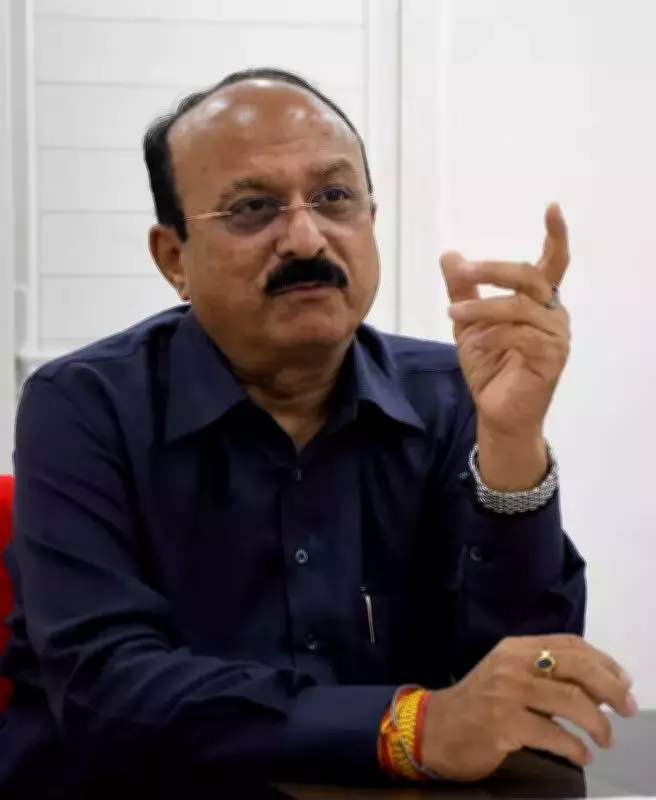
Significant structural changes across Delhi's education system are anticipated in the coming months and years, according to Education Minister Ashish Sood. In an exclusive interview marking the government's one-year anniversary, Sood detailed reforms spanning school regulation, institutional funding, and technological integration.
Addressing Implementation Timelines and CM Shri Schools
Responding to criticism about delayed project timelines, Minister Sood emphasized that systemic transformation requires time. "We took office on February 20 last year; things cannot change overnight," he stated. Regarding the CM Shri schools initiative, Sood confirmed that admissions have been completed and students selected according to established processes.
The primary objective involves providing technology-enabled, AI-supported education with multilingual learning interventions to build long-term academic capacity. The technological component experienced delays due to unprecedented procurement scale in Delhi, with nearly 7,000 smart classrooms currently in preparation.

"Large-scale purchases of smart boards and computers require formal tendering processes, vendor selection, and adherence to procedural timelines," Sood explained. Most classrooms are expected to be operational before the next budget cycle.
School Fee Regulation Legislation and Transparency Concerns
The proposed school fee regulation law has faced scrutiny, with critics alleging lack of transparency and anti-parent provisions. Minister Sood dismissed these claims as misinformation, pointing to strong opposition from private school organizations as evidence of the bill's public interest alignment.
"If the law were truly non-transparent or anti-people, why would private schools be opposing it so strongly?" Sood questioned. He noted that legal challenges originate from private school associations rather than Delhi citizens.
The minister attributed the current situation to previous administrations' inaction over eleven years, despite multiple attempts to draft legislation. "We completed the process within four to five months. This reflects our intent," Sood asserted, highlighting the absence of a legal framework protecting parents from arbitrary fee increases under earlier governments.
Enhanced Funding for Government Colleges
Following the BJP government's assumption of office, a substantial grant of Rs 417 crore was sanctioned for twelve Delhi government-funded colleges. Sood provided detailed allocation figures: approximately Rs 387 crore previously, rising to about Rs 405 crore in 2024-25, and further increasing to nearly Rs 700 crore in 2025-26.
This enhanced funding aims to clear financial backlogs, repair infrastructure, and ensure timely salary payments, creating stable academic environments. Sood recalled periods when staff faced severe hardships with delayed salaries during festivals, emphasizing the government's commitment to allowing academic communities to focus on teaching rather than financial crises.
Infrastructure Audits and Safety Measures
Minister Sood revealed concerning infrastructure conditions in government schools, with some buildings declared unsafe years ago yet continuing to operate from alternative locations. In one instance, students traveled several kilometers daily because their school building was deemed dangerous in 2022 without subsequent corrective action.
The government has initiated comprehensive audits using 3D assessments covering every classroom, toilet, and facility. These reports document even minor issues like broken switches, structural damage, and safety risks.
"There are hundreds of schools where construction remains incomplete or where spending patterns appear irregular, with funds released but projects left unfinished," Sood disclosed. He cited a case where Rs 1 crore of sanctioned funds had been utilized, yet officials subsequently requested an additional Rs 4 crore for project completion.

NIPUN Certification and Foundational Learning
A key government promise involves certifying all schools under the National Initiative for Proficiency in Reading with Understanding and Numeracy (NIPUN) framework. The first step involved conducting a baseline survey at the academic year's beginning to understand learning outcomes.
The government is now preparing technology-enabled assessments to identify gaps more accurately, with a commitment to achieving NIPUN certification for all Delhi schools by the government's tenure end. "We should not reach a stage where a Class VII student is unable to read a Class V English text. That is unacceptable," Sood emphasized.
Broader Vision: Technology and Entrepreneurship
Technology-enabled education forms the cornerstone of Delhi's educational vision. The government plans to introduce AI chatbots for personalized student support, building on existing specialized preparation programs serving approximately 2,200 students.
Additional initiatives include:
- Developing portals for holistic report cards aligned with National Education Policy guidelines
- Creating startup and incubation policies to foster entrepreneurial skills among students
- Aiming to nurture approximately 5,000 startups through education-linked initiatives by 2035
"The objective is enabling Delhi's youth to become job creators," Sood concluded, outlining an ambitious roadmap for transforming the capital's educational landscape through structural reforms, technological integration, and capacity building.