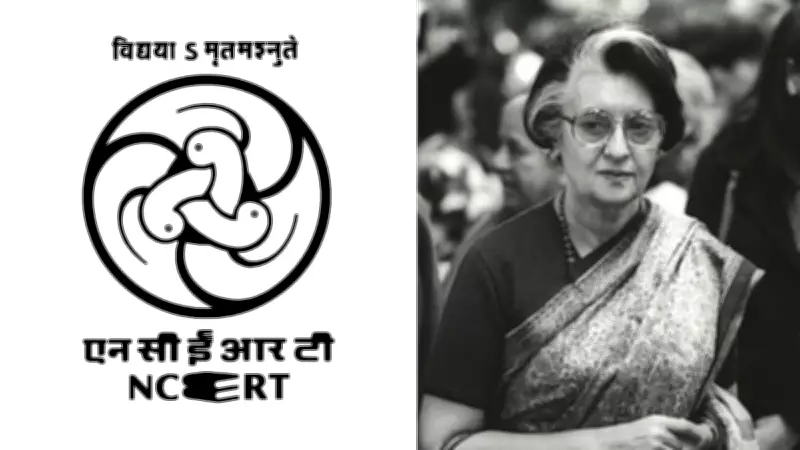
The National Council of Educational Research and Training (NCERT) has for the first time included the Emergency period (1975-77) in its Class 9 Social Science textbook, titled 'Understanding Society: India and Beyond'. The chapter, part of the newly released textbook, describes the Emergency as a 'challenge to democracy', marking a significant shift in how this historical event is presented to younger students.
What the Textbook Says
The textbook, released on 25 June 2026, examines the Emergency in the context of democratic resilience. According to the NCERT, the section aims to help students understand the fragility of democratic institutions and the importance of constitutional safeguards. The chapter highlights how the imposition of Emergency under Prime Minister Indira Gandhi led to the suspension of fundamental rights, censorship of the press, and arbitrary arrests.
A key passage reads: 'The Emergency (1975-77) is often remembered as a dark chapter in India's democratic history. It serves as a reminder that democracy requires constant vigilance and active citizenship.' The textbook also references the Supreme Court's landmark judgment in the Kesavananda Bharati case, which established the basic structure doctrine, as a check on executive overreach.

Educational Significance
This inclusion addresses a long-standing gap in the curriculum. Previously, the Emergency was only taught in higher classes, such as Class 11 and 12. Education experts have welcomed the move, noting that early exposure to such events can foster critical thinking. Dr. Ravi Kumar, a professor of education at Delhi University, said: 'Introducing the Emergency at the Class 9 level is crucial. It helps students grasp the nuances of democracy and the consequences of its erosion.'
The textbook also draws comparisons with other democratic challenges globally, such as the suspension of civil liberties during wartime, to provide a broader perspective. It includes activities like group discussions and essay prompts on the role of the judiciary and media during crises.
Broader Curriculum Revisions
The Emergency chapter is part of a larger revision of NCERT social science textbooks, which now integrate contemporary issues with historical events. Other updates include expanded coverage of environmental movements, digital rights, and the 1991 economic reforms. The new Class 9 textbook also features a dedicated section on the Constitution's fundamental duties, emphasizing the balance between rights and responsibilities.
NCERT Director Professor Dinesh Prasad Saklani stated: 'Our goal is to equip students with the tools to analyze complex socio-political issues. The Emergency is a case study in how democracies can falter and recover.' The textbook has been approved by the Ministry of Education and will be used in schools affiliated with CBSE and other state boards adopting the NCERT syllabus.
Reactions and Criticism
The move has drawn mixed reactions. While many academics and activists have praised it as a step toward honest history education, some political commentators have criticized the timing, noting its release on the 51st anniversary of the Emergency's imposition. Others argue that the portrayal could be more critical of the role of the judiciary and bureaucracy during that period.
Nevertheless, the NCERT maintains that the content is balanced and age-appropriate. The textbook includes primary sources such as newspaper headlines from 1975 and excerpts from speeches by Jayaprakash Narayan, who led the movement against the Emergency. This approach, according to the NCERT, encourages students to evaluate evidence and form their own conclusions.
Impact on Students
Early exposure to the Emergency is expected to deepen students' understanding of democratic principles. The textbook includes a timeline of events from the Allahabad High Court verdict that unseated Indira Gandhi to the eventual lifting of the Emergency in 1977. It also discusses the role of civil society and the press, with a focus on the importance of freedom of expression.
As one student from a Delhi school remarked: 'Learning about the Emergency makes me realize how precious our rights are. It's not just history; it's a lesson for today.' The NCERT hopes that such reflections will inspire a generation of informed and engaged citizens.