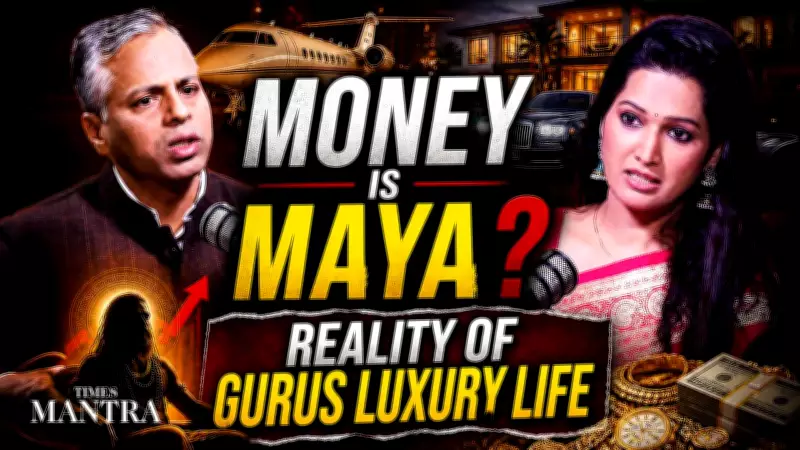
If money is considered 'maya,' why do some spiritual leaders live luxurious lifestyles? In this discussion, Bhavya Shrivastava explores this widely debated contradiction. Is luxury against spirituality, or is there a deeper understanding behind it? How should one interpret wealth in a spiritual context? This conversation breaks down the difference between attachment and usage.
The Core Contradiction
Many people question the lavish lifestyles of gurus who preach detachment from material wealth. The concept of 'maya' often implies that the material world is an illusion, yet some spiritual leaders reside in opulent ashrams, drive luxury cars, and accumulate significant wealth. Critics argue this hypocrisy undermines their spiritual authority.
Understanding 'Maya'
In Hindu philosophy, 'maya' does not mean that money or possessions are unreal. Instead, it refers to the illusion of identifying with the material world. Spirituality teaches non-attachment, not renunciation of resources. A guru may use wealth for service, propagation of teachings, or maintaining institutions that benefit society.

Attachment vs. Usage
The key distinction lies in attachment versus usage. A person can use wealth without being attached to it. For a spiritual leader, luxury may be a tool to attract followers, fund charitable activities, or create an environment conducive to spiritual practice. The problem arises when attachment to wealth overshadows spiritual goals.
Different Perspectives
Some traditions advocate asceticism, where gurus live in poverty to set an example. Others accept wealth as a sign of divine blessing or a means to serve. The debate often reflects cultural and personal biases. Ultimately, the spiritual seeker must discern the intention behind the luxury.
Conclusion
Bhavya Shrivastava's discussion urges viewers to look beyond surface-level judgments. The real truth is that money is not inherently evil; it is the attachment to it that creates suffering. A guru's lifestyle should be evaluated based on their teachings and actions, not merely their possessions.