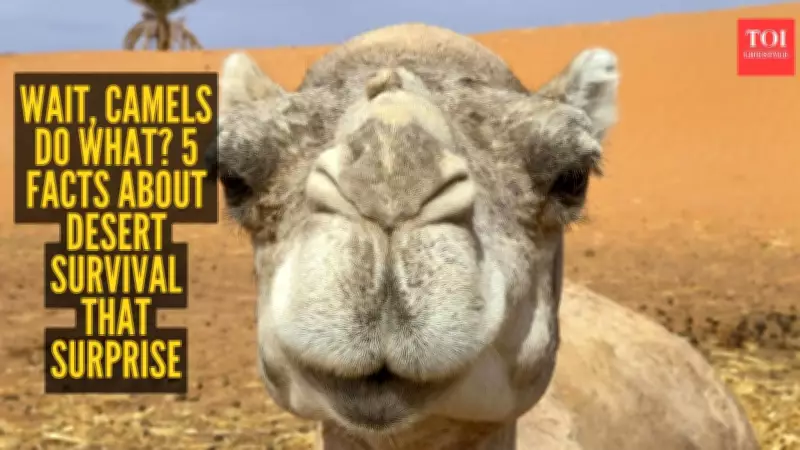
Camels rarely get the spotlight beyond being called the "ships of the desert." Most people know they have humps, survive extreme heat, and are used for transport in desert regions. But the truth is, camels are far more unusual than they appear. Some of their survival tricks sound almost unbelievable, but they are real. Here are five camel facts that hold up scientifically.
Camels Do Not Store Water in Their Humps
This is one of the most common myths. A camel's hump does not store water. Instead, it stores fat, which the animal can break down for energy when food is scarce. This fat reserve also helps them survive long periods in harsh desert conditions. Their real survival strength lies in how efficiently their bodies conserve water – not store it.
Camels Can Drink Massive Amounts of Water in a Short Time
After going without water for days, camels can rehydrate at an incredible speed. They can drink around 100–150 liters of water in a short span of time, often within minutes. This rapid intake helps them quickly recover from dehydration without harming their system, something most animals cannot do.

Their Body Temperature Naturally Fluctuates
Unlike humans, camels don't keep a strictly constant body temperature. Their body temperature can rise during the day and drop at night, which reduces the need for sweating. Since sweating leads to water loss, this adaptation is a major reason they survive extreme desert heat.
They Have Natural Protection Against Sandstorms
Camels are practically built for harsh desert winds. They have long double eyelashes that help block sand. Their nostrils can narrow or close, preventing dust from entering. Combined with thick eyebrows and fur, these features make sandstorms far less dangerous for them than for most animals.
Camels Do Spit – And It's Not Just Saliva
Camels are generally calm animals, but they do have a defensive side. When irritated or threatened, a camel may spit as a warning. And it's not just saliva – it can include partially digested stomach contents, which makes it especially unpleasant. It is usually a clear signal to stay away.