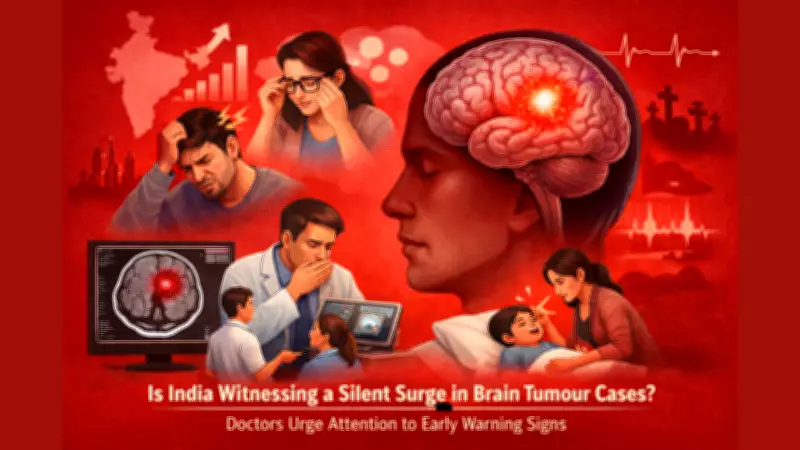
Brain Tumours: The Silent Surge and Why Early Symptoms Are Often Missed
When people imagine brain tumours, they often think of dramatic scenarios: sudden seizures, loss of speech, or severe neurological issues that are impossible to ignore. However, this perception is far from the typical reality of how these conditions begin.
The Danger of Subtlety in Early Symptoms
Brain tumours are frequently perceived as rare, dramatic illnesses that announce themselves with obvious neurological problems. In truth, early symptoms are often subtle, gradual, and easy to dismiss, explains Dr. (Prof.) I. C. Premsagar, Chief of Neuro & Spine Oncology services at RGCIRC (Rajiv Gandhi Cancer Institute & Research Centre). This very subtlety is what makes brain tumours particularly dangerous.
Slight changes in headaches, a bit of confusion, irritability, or trouble focusing are common early signs. Most individuals might blame these on stress, poor sleep, or a hectic lifestyle. As the brain controls nearly every function of the body, even small changes caused by a growing tumor can appear vague or unrelated, Dr. Premsagar notes. Consequently, people tend to wait, adjust, and normalize these symptoms, leading to delays that can cost precious time in treatment.

Are Cases Really Rising or Just Better Detected?
Globally, brain and central nervous system tumours are not the most common cancers, but they rank among the most complex to treat. More than 322,000 new cases of brain and CNS tumours are diagnosed every year worldwide, says Dr. Premsagar. In India, with over 1.4 million new cancer cases reported annually, brain tumours are becoming more visible, partly due to improved diagnostic techniques like accessible scans.
However, this is only one aspect of the story. Some epidemiologists believe that the number of brain tumour cases may double by 2030, states Dr. (Brig) Anil Kumar Dhar, Clinical Director and Head of Medical Oncology at Marengo Asia Hospitals, Gurugram. This projection is supported by emerging research, including a 2024 study in Nature's Scientific Reports, which indicates a steady global increase driven by ageing populations, environmental factors, and enhanced detection. The study estimates a 39.30% rise in newly diagnosed brain and CNS cancer cases in Asia, from 166,925 in 2020 to 232,000 by 2040.
In India, there is a concerning surge in childhood brain tumours that often go unnoticed. Additionally, underreporting remains a significant issue, as many cases from rural areas are not documented, meaning the current statistics may not fully reflect the true incidence.
Why Brain Tumours Are So Easy to Miss
One of the biggest challenges with brain tumours is not just treatment but recognition. Symptoms develop slowly, and people often adapt to changes, blame lifestyle factors, or delay seeking medical advice, explains Dr. Premsagar. Fear of a serious diagnosis also plays a role, causing many to wait until symptoms become intolerable.
The symptoms overlap with everyday issues, making them easy to dismiss:
- Headaches that feel slightly different but not severe.
- Nausea without a clear reason.
- Vision or hearing changes that come and go.
Doctors watch for specific patterns, such as persistent headaches that differ from usual ones, vomiting unrelated to food or infection, unresolved vision or hearing changes, and seizures in individuals with no prior history. Family members often notice changes first, as brain tumours can affect behaviour, mood, and thinking, leading to memory lapses, difficulty concentrating, unusual irritability, or personality changes. As these symptoms can mimic stress, anxiety, or aging, they are often overlooked, Dr. Premsagar adds.
What Could Be Driving the Increase?
There is no single cause behind brain tumours; it is a mix of factors, some understood and others still under study. Dr. Dhar points to key contributors:

- Early diagnosis through advanced scans.
- Pollution and exposure to toxins.
- Long-term mobile phone usage with radiation exposure, particularly in young populations.
While not all these factors are fully established as causes, they are areas of concern and ongoing research. Broader lifestyle shifts, such as increased screen time, less physical activity, and greater exposure to environmental pollutants, also shape long-term health risks. Additionally, ageing populations contribute, as the risk of many cancers, including brain tumours, rises with age.
Not All Brain Tumours Are the Same
The term brain tumour encompasses a diverse group of conditions. Brain tumours are a divergent group classified into two broad categories: primary brain tumours, which arise from neuronal cells, and metastatic brain tumours, which originate from cells outside the brain and spread to it, explains Dr. Dhar. Each type behaves differently; some are benign and manageable, while others are aggressive and require urgent treatment.
In India, the incidence of brain tumours is approximately 10 per 100,000 population, compared to 30-35 per 100,000 in the United States. Out of these, 30-35% are malignant, and the rest are benign, highlighting that a diagnosis does not always mean the same outcome but always necessitates timely evaluation.
Why Early Detection Changes Everything
Timing is critical with brain tumours. Any persistent, progressive, or unexplained neurological symptom deserves attention. While most symptoms do not turn out to be cancer, early evaluation ensures that serious conditions are ruled out or detected in time, emphasizes Dr. Premsagar. Delays can limit treatment options and affect outcomes, whereas early detection offers higher chances of cure and a good quality of life.
The shift doctors advocate is not towards panic but towards awareness. Paying attention to subtle changes, even if they seem minor, can make a significant difference in health outcomes.