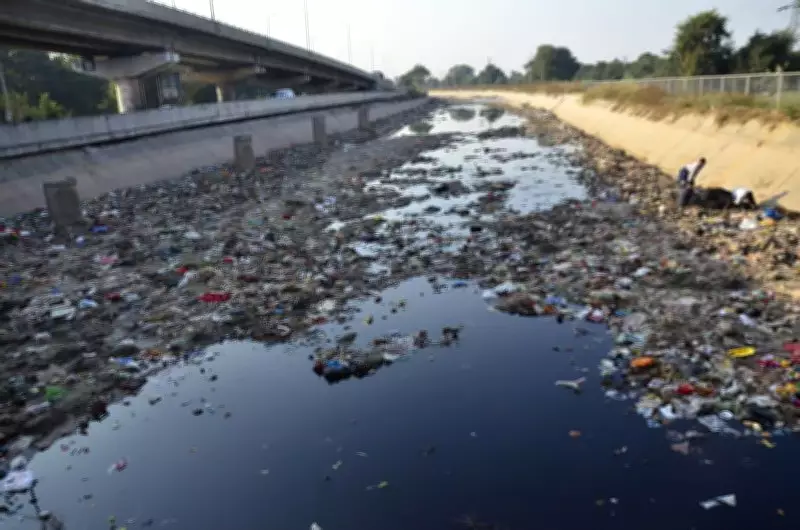
Punjab's campaign against single-use plastics (SUPs) is losing momentum, despite the state being ahead on paper. The National Green Tribunal (NGT) and the Akal Takht have raised alarms over plastic pollution, which now threatens rivers, groundwater, and wildlife.
Policy vs. Reality
In April 2016, the Punjab Department of Local Government banned the manufacture, stock, distribution, sale, and use of plastic carry bags across all urban local bodies. However, enforcement has been weak. Industry sources note that three years ago, there were about 300 plastic manufacturing units; now that number has increased.
Punjab has provisions for fines up to Rs 1 lakh, among the highest in India—comparable to Delhi (Rs 1 lakh), higher than Gurugram (Rs 500–Rs 25,000), Bengaluru (Rs 5,000–Rs 20,000), and Himachal Pradesh (up to Rs 25,000), but less than Uttarakhand (Rs 2 lakh–Rs 5 lakh). Despite this, the ban has not been effectively implemented.

Major Cities Drive Crisis
Three major cities—Ludhiana, Jalandhar, and Amritsar—are the primary contributors, generating thousands of metric tonnes (MT) of waste daily. Jalandhar produces over 600 MT per day, Ludhiana over 1,000 MT, and Amritsar over 500 MT, with plastic waste forming a large portion. The state generates an estimated 350–352 tonnes of plastic waste daily, a figure that continues to rise.
A Plastic Waste Brand Audit-2025, conducted across Amritsar, Bathinda, Jalandhar, Ludhiana, Mohali, and Patiala, analyzed 6,991 kg of municipal waste. Of this, 613 kg was plastic, with 88% found to be hard to recycle. The Punjab Pollution Control Board (PPCB) examined 11,810 plastic packets, attributing nearly 59% of non-recyclable waste to 14 major national and multinational brands.
Environmental and Health Impacts
Landfills have exceeded capacities, turning neighboring areas into uninhabitable wastelands. Environmentalists highlight toxic leachate from sites like Jalandhar's Wariana landfill seeping into groundwater and flowing into the Bist Doab and Beas rivers, threatening wetlands and wildlife.
Gurmangal Dass Soni, who manages a recycling unit in Rurka Kalan, Jalandhar, said, “Plastic is a monster guzzling up the environment. At our village, we generate an average of 10 quintals of plastic waste daily. All dirty, segregated plastic bags are compressed into bales of 50 to 60 kg and sent to a Haryana firm for recycling.”
Activism and Legal Battles
An NGO, Action Group Against Plastic Pollution (AGAPP), founded by Dr. Navneet Bhullar, Dr. Pallavi Khanna, and ecologist Bageshwar Singh, is fighting single-use plastics through litigation. Their goal is to “bombard the authorities with a tsunami of litigation until the problem is resolved.”
Central bans include the Plastic Waste Management (Amendment) Rules, 2021, prohibiting low-utility single-use items, and a comprehensive ban in July 2022 on plastic cutlery, straws, trays, wrappers, and thin banners. By December 2022, carry bags under 120 microns were banned. However, ground-level enforcement in Punjab remains inadequate.