The Brihanmumbai Municipal Corporation's (BMC) efforts to tighten control over the disposal of construction and demolition (C&D) waste are showing promising early results. In April, when the civic body implemented a new standard operating procedure (SOP) mandating disposal through its autoDCR-linked monitoring system, a total of 32,043 tonnes of such debris was collected. Of this, 14,125 tonnes reached Mumbai's two authorized recycling plants, accounting for nearly 500 tonnes per day, according to a BMC official.
While the quantum may appear modest, officials are optimistic about gradual increases over time. This also means that 14,000 tonnes of C&D debris were disposed of correctly instead of being dumped haphazardly, mitigating environmental hazards. The new SOP, implemented under the Construction & Demolition Waste Management Rules, took effect on April 9.
Daily Generation and Environmental Concerns
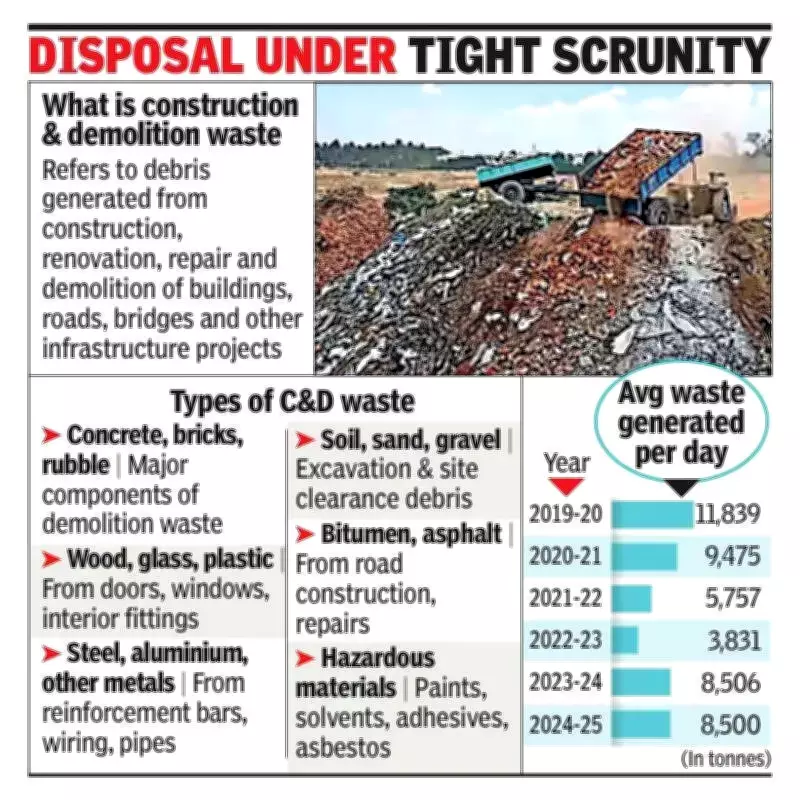
Mumbai generates approximately 8,000 tonnes of C&D waste daily from redevelopment projects, Metro construction, road concretisation, and large-scale excavation works. Between April 2025 and March 2026, an average of 432 tonnes of debris was collected daily. Civic officials acknowledge that illegal dumping in mangroves, nullahs, roadsides, and open plots has become a growing environmental concern, contributing to flooding risks, dust pollution, and deteriorating air quality.

AutoDCR Integration and Waste Tracking
The BMC's AutoDCR (automatic development control regulations) system is a digital platform used to scrutinise and process building proposals online, reducing manual intervention and speeding up approvals. The platform has now been integrated with C&D waste tracking, requiring all project proponents to submit a detailed waste management plan specifying quantities of demolition, excavation, and construction waste. Disposal is permitted only at authorised recycling facilities or designated sites, such as in Deonar, with transportation outside city limits barred.
Recycling Plants and Future Plans
Mumbai operates two civic-run C&D waste recycling plants in Dahisar and Shilphata, each with a processing capacity of 600 tonnes per day. A new 1,600-tonne plant is planned in Deonar. Since the two recycling facilities became operational in 2024, around 3.3 lakh tonnes of C&D waste has been collected, of which nearly 2.11 lakh tonnes has been processed.
Digital Portal Launch
The civic body is preparing to launch a dedicated digital portal for C&D waste management, modelled on Delhi's ‘Malba portal', likely next week. Officials expect this will lead to a sharp increase in debris processed at these plants. The proposed platform will allow residents, contractors, and developers to schedule debris pickups, register transport vehicles, and digitally track waste movement through vehicle tracking management systems. "Every debris vehicle will be tracked through the portal. The idea is to create a fully accountable and technology-enabled waste disposal ecosystem," an official said.