National Medical Commission Criticized by Supreme Court Over Intern Stipend Inaction
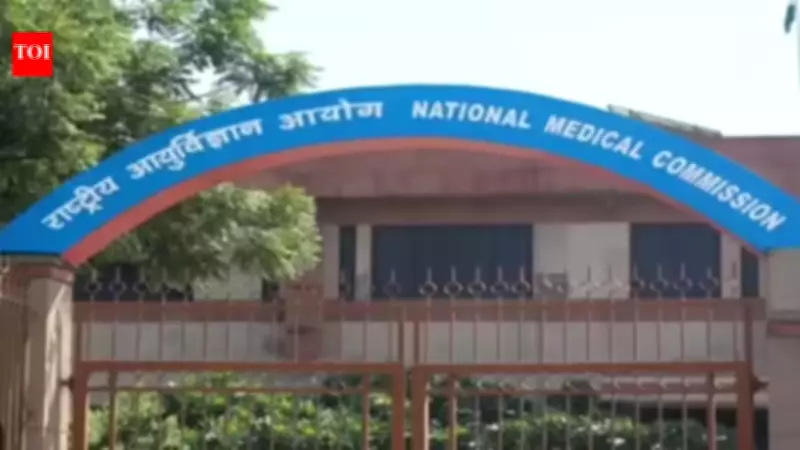
The National Medical Commission (NMC) has remained conspicuously silent regarding 60 medical colleges, which include 27 private institutions, that have admitted to not paying any stipend to their MBBS interns. This long-standing issue, which has been under the scrutiny of the Supreme Court since 2022, highlights systemic failures in ensuring fair compensation for medical trainees.
Supreme Court Expresses Frustration with NMC's Delayed Response
In a recent hearing on October 28, 2025, the Supreme Court issued a strongly worded order, stating that the NMC "seems to be dragging its feet without having any serious concern." The court further admonished the commission, noting, "We are forced to make this observation as no action seems to have been taken against erring institutions. We hope and trust that the NMC would wake up from its slumber and take appropriate steps … at least by the next date of hearing."
The case was scheduled for a hearing on March 17, but just five days prior, on March 12, the NMC finally took action by issuing a public notice. This notice imposed a penalty of Rs 1 crore on seven medical colleges that had failed to furnish required information regarding stipend payments despite repeated reminders.

Selective Enforcement and Inadequate Penalties
Despite possessing data dating back to 2024 that clearly identified 60 colleges not paying stipends, the NMC chose to penalize only seven colleges for non-compliance with information requests. This selective enforcement raises serious questions about the commission's commitment to addressing the core issue.
An analysis of data submitted by hundreds of medical colleges reveals that private institutions save crores of rupees annually by avoiding stipend payments equivalent to those in state medical colleges. Consequently, even a one-time penalty of Rs 1 crore is unlikely to serve as an effective deterrent for many wealthy private colleges.
Exploitative Practices and Legal Loopholes
Thousands of MBBS students performing clinical duties during their final-year internships are reportedly paid as little as Rs 2,000 per month, according to data submitted to the Supreme Court by the NMC. A former chief justice hearing the case likened this practice to bonded labour, emphasizing the injustice faced by young doctors working 16-20 hours daily without fair compensation.
The Compulsory Rotating Medical Internship Regulations 2021 currently contain a vague provision stating that "all interns shall be paid stipend as fixed by the appropriate authority applicable to the institution/ University or State." This contrasts sharply with regulations for postgraduate resident doctors, which mandate stipends on par with state government medical institutions in the same location.
Historical Context and Ongoing Delays
This issue has persisted since January 25, 2019, when the Board of Governors of the erstwhile Medical Council of India sought public comments on amending the Regulations on Graduate Medical Education 1997. The proposed amendment aimed to ensure stipend parity with state government institutions, but it was never gazetted after the board's dissolution.
Despite the health ministry urging the NMC to review stipend provisions for MBBS interns in light of postgraduate medical education regulations from 2023, no substantive action has been taken. The case continues to drag into its fourth year without resolution, leaving thousands of interns in financial limbo and undermining the integrity of medical education in India.