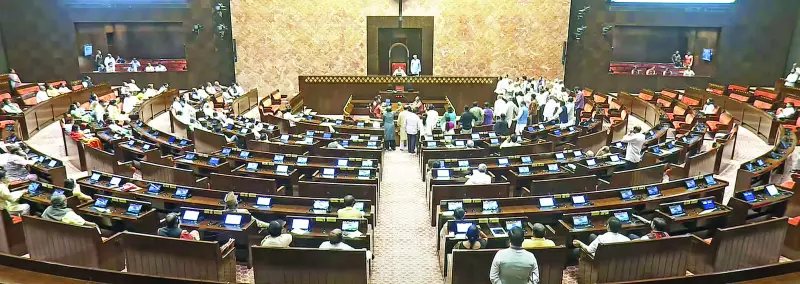
In a significant disclosure in the Rajya Sabha, the Union Minister of State for Jal Shakti, V Somanna, revealed that a staggering 705 multi-village piped water supply schemes in Odisha are facing delays. The minister attributed the holdups to a complex web of challenges including protracted land acquisition, underperforming contractors, and slow Right of Way (ROW) clearances from multiple key departments.
Root Causes of the Massive Delay
Providing a written reply to a question from Rajya Sabha member Sasmit Patra on Monday, Minister Somanna detailed the primary bottlenecks. The major hurdles include land acquisition problems and the non-performance of contractors. Furthermore, obtaining timely ROW clearances from a slew of infrastructure and regulatory bodies—such as the National Highways (NH), National Highways Authority of India (NHAI), Roads & Buildings (R&B), Rural Development (RD), Forest, and Railways departments—has significantly slowed progress on these critical water projects.
Corrective Measures and Institutional Mechanisms
In response to the widespread delays, the Odisha government has initiated several corrective steps. The state has established high-level institutional committees to streamline coordination and expedite resolutions.

A key committee is headed by the Development Commissioner-cum-Additional Chief Secretary, with secretaries from all stakeholder departments as members. Another pivotal panel is led by the Commissioner-cum-Secretary of the Panchayati Raj and Drinking Water (PR&DW) department, incorporating the Engineers-in-Chief of all infrastructure departments.
To tackle issues at the ground level, district collectors are now chairing monthly coordination meetings. These forums aim to resolve pending approvals and local disputes swiftly, ensuring projects can move forward without unnecessary administrative delays.
Tackling Chronic Scarcity and Water Quality
The minister's reply also shed light on the severe drinking water challenges plaguing parts of Odisha. Field assessments have identified blocks suffering from chronic shortages due to groundwater depletion and widespread contamination.
Water sources in many areas are contaminated with dangerous levels of iron, fluoride, salinity, and bacteriological impurities. Districts like Naupada, Bargarh, Mayurbhanj, and Gajapati are particularly affected by these quality issues.
To combat this dual crisis of scarcity and contamination, the PR&DW department has launched a multi-pronged strategy. Initiatives include:
- Surface water-based mega piped water supply schemes.
- Single- and multi-village piped water supply projects.
- Solar-based piped water supply systems and Solar Dual Pumps.
- Installation of Iron Removal Plants (IRPs) and defluoridation plants.
- Regular disinfection of water sources across districts.
Additionally, the state is focusing on source sustainability by constructing recharge structures, restoring water bodies, and promoting rainwater harvesting in collaboration with other departments. These measures are crucial for ensuring safe and adequate water availability, especially during the punishing summer months.
Community Involvement and Preventive Actions
Beyond infrastructure, the government is emphasizing community-level interventions. Preventive measures include organizing awareness programs on safe water handling practices and strengthening Village Water and Sanitation Committees (VWSCs). These committees are being equipped with Field Test Kits to empower local surveillance of water quality, creating a first line of defense against contamination.
For regions facing recurring water scarcity, the state has planned special interventions. These involve prioritizing the completion of ongoing schemes and making temporary arrangements such as repairing defunct tube wells and non-functional piped water projects. The installation of new tube wells is also part of the immediate action plan to provide relief to vulnerable communities.

The comprehensive reply from Minister Somanna underscores the scale of the water crisis in Odisha and the administrative and logistical complexities involved in resolving it. While the delay of 705 schemes presents a major hurdle, the outlined corrective and preventive measures indicate a structured, albeit challenging, path toward ensuring 'Har Ghar Jal' (water to every household) for the state's residents.