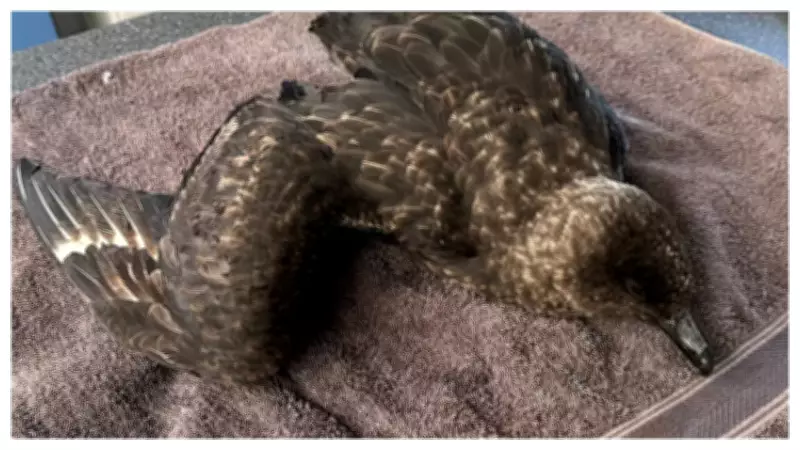
Amid the deadly bird flu scare, Australia, previously untouched by the destructive global H5 bird flu strain, now faces a potential breach. A dead migratory bird, a brown skua, returned a suspected positive result for Avian influenza in Western Australia. Federal Agriculture Minister Julie Collins urged Australians not to touch sick animals and to report any suspicious findings.
Detection in an Isolated Coastal Park
The potential breach was discovered after a single sick brown skua was found on a remote beach within Cape Le Grand National Park near Esperance, roughly 700 kilometers southeast of Perth. A local wildlife carer spotted the distressed migratory bird on Sunday and immediately notified environmental authorities. The bird was placed in isolation but succumbed to its illness that same evening. A second sub-Antarctic migratory bird, a giant petrel, was subsequently discovered unwell in the same coastal area and is undergoing screening by state veterinary teams.
State and Federal Labs Run Tests
Preliminary diagnostic testing by the Western Australian Department of Primary Industries and Regional Development returned a suspected positive result for avian influenza. To determine the exact genetic lineage and verify if it is the highly pathogenic H5 strain, tissue samples were dispatched overnight to the CSIRO’s Australian Centre for Disease Preparedness. Minister Collins stated that definitive results are expected tomorrow. She emphasized no evidence of mass wildlife mortality or infection spreading to local commercial poultry farms.

Global Context
The highly pathogenic H5 variant has wreaked havoc across Europe, Asia, Africa, the Americas, and Antarctica, killing millions of wild seabirds, seals, and land mammals. Because the infected brown skua remained isolated while in care, WA Agriculture and Food Minister Jackie Jarvis noted that early-warning and containment protocols functioned as planned. A national emergency response group has been mobilized to coordinate containment strategies and increase field surveillance if the strain verification comes back positive.
Public Health Advice and Symptoms
Public health authorities reassure that the risk of human contraction remains low unless an individual works directly with infected avian populations. Federal authorities urge beachgoers and hikers to maintain a safe distance from sick or dead wildlife. Instead of approaching animals, the public should document the location, take photographs or video from a distance, and file an official report online at birdflu.gov.au.
How to Identify Avian Influenza
When avian influenza strikes, signs are hard to miss. Commercial farmers, backyard keepers, and wildlife spotters need to know what to look for to prevent a major outbreak.
Unexplained Deaths and Severe Fatigue
The most alarming sign is sudden, widespread mortality. Surviving birds often show extreme behavioral shifts, becoming lethargic, refusing to eat or drink, and appearing droopy with ruffled feathers.
Swelling, Bruising, and Breathing Difficulties
Fluid buildup leads to visible swelling around the head, neck, limbs, wattle, or comb, often with dark bruising on feet and skin. Respiratory distress includes panting, sneezing, coughing, or nasal discharge.
Neurological Failure and Production Drops
The virus attacks the nervous system, causing twisted head or neck, loss of balance, or inability to walk or stand. For laying hens, a sudden drop in egg production is a classic early warning sign.