

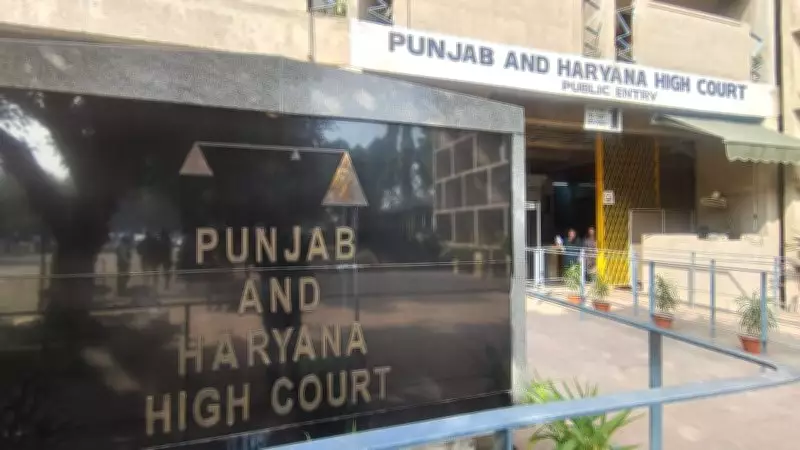
The Punjab and Haryana High Court has upheld the termination of an Anganwadi worker, dismissing her appeal against the State of Haryana. The court found her explanation for failing to monitor a pregnant woman—claiming the woman's expression did not indicate pregnancy—as 'farfetched' and indicative of a 'major shortcoming' in her duties.
Court Ruling on Worker's Defense
The Division Bench of Justice Ashwani Kumar Mishra and Justice Rohit Kapoor observed that the appellant, an Anganwadi worker, was responsible for visiting households and monitoring pregnant women in her designated area. The case arose after a pregnant woman died in the area under her supervision without any report from the worker regarding her condition.
The Bench noted that a Single Judge had earlier refused to interfere with the termination order, as no satisfactory explanation was provided for the deficiency in services. In her defense, the appellant claimed the deceased woman's family had not informed her about the pregnancy.

Referring to her reply to the show-cause notice, the court reproduced her statement: 'During the home visit, I observed her going to the terrace quickly to do her household chores like carrying a wet heavy blanket. Her expression did not indicate that she was pregnant.'
Implications for Frontline Healthcare Workers
The Bench described the explanation as 'farfetched' and held that it clearly indicated a major shortcoming in rendering expected services. The court concluded that the contractual employment was discontinued after a show-cause notice, and no exception could be taken in the case. The appeal was dismissed accordingly.
This ruling underscores that frontline healthcare and welfare workers cannot evade responsibility for monitoring beneficiaries by relying on superficial observations or lack of information from families. Their role requires active identification and tracking of pregnant women, and failure to do so can lead to termination of employment.






