You know that moment when you learn something and suddenly cannot unsee it? This is going to be one of those moments. Your house is basically a petri dish, and the items you touch most often are the dirtiest. Understanding this can help you avoid getting sick frequently.
Phone
Let us start with the obvious culprit: your phone. This device lives in your pocket, gets touched thousands of times a day, and accompanies you to bathrooms, restaurants, and everywhere else. Studies indicate that your phone can carry more bacteria than a toilet seat. A toilet seat is specifically designed to handle gross substances, yet your phone harbors even more germs. You eat with your hands after scrolling through social media, and you hold it near your face during calls. It essentially functions as a bacterial delivery system that you keep close to your face and food. The worst part is that most people never clean their phones.
Kitchen Sponge
Your kitchen sponge hosts a different kind of bacterial party. It sits in your sink, remains perpetually damp, and you use it to clean your dishes. However, it is not actually cleaning anything; it is merely redistributing bacteria around your kitchen. E. coli, salmonella, and listeria find your sponge to be a five-star resort for all the bacteria you definitely do not want near your food preparation area. Surprisingly, microwaving your sponge does not kill most of the bacteria living inside. You would need to boil or bleach it, which most people do not do because they forget their sponge is essentially a biohazard.

Toothbrush Holder
Then there is your toothbrush holder. It sits in the bathroom, gets splashed with water every time someone brushes their teeth, and is rarely cleaned. The bathroom is where fecal bacteria accumulate, and these particles become airborne when you flush. Consequently, your toothbrush holder collects fecal bacteria while sitting right next to where you place the thing that goes into your mouth. Most people's toothbrush holders are essentially marinating in fecal particles. It is disgusting when you think about it, which is why most people avoid doing so.
Cutting Board
Your kitchen cutting board is another bacterial hotspot, especially if it is made of wood. Wood is porous, allowing bacteria to penetrate tiny cracks and thrive there even after washing. Raw chicken juice does not come off with warm water alone. Cross-contamination occurs, and you may end up with campylobacter or salmonella on your salad because your cutting board harbors bacteria like a bed and breakfast.
Remote Control and Light Switches
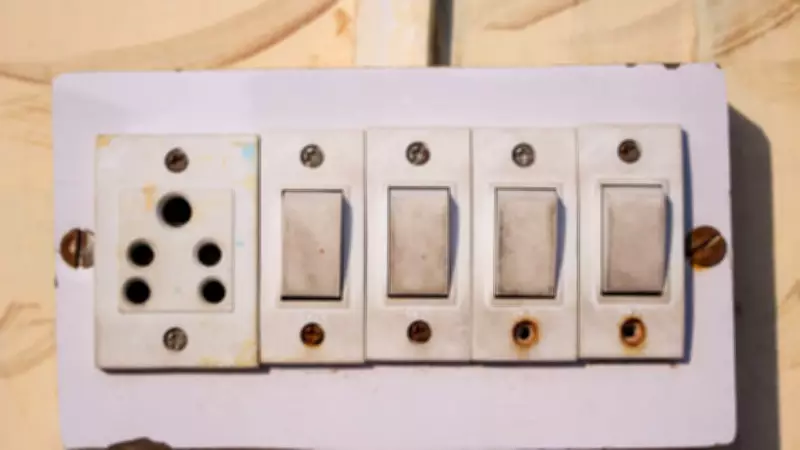
Do not forget about your remote control and light switches. These items are touched constantly but cleaned rarely. Everyone's hands come into contact with them: the sick person, the one who did not wash hands after the bathroom, and the child who played in the dirt. Light switches in public places can carry hundreds of times more bacteria than doorknobs, highlighting how many people touch them without thinking.
Kitchen Sink
Your kitchen sink deserves special mention because it is the main site for bacterial growth. It is warm, wet, dark, and contains food residue. The drain is like a bacterial nightclub, where microorganisms multiply and thrive. Your sink can be dirtier than your toilet.
Kitchen Counter
The counter where you set down grocery bags is another forgotten hotspot. Those bags have been rolling around in delivery trucks, on warehouse floors, and handling unknown contaminants. You place them on the counter where you prepare food, leading to potential cross-contamination.