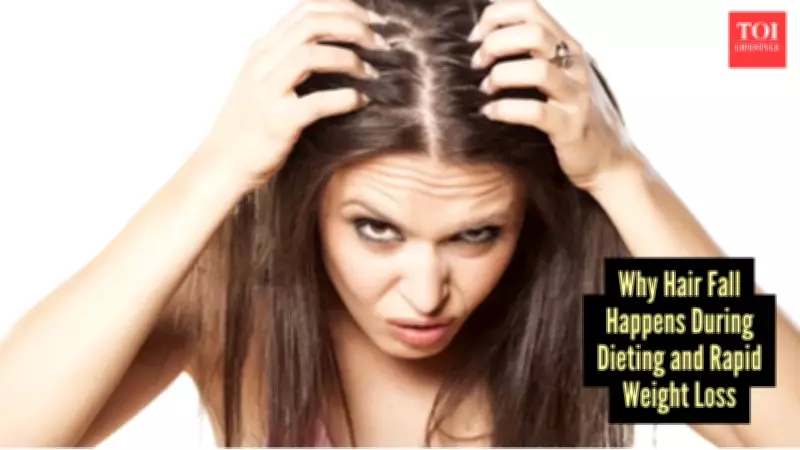
Stepping on the scale and seeing the numbers drop can feel fantastic. But that joy may quickly turn to alarm when you notice clumps of hair circling the shower drain. If you're shedding hair while losing weight, take a deep breath. You are not alone, and this is actually a common physiological reaction. Let's break down why your body trades hair for fat loss and what you can do to stop it.
The Science of Survival Mode
Normally, about 90 percent of your hair is actively growing, while a tiny fraction takes a resting break. However, when you drop weight quickly or drastically slash your calories, your body goes into shock. It hits the panic button and enters survival mode. In this state, hair growth is deemed a luxury, not a biological necessity. To conserve vital energy for your heart, lungs, and other organs, the body forcefully pushes up to half of your active hair follicles into the resting phase. Dermatologists call this condition telogen effluvium.
The sneakiest part is that you won't see the damage right away. The massive shedding usually kicks in about two to four months after you started that intense diet.

What's Really Triggering the Fall?
Several culprits behind this sudden shedding often occur simultaneously during a major health kick.
Starving the Strands
Hair is mostly made of a protein called keratin. If you are barely eating and missing your daily protein goals, your body simply does not have the building blocks to keep your hair thick. Extreme diets also tend to lack iron, zinc, biotin, and vitamins A, C, D, E, and B12. Without these micronutrients, your follicles essentially shut down.
The Hormonal Rollercoaster
Body fat does not just sit there; it helps regulate your hormones. Losing a lot of fat quickly messes with insulin sensitivity, estrogen, testosterone, and thyroid levels. Since hormones dictate your hair growth cycle, this sudden imbalance leads to immediate shedding.
Pure Metabolic Shock
Sometimes, even a perfectly nutritious diet cannot prevent hair loss. The sheer physical trauma of rapid weight loss or undergoing bariatric surgery is enough of a systemic stressor to trigger hair loss on its own.
The Ozempic Effect
With weight-loss drugs like Ozempic, Wegovy, and Mounjaro becoming popular, complaints about hair loss have skyrocketed. However, recent dermatological research clears the drugs themselves. The medication is not poisoning your hair. Instead, the shedding is a secondary side effect of the extreme, rapid weight loss these injections cause. Studies show a clear pattern: drugs that cause the highest magnitude of weight loss, such as Mounjaro, have the strongest link to hair shedding. You rarely see it at lower doses, but once you hit higher obesity-treatment doses where weight melts off, the hair often follows.
Will It Grow Back?
The good news is that this type of hair loss is temporary. Once your weight stabilizes and you are no longer starving your body of calories, your follicles will wake back up. The shedding usually tapers off within three to six months. Give it about nine to twelve months, and most people see their original hair density fully return.
How to Keep Your Hair and Lose the Weight
You do not have to choose between reaching your body goals and keeping a full head of hair. You just need to be smart about it. First, take it slow. Aiming for a sustainable loss of just one or two pounds a week drastically reduces the stress on your system compared to crash dieting. Never drop your intake below 1,000 calories a day, as this guarantees you will starve your scalp. Make sure you prioritize protein, shooting for roughly 70 to 100 grams daily to support keratin production. Finally, skip the blind multivitamin popping and get your blood checked so you can target specific gaps like iron and zinc.