West Asia Conflict Severely Impacts Hyderabad's Medical Tourism Industry
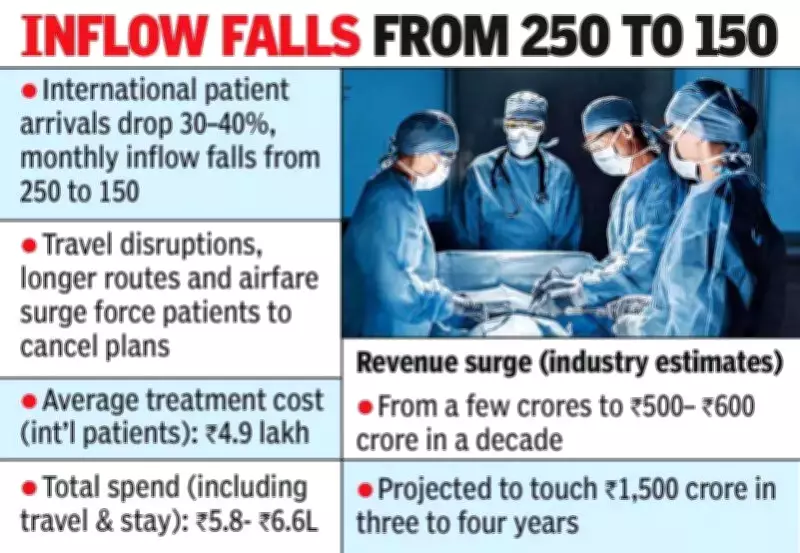
The ongoing conflict in West Asia has dealt a significant blow to medical tourism in Hyderabad, with hospitals across the city reporting a sharp 30–40% decline in international patient arrivals over recent weeks. Facilities that typically welcome 240–250 overseas patients monthly from regions like the Gulf and Africa have seen this number plummet to approximately 150, as many individuals postpone elective procedures due to travel disruptions and safety concerns.
Hospital Reports Highlight Widespread Cancellations and Delays
Prem Gokul, associate vice-president of international business relations at KIMS Hospitals, noted a sudden drop in elective surgeries, explaining that patients often book travel 15 days to a month in advance. "Many scheduled for March have not turned up, especially from Bahrain, Oman, Kuwait, Saudi Arabia, and the UAE, particularly Dubai," he said. This trend is echoed by a neurologist at Apollo Hospitals, who reported that Middle East patient numbers have fallen from 7–14 per week to just 1–2, with African inflow decreasing even further.
CARE Hospitals has experienced similar challenges, with about 30% of its roughly 500 monthly international patients postponing or cancelling treatments in March. Toshan Singh, head of international sales and marketing at CARE Hospitals, attributed this to increased travel times and security worries. "As many patients transit via Gulf nations, journeys that usually take 14–16 hours are now stretching up to two days due to flight detours and multiple stops, discouraging many patients," he explained.

Factors Driving the Decline: Connectivity, Security, and Costs
Experts point to several key factors behind this slowdown:
- Disrupted Connectivity: India relies heavily on international airlines, especially Middle Eastern carriers like Emirates, Etihad Airways, Qatar Airways, and Oman Air, which have reduced operations amid the conflict.
- Security Concerns: The volatile situation in West Asia has raised fears among travellers, leading to cancellations and deferrals.
- Spike in Airfares: Round-trip tickets that previously cost Rs 90,000–Rs 1.4 lakh have surged to Rs 2.2–Rs 2.8 lakh, making travel prohibitively expensive for many patients.
Sameer Agrawal, deputy general manager of international business at Apollo Hospitals, warned that the situation could worsen, noting that major healthcare hubs like Thailand, Turkey, and Singapore benefit from strong national carriers, whereas India faces greater vulnerability due to its dependence on foreign airlines.
Impact Extends to African Routes and Long-Term Outlook
The conflict's effects are not limited to West Asia; African routes have also been affected. Direct connectivity via Ethiopian Airlines between Hyderabad and Addis Ababa had previously boosted patient inflow from countries like Kenya, Ethiopia, Somalia, and Nigeria, narrowing the gap with cities like Mumbai and Delhi. However, current tensions have forced travellers onto fewer routes, further driving up fares and reducing accessibility.
Despite these setbacks, experts see a potential long-term opportunity for Hyderabad. Dr. Krishna Chaitanya Mantravadi of Oasis Fertility suggested that when disruptions affect healthcare access in certain regions, patients seek alternatives, and India, with its proximity and diplomatic ties, remains a strong option. Prem Gokul added that once conditions normalise, patients who previously preferred Gulf hubs such as Dubai or Jordan may increasingly consider Hyderabad a stable and reliable medical tourism destination.
This downturn highlights the interconnectedness of global events and local economies, underscoring the need for adaptive strategies in the healthcare sector to mitigate future disruptions.