

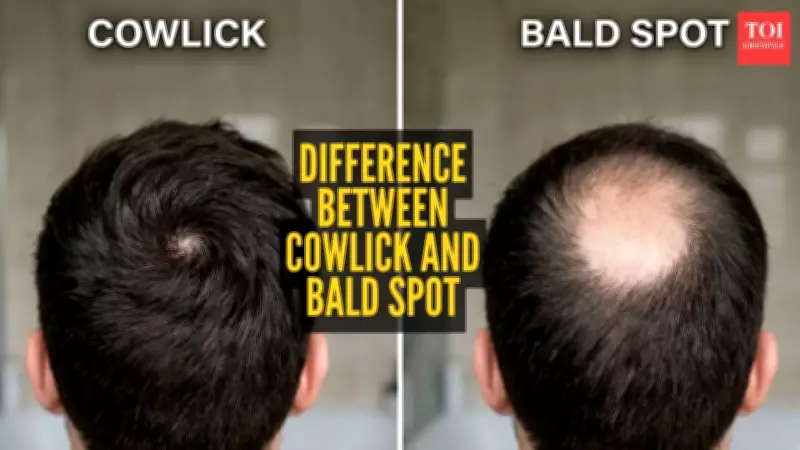
Cowlick vs Bald Spot: A Comprehensive Guide to Identifying Hair Concerns
Few moments in daily grooming trigger as much immediate anxiety as spotting an unusual patch on your scalp while looking in the mirror. You might be casually brushing your hair when suddenly, you notice a section that appears thinner, emptier, or just different from the rest. Instantly, fears of balding surface, sending you into a spiral of worry.
Before you dive into alarming online searches, it is crucial to understand that not every irregular hair pattern signals hair loss. Many people mistakenly confuse a normal cowlick with the early stages of a bald spot, leading to unnecessary stress. The positive news is that distinguishing between the two is relatively simple once you know what specific indicators to observe.
Understanding the Cowlick: Your Hair's Natural Rebel
A cowlick is essentially a section of hair that grows in a different direction from the surrounding strands, often forming a swirl or spiral pattern. This phenomenon results from the natural angle of your hair follicles, typically located at the crown of your head. Despite attempts to style it with products like pomade or hairspray, a cowlick resists lying flat, showcasing its unique character.

Key characteristics of a cowlick include:
- It has been present since childhood, visible in old photographs.
- It is commonly found at the crown or along the hairline.
- It persistently challenges styling efforts.
- It appears more pronounced when hair is short or wet.
Identifying a Genuine Bald Spot: Signs of Hair Thinning
In contrast, a bald spot involves actual hair thinning or complete loss in a specific area. This condition is not about growth direction but rather the density of hair. Causes can range from genetic factors like pattern baldness to external influences such as high stress, hormonal changes, or tight hairstyles worn over extended periods.
Warning signs of a bald spot are:
- Gradual expansion of the area over several months.
- Increased visibility of the scalp compared to before.
- Excessive hair shedding in showers or on pillows.
- Hair in the affected region feeling finer or fuzzier than elsewhere.
Why the Crown Area Often Causes Confusion
The crown of the head is a prime location for both natural cowlicks and the onset of pattern hair loss, leading to frequent mix-ups. Under bright lighting, a cowlick's spiral can expose some scalp, creating an illusion of thinning. If you have not previously examined this area closely, noticing it might feel like a sudden change, even if it has remained unchanged since childhood.
Five Practical Methods to Differentiate Between Them
If you are currently inspecting your scalp with a hand mirror, consider these specific clues:
1. Assess the Timeline
A cowlick is a constant feature that does not alter in size over time. Conversely, a bald spot tends to evolve, becoming more noticeable over weeks or months.
2. Evaluate Hair Density
Examine the skin closely. With a cowlick, hair is fully present but grows away from the swirl's center. In a bald spot, hair count is reduced, or the skin may be entirely smooth.
3. Monitor Shedding Patterns
Notice if you are losing more hair than usual. Increased shedding combined with a suspicious patch suggests thinning, whereas a cowlick does not cause extra hair loss.
4. Observe Scalp Visibility
Both can show scalp, but with a cowlick, visibility often diminishes when hair is moved or styled differently. A true bald spot remains visible regardless of combing direction.
5. Check Texture Consistency
Run your fingers over the area. If the hair feels wispy or thinner compared to other parts of your head, it might indicate a bald spot. Uniform texture across your scalp points to a cowlick.

Avoiding Common Pitfalls: Lighting and Wet Hair Traps
Refrain from judging your hair immediately after washing it. Wet hair tends to clump, exposing the scalp more easily, especially at the crown. If the spot disappears once your hair dries, it is likely a cowlick. Additionally, harsh overhead lighting in bathrooms can make even thick hair appear sparse. For a more accurate assessment, inspect your hair in natural, indirect light before jumping to conclusions.
When to Seek Professional Advice
Consult a dermatologist or trichologist if you observe:
- The patch visibly enlarging over time.
- Your hairline receding gradually.
- Itchiness, redness, or irritation on the scalp.
- The presence of miniature, thinner hairs in the area.
Final Thoughts: Reducing Unnecessary Stress
It is completely normal to feel concerned about your hair health. However, remember that significant hair loss does not occur overnight. If you are not experiencing excessive shedding and the spot has remained unchanged for months, it is probably just a persistent cowlick. A practical approach is to take a clear photo of the area now, set it aside, and re-evaluate in two months. If there is no difference, you can confidently alleviate your worries and focus on maintaining overall scalp wellness.
