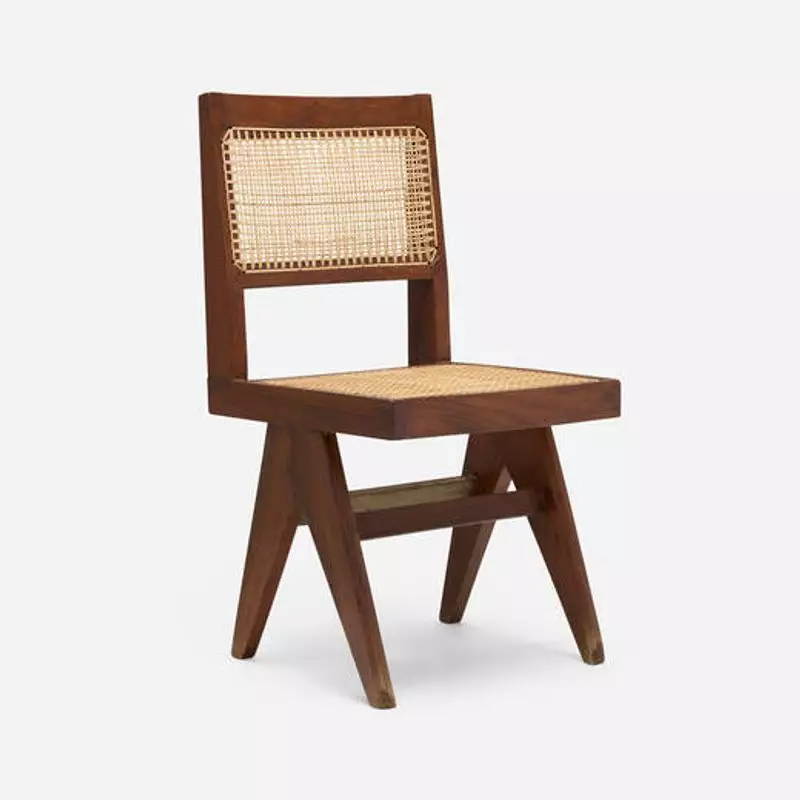
The global art and design market has once again demonstrated its appetite for iconic modernist pieces, with four heritage items from Chandigarh fetching a combined total of Rs 18.87 lakh (approximately $22,500) at a recent auction in the United States. The sale, conducted by the prestigious Wright auction house in Chicago, underscores the enduring international value and demand for design artifacts connected to the creation of the planned city of Chandigarh.
The Prized Lots and Their Final Hammers
The auction featured a curated selection of items intrinsic to Chandigarh's architectural history. The star lot was a ‘Office Chair’ from the iconic ‘Cane’ series, designed by the legendary Swiss architect Pierre Jeanneret, who collaborated closely with his cousin, Le Corbusier, on the Chandigarh project. This piece alone commanded a winning bid of $8,750 (roughly Rs 7.34 lakh).
Another significant item was a pair of ‘Library Ladders’, also designed by Pierre Jeanneret for the city's Capitol Complex. These functional yet elegant pieces sold for $6,250 (approximately Rs 5.24 lakh). Further contributing to the total were a ‘Bibliotheque Wall Light’ by French designer Jacques Biny, which went for $5,000 (about Rs 4.19 lakh), and a ‘Teak and Metal Stool’ that fetched $2,500 (around Rs 2.10 lakh).

A Legacy of Modernism in High Demand
The successful auction is not an isolated event but part of a sustained trend. Furniture and fixtures originally crafted for Chandigarh's public buildings, universities, and government offices during its founding period in the 1950s and 60s have become highly coveted collectibles in the international design market over the past two decades. Pieces by Jeanneret, in particular, are celebrated for their minimalist aesthetic, robust craftsmanship, and deep historical significance.
This market phenomenon began in earnest in the late 1990s and early 2000s, when items deemed surplus or in disrepair were sometimes sold off. They were rediscovered by Western dealers, conservators, and collectors, leading to a surge in value. Today, auctions in major global hubs like New York, London, Paris, and Chicago regularly feature Chandigarh heritage, with prices often soaring into crores of rupees for rare or exceptional pieces.
Implications and the Conversation on Cultural Patrimony
While the market celebrates these sales, they invariably spark discussions about cultural heritage and patrimony within India. Each auction raises questions about the stewardship of India's modernist architectural legacy. Heritage advocates and many citizens express concern about the continued migration of these historically significant items out of the country, viewing them as an integral part of Chandigarh's—and India's—material culture.
The high prices achieved abroad highlight a paradox: the immense international valuation of these objects sometimes outpaces local institutional budgets or acquisition priorities. This creates a continuous challenge for preserving such heritage in situ. The conversation often turns to the need for enhanced documentation, stronger protective measures, and creating mechanisms that allow important pieces to remain in India for public appreciation and education.
The Rs 18.87 lakh sale in Chicago is a clear economic indicator of the prestige associated with Chandigarh's design heritage. It confirms that the furniture born from the city's ambitious founding vision is now firmly enshrined in the global canon of 20th-century design. The event serves as both a celebration of Chandigarh's design legacy and a reminder of the ongoing need to preserve its physical history within its own borders for future generations.