Youth Team Creates Digital Dictionary to Save Vanishing Nomadic Languages
From the echoing calls of "Kalu Madari aaya" through narrow gullies to children chasing after jamooras, jugglers, and dancing bears, the vibrant street spectacles of a bygone era have nearly disappeared from India's cultural landscape. In a remarkable cultural rescue mission, a dedicated team of youths, spearheaded by history teacher Hemant Lodhi, has intervened just in time to document the fast-fading languages of nomadic communities.
Documenting Languages on the Brink of Extinction
The team spent six intensive months living among the Kalandar, Kanjar, Nat, Banchara, and Kal Bheliya communities, meticulously recording 1,800 spoken words in the voices of the nomadic people themselves. This unprecedented effort represents a crucial step in preserving linguistic heritage that was never previously written down.
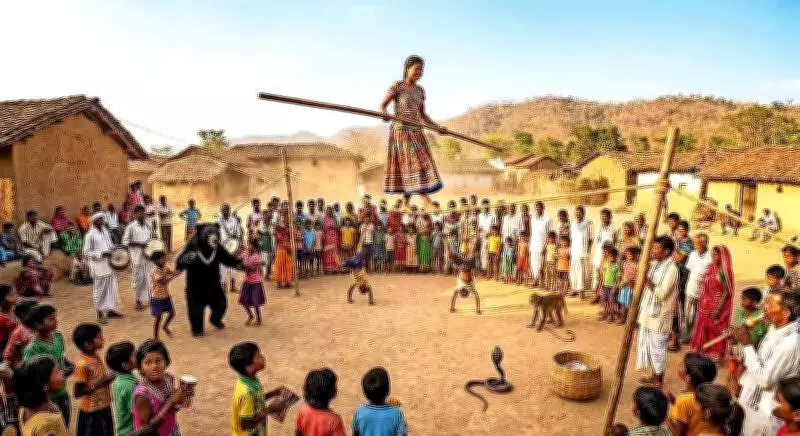
For generations, these communities sustained themselves through street performances—enthralling audiences with bear and monkey shows accompanied by the rhythmic beat of damrus, mesmerizing snake charming acts, daring rope walking, and breathtaking acrobatics. They communicated in coded tongues understood exclusively within their own world, creating a unique linguistic ecosystem.

The Collapse of Traditional Livelihoods
As animal protection laws strengthened across India, authorities began confiscating bears and monkeys, releasing them into forest sanctuaries. This well-intentioned conservation effort had an unintended consequence: it completely dismantled the traditional livelihoods of these nomadic communities.
Forced to abandon their nomadic lifestyles and settle in permanent locations, the communities gradually slipped to society's margins. With this transition away from their traditional ways of life, their spoken languages began fading from daily use, putting entire linguistic traditions at risk of permanent extinction.
A Race Against Time to Preserve Cultural Heritage
Sensing the urgent need for intervention, Lodhi, a dedicated teacher from Raisen district, assembled a fifteen-member youth team and ventured into the settlements of these nomadic communities. Through months of rigorous fieldwork, countless conversations, and careful trust-building exercises, the team painstakingly collected words that had existed solely in oral tradition for centuries.
"We conducted this documentation project last year," Lodhi explained. "Our team worked in coordinated groups, visiting settlements of people from various nomadic tribes. The most challenging aspect was undoubtedly gaining their confidence and trust. We recorded their language and vocabulary in their native tongue, preserving their authentic voices."
He added, "The digital recordings are currently being finalized, and the complete dictionary will be available online through the academy's website in the coming days."
The Digital "Talking Dictionary" Innovation
The culmination of this extensive effort is a groundbreaking digital "talking dictionary"—the first of its kind for these communities. This innovative resource features approximately 1,800 words, including fascinating linguistic discoveries such as ‘Geebat' for chugli (gossip) and ‘Uthit Na' for uthna (to rise).
Prepared using the International Phonetic Alphabet, each entry in the dictionary is enhanced with images of everyday objects like flowers, utensils, and tools. This visual component makes the language more accessible and engaging for younger generations who might be disconnected from their ancestral heritage.
Global Accessibility and Ongoing Documentation
The dictionary will be hosted on the state-operated Janajatiya Lok Kala Evam Boli Vikas Academy portal, available in Hindi, English, and multiple other languages. This digital platform will enable people worldwide to read, hear, and understand this endangered tongue from anywhere with internet access. Sources indicate the dictionary is likely to be uploaded within approximately one month.

Beyond documenting the Kalandar language, the project has also captured languages of the Nat community—renowned for their extraordinary rope-walking feats—and the Banchara community. Documentation work continues even now, expanding the preservation effort to include additional linguistic traditions.
While these communities may no longer walk literal tightropes as frequently as before, this digital dictionary ensures their linguistic heritage won't disappear into silence. Through this innovative preservation effort, their unique voices can now be heard and understood by future generations, creating a bridge between traditional knowledge and modern technology.