The Enduring Legacy of the Eye of Horus
The Eye of Horus stands as one of history's most resilient symbols, maintaining profound significance across both ancient traditions and contemporary spiritual practices. Originating in the rich tapestry of ancient Egyptian mythology, this emblem has transcended its cultural roots to become a global icon of inner wisdom and safeguarding.
Ancient Origins: Protection and Healing in Egyptian Lore
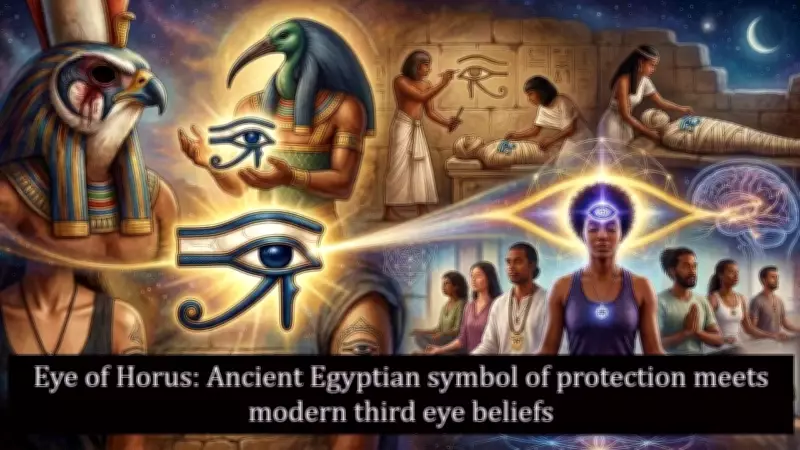
In ancient Egypt, the Eye of Horus was deeply embedded in mythological narratives and daily life. The symbol derives from the legend of Horus, the falcon-headed sky deity who engaged in a fierce battle with his uncle Set to avenge his father Osiris. During this conflict, Horus sustained an injury that resulted in the loss of an eye. However, Thoth, the god of wisdom, miraculously restored it, transforming the event into a powerful metaphor for healing, renewal, and divine intervention.
The ancient Egyptians utilized the Eye of Horus extensively as a protective talisman. It was meticulously carved onto tombs to shield the deceased in the afterlife, worn as amulets by the living to ward off malevolent forces, and incorporated into rituals to ensure safety and prosperity. Historians emphasize that this was far more than mere decoration; it was believed to possess an active, guarding power—a spiritual barrier against danger and harm.

Evolution into Modern Spirituality: The Third Eye Connection
Over centuries, the Eye of Horus has undergone a remarkable transformation, acquiring meanings beyond its original Egyptian context. In New Age and contemporary spiritual circles, it is increasingly associated with the concept of the third eye. This metaphorical eye symbolizes enhanced intuition, perception, and higher consciousness, allowing individuals to see beyond the physical realm into deeper truths.
While the third eye is traditionally linked to Eastern philosophies, particularly the Ajna Chakra in practices like yoga and meditation, the visual and symbolic parallels with the Eye of Horus have led many to merge these ideas. Spiritual practitioners today view the symbol as a tool for fostering clear thought, profound insight, and a heightened understanding of one's environment, effectively marrying ancient wisdom with modern spiritual exploration.
Bridging Ancient and Modern: Themes of Protection and Awareness
Experts caution that despite its global adoption in spiritual practices, the Eye of Horus remains firmly rooted in ancient Egyptian belief systems. The interpretation as a third eye is a modern adaptation, yet the underlying themes of protection and elevated awareness naturally connect the two traditions. The geometric design of the symbol has also sparked discussions in fields like neuroscience, where it is sometimes analyzed in relation to human brain structure and perceptual abilities, further linking it to consciousness and awareness.
Contemporary Relevance: From Jewelry to Wellness Practices
Today, the Eye of Horus continues to thrive in various forms, including jewelry, tattoos, art, and wellness routines. For many, it serves a dual purpose: offering a sense of protection while symbolizing personal awakening and intuitive growth. This enduring appeal highlights how the symbol has adapted to modern times while retaining its core essence as a beacon of protection, healing, and the timeless power of inner vision.
In essence, the Eye of Horus exemplifies how ancient symbols can evolve, saving cultural heritage while inspiring new generations of seekers. Its journey from the tombs of Egypt to the meditation spaces of today underscores a universal human quest for safety, insight, and spiritual connection.