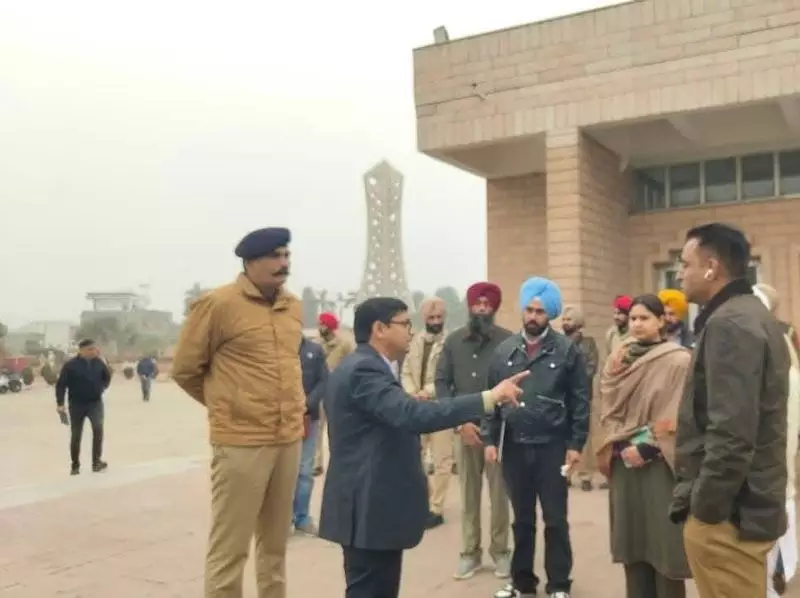
The city of Ludhiana is set to erect a poignant memorial dedicated to the supreme sacrifice of 66 Kuka Sikhs, who were executed by the British colonial government in a single day in 1872. This significant announcement was made by Punjab's Finance Minister, Harpal Singh Cheema, during a recent state function. The memorial aims to permanently honor the valor of these unsung heroes of India's early freedom struggle.
Remembering the Fateful Day of 1872
The historical backdrop of this tribute is both tragic and inspiring. On the 17th and 18th of January, 1872, the British authorities carried out a brutal mass execution of 66 members of the Namdhari Sikh sect, also known as Kuka Sikhs. This horrific event was a direct retaliation for the Kuka movement's act of attacking the cow slaughtering town of Malerkotla. The British, under the command of Deputy Commissioner L. Cowan, lined up and shot the men without any formal trial. The executions were carried out with cannons in the vicinity of the Ludhiana Central Jail.
This act of colonial brutality was not just a punishment but a message intended to crush the spirit of rebellion. The Kuka movement, led by Satguru Ram Singh Ji, was a formidable force against British rule, advocating for Swadeshi principles and challenging imperial authority. The massacre of 1872 stands as a stark testament to the price paid by Indians in their quest for independence, long before the more widely documented events of the 20th century.

A Long-Awaited Tribute Takes Shape
The decision to build a memorial comes as a fulfillment of a longstanding demand from the community and historians to properly recognize this chapter of history. Finance Minister Harpal Singh Cheema, while addressing the gathering, emphasized that the sacrifice of the Kuka Sikhs is a golden chapter in Punjab's history and the broader Indian freedom movement. He stated that the Punjab government, under the leadership of Chief Minister Bhagwant Mann, is committed to preserving and honoring this legacy for future generations.
The memorial is envisioned not just as a structure of stone and mortar, but as a place of reverence and education. It will serve as a permanent reminder of the courage and resilience of those who laid down their lives. The announcement was made at a function where the minister also honored the descendants, or parivars, of the martyrs, acknowledging the enduring connection between the past and the present.
Honoring Legacy and Inspiring Future Generations
The construction of this memorial in Ludhiana carries profound significance. It represents an official act of historical remembrance, ensuring that the story of the 66 Kuka Sikhs is not confined to textbooks but is physically etched into the landscape of the city where they were martyred. This move is seen as a corrective measure to bring a pivotal, yet sometimes overlooked, event into the mainstream narrative of India's fight for freedom.
For the local community and Sikhs worldwide, this memorial will provide a sacred space for reflection and homage. It underscores the Punjab government's focus on celebrating regional history and the diverse strands that contributed to the nation's independence. The project is expected to foster a deeper understanding of the sacrifices made by the Kuka Sikhs, whose defiance against colonial power and cultural imposition marked them as early revolutionaries.
In conclusion, the Ludhiana memorial for the 66 Kuka Sikh martyrs is more than a construction project; it is an act of historical justice. By commemorating the supreme sacrifice of January 1872, the state ensures that the ideals for which these men died—freedom, faith, and resistance—continue to inspire and resonate with people today. It stands as a powerful symbol of remembrance, ensuring that their supreme sacrifice is never forgotten.