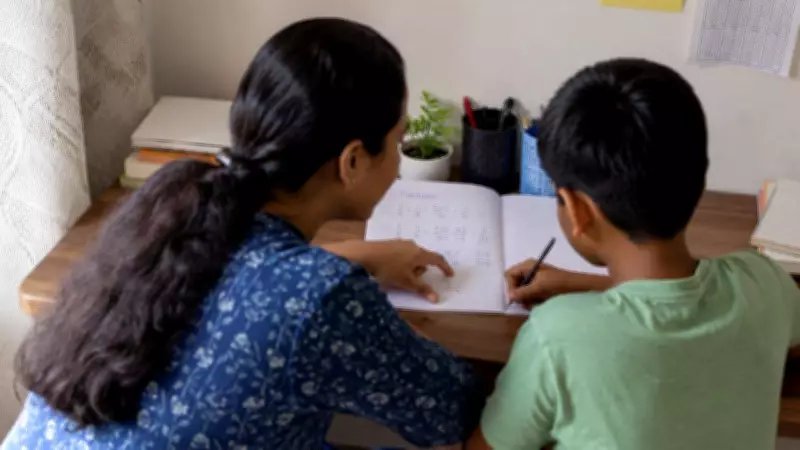
I still have a recurring dream. I am going for my examination and I realise I have not studied a single chapter in Maths! I open that book again and again to see brand new pink and white pages, formula, graphs and my heart begins to pound, palms sweat and I wake up with a start! Thank God, it was a dream, I tell myself and smile...wondering why it still happens, after so many years of passing out of school.
In high school, many classmates took private tuition from our maths teacher. Their results improved rapidly; I remained average in Maths. The teacher, unfortunately, did not help my confidence. He would say things like, “How can you not solve this?” or “Maths is not your cup of tea.” Sometimes he mocked me for scoring well in other subjects but struggling in maths. At fifteen, those words felt absolute. I began to believe them.
By Class 10, I was convinced I would ruin my board exams because of this one subject. Fear sat beside me every time I opened a maths book.

Then, in the last six months before the ICSE exams, everything changed.
The Turning Point: A Tutor Who Believed
A new tutor entered my life. I still remember his name vividly, though I have forgotten many other details from my school years: Hare Ram Gupta. At the time, he charged ₹100 an hour, when my monthly school fee was ₹350. He was expensive, but now I realise why.
What I remember most is not his teaching style, though he explained concepts clearly and patiently. What I remember is his belief in me.
Every class, he would say some version of the same thing: “You are such a good student! You score so well in all the subjects and you are good in maths too, really good” At first, I dismissed it as encouragement adults give children. But he repeated it consistently, sincerely, and specifically. When I solved a problem correctly, he noticed. When I improved, he said so. His compliments were tied to effort and progress, not empty praise.
Something unexpected happened: my performance began to improve. Not overnight, and not magically. I still had to practice, make mistakes, and struggle through difficult problems. But the panic started to loosen its grip. I was no longer trying to prove that I was not “bad at maths.” I was simply learning maths.
By the time my ICSE finals arrived, I had regained my confidence. I ended up scoring unbelievably good marks! The subject that had once felt like a wall became manageable.
Inheriting Stories, Not Just Genes
Years later, when my son—naturally curious and bright in most subjects—reached Class 6, an old fear returned. I worried he might inherit my acumen around maths. I caught myself watching his homework too closely, feeling tense before his tests, bracing for signs that he was struggling.
And then I realized something important: children do not only inherit our abilities or weaknesses. They also inherit our stories about ourselves.
For years, my story had been: “I am bad at maths.” But that was never the full truth. The fuller truth was: “I was a capable student who lost confidence because of repeated criticism, and regained it when someone believed in me.”
That is the story I wanted to pass on to my son. I started telling him daily, " Maths is your favourite subject, you do so well in maths! Oh I think you love to study maths! You are so smart! You can do anything! He started loving maths even more and it did become is favourite subject in the next few years.
Marks Do Not Matter, Confidence Does
Not that marks do not matter at all—they do, in practical ways. Not that confidence alone solves everything—it doesn’t. But confidence changes how we approach difficulty. A child who believes “I can improve” will keep trying longer than a child who believes “I am just not made for this.” I think often about the difference between my two maths teachers. One used shame as motivation. The other used belief. Both taught the same subject. Only one taught me that I was capable of learning it. And perhaps that is the deeper lesson, far beyond mathematics: people grow into the expectations placed upon them. Especially children. Especially by adults they trust.

The other day I was sitting in a Delhi stadium and watching my son play football. While I was totally unmindful of how he was performing and was only focusing on how happy he looked while playing, a couple sitting next to me appeared super tensed. The father was constantly shouting-Kick hard, kick hard! Why can't you! Oh no, you're ruining it! And would then keep telling his wife, " Iske bas ki nahi hai (He can't do it).
I felt so deeply sorry for them. Parents unnecessarily pressurising parents in a casual sport and using negative terms like -iske bas ki nai hai. What if the child does not perform well? In the larger scheme of things, it was only one game on an ordinary evening in his life. Years from now, the score would hardly matter. What should have mattered most was that he enjoyed himself, learned something new, and had fun.
Why Positive Parenting Matters
Positive parenting, often referred to as gentle parenting, focuses on building a strong connection with children and guiding their behaviour rather than relying on punishment or fear. At its core, it combines clear boundaries with empathy, respect, and understanding. The goal is not simply to enforce rules but to help children understand the reasons behind them. Children are more likely to learn and cooperate when they know why certain behaviours are expected. Instead of responding with punishment alone, positive parenting encourages conversations about choices, consequences, and responsibility. Consistent family rules create a sense of security and predictability, helping children develop confidence, self-discipline, and important life skills as they grow.
A research titled, Positive Parenting, Effortful Control, and Developmental Outcomes across Early Childhood published in National Library of Medicine says, "Parents who are positive and supportive of their children in stressful situations (like the puzzle task used here) may help children deploy attention and focus and reduce negative arousal. Such supportive parental practices may help children to constructively deal with their emotions and engage in successful coping."
Affirmations That Work Like Magic
- Saying "You can't do" is not challenging your child, but actually demeaning them and planting in their mind a perception about themselves. Always say, "I know you can do it!"
- Keep focussing on the good qualities of your child and even if the child is not really good at something, you can still say, " You are trying hard and is showing results, you are on way to become the best."
- But what to do if the child does not study? Have patience . Keep telling almost daily to the child and to everyone, " My child is very sincere, he studies. Say this to your child," I know you are a good child, I know you will study well today." Remember, like habits, positive words take time to make an impact.
- What if your child scores really bad marks? "My child is very sincere, this time he is really working hard to get better marks. My child will definitely score well this time."
Parenting is often an act of faith. You repeat the same encouraging words, offer the same reassurance, and hope that somehow it is reaching your child. More often than not, it is. Even when the results are not immediate, those affirmations slowly shape how children see themselves and the world around them. One day, the confidence, kindness, and strength they display may well be an echo of the words you chose to say today.