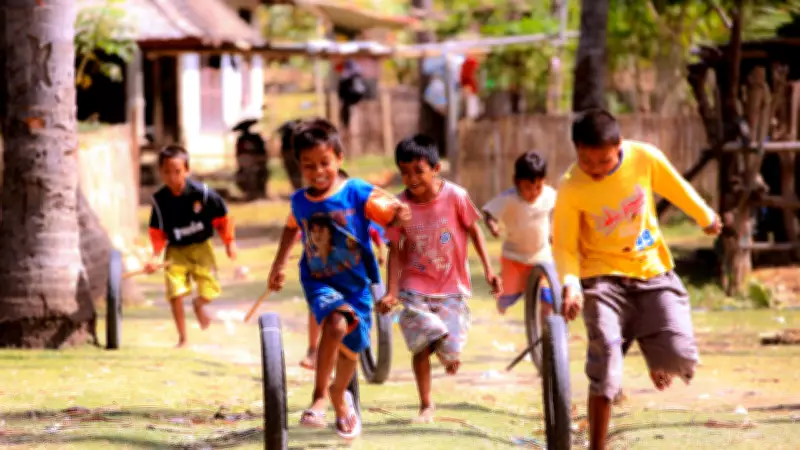
Childhood in the 1990s followed a rhythm that feels almost unfamiliar today. It was a time before smartphones, social media and on-demand entertainment shaped every spare moment. Children learned patience by waiting for their favourite TV shows, independence by exploring their neighbourhoods and creativity by making their own fun outdoors. Questions were answered through books, teachers or family members rather than a quick internet search. While today's children enjoy remarkable convenience and connectivity, many of the everyday experiences that defined growing up in the 90s have become increasingly rare. Those small moments quietly taught resilience, resourcefulness and real-world social skills.
Entertainment Did Not Arrive Instantly
Boredom had a very different shape then. Children built entire afternoons out of whatever was available. They played cricket in lanes, invented games with chalk and stones, made up rules halfway through and argued them out face to face. If there was music, it came from cassettes, CDs or the radio. If there was a movie, it was watched in full, often with the same family members, sometimes on a small television with that faint hum that older homes still remember well. Entertainment was less personalised, but it was also more shared.
Waiting Was Part of the Routine
90s kids learned patience almost by accident. Television ran on fixed schedules. If a favourite cartoon came on at 5 p.m., you had to be there at 5 p.m. Miss it, and that was the end of it unless someone had recorded it. There were no instant replays on demand, no endless scrolling and no 'watch later' button to rescue the moment. Even simple things, like calling a friend, depended on whether someone was at home and whether the landline was free. Waiting was normal, and it taught children to sit with anticipation instead of rushing to satisfy it.

You Had to Ask People, Not Search the Internet
A 90s childhood involved looking things up in the most human way possible. Homework meant encyclopedias, parents, teachers, neighbours and the occasional older cousin who acted like a subject expert. If you wanted the meaning of a word or the capital of a country, you could not summon an answer in seconds. You had to ask, read, compare or simply remember it for later. That made curiosity slower, but also more social. Knowledge was something passed around, not just retrieved.
Getting Lost Was a Real Risk
Children in the 90s were often allowed to roam a little more freely, but without the digital safety net that exists now. There were no live location pins, no constant check-ins and no parental group chat tracking every movement. That meant learning directions, landmarks and street names mattered. Children remembered where the corner shop was, how to get back home and which house belonged to which friend. It was a practical kind of independence, one that came from experience rather than app notifications.
Phone Calls Were a Social Event
Before smartphones turned communication into a constant stream, a call felt more deliberate. The whole house might hear the landline ring. Someone could answer, ask who was calling and decide whether the call was for them. Privacy was limited, but there was a ritual to it. Children also had to speak clearly, quickly and often nervously. There were no voice notes, no emoji shortcuts and no chance to quietly edit a message after sending it. Talking itself was a skill, not just a tap on a screen.
Play Happened in the Physical World
Perhaps the biggest difference is that 90s kids learned how to occupy themselves in the world outside. They climbed, ran, scraped knees, made friends in person and came home only when the streetlights came on or a parent called from the balcony. They learned how to negotiate, share, wait their turn and settle disputes without an online buffer. They learned how to be bored, and then how to turn boredom into play. That may be one of the most underrated childhood lessons of all.

A Slower Childhood Left Its Mark
The 90s were not perfect, and nostalgia can make the past look softer than it really was. But childhood then carried a rhythm that is increasingly rare now. It was slower, less curated and far less immediate. Children today are growing up with extraordinary access, convenience and connection. But the 90s also gave kids a different education, one built from waiting, wandering, remembering and making do. Those lessons still matter, even if they now live in memory more than in daily life.