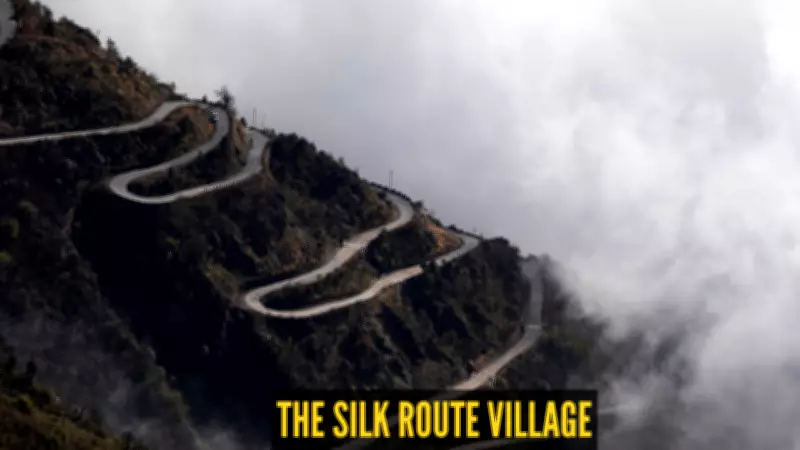
In the eastern Himalayas, where cold breezes flow and roads twist like ribbons, lies a quiet mountain settlement called Zuluk in Sikkim. This place offers a gradual journey toward peace, as cities fade, traffic thins, and travelers find themselves surrounded by steep slopes, forests, and roads that feel surreal.
The Unique Charm of Zuluk
Zuluk sits at an altitude of around 10,000 feet and was once part of the ancient Silk Route connecting India with Tibet. Today, it is renowned for its dramatic 32 hairpin bends that climb the mountain in tight loops, offering one of the most visually striking road journeys in India.
Location and Accessibility
Zuluk is located in East Sikkim, a high-altitude region near the Indo-China border. It lies on the old trading route that once linked Kalimpong with Lhasa through passes like Nathu La and Jelep La. Due to its proximity to the international border, the entire region is under restricted access, which keeps the landscape pristine compared to more commercial hill stations.

The Famous 32 Hairpin Bends
The highlight of Zuluk is the zigzag road that climbs sharply up the mountain. Locally called a maze road, from above it looks like a coiled snake frozen in motion. These 32 hairpin bends were engineered and maintained by the Border Roads Organisation (BRO). The challenge is not just the number of turns, but also steep gradients, sudden fog, snowfall in winter, and landslides during monsoon. The best viewpoint is Thambi View Point, where the entire sequence of bends unfolds below, and on clear mornings, the snow peaks of Kanchenjunga glow in soft gold and pink.
How to Reach Zuluk
Most travelers begin from Gangtok or Siliguri (New Jalpaiguri). From Siliguri, the route goes through Rangpo, Rongli, and Phadamchen. From Gangtok, it passes through Tsomgo Lake and Kupup before descending to Zuluk. The nearest airport is Bagdogra, and the nearest railway station is New Jalpaiguri. The road journey takes roughly 6–8 hours. Self-driving is not permitted; only registered local vehicles and drivers are allowed on the Silk Route circuit for safety and terrain reasons.
Permits and Travel Rules
Since Zuluk is in a sensitive border zone, permits are mandatory. Indian citizens need a Protected Area Permit (PAP), issued through authorized travel agents or district offices like Rongli. Foreign nationals require a Restricted Area Permit (RAP). Aadhaar is not always accepted; Voter ID or passport is preferred. Entry to high-security zones like Nathu La requires a separate permit arranged in advance from Gangtok.
What the Journey Feels Like
Travelling to Zuluk is about experiencing constant landscape changes: from green valleys to pine forests, then to barren alpine slopes. Accommodation is mostly in homestays with simple rooms, thick blankets, basic food, and traditional heating stoves called bukhari. Meals include rice, dal, vegetables, noodles, momos, and warm butter tea.
Best Time to Visit
The recommended months are March to May and October to early December. Spring brings rhododendrons and clearer skies; autumn offers sharp visibility of Himalayan ranges. Winter is dramatic but difficult due to heavy snow and road closures. Monsoon is avoided because of landslides and poor visibility. For photographers, bikers, and road-trippers, Zuluk is a dream destination and a reminder of untouched mountain life.