West Asia Tensions Escalate, Putting Nearly 10 Million Indians at Heightened Risk
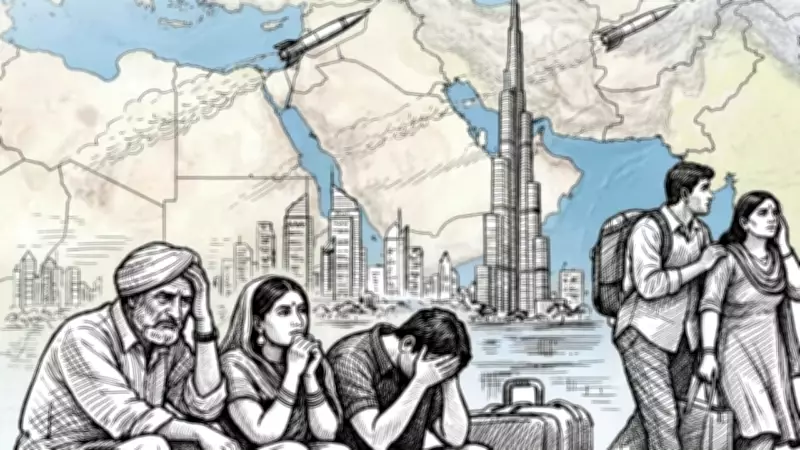
As military tensions surge in West Asia following recent US-Israel operations against Iran and Tehran's retaliatory actions, the safety of approximately 10 million Indian nationals residing across the region has become a pressing concern. Prime Minister Narendra Modi on Monday described the volatile situation as a "matter of grave concern," firmly reiterating India's position that disputes must be resolved through dialogue and diplomacy.
Indian Government's Response and Advisory Measures
The Ministry of External Affairs (MEA) has officially stated it is "deeply concerned" by the escalating hostilities and has urgently called upon all involved parties to exercise maximum restraint. Indian diplomatic missions throughout West Asia remain actively engaged with the Indian community, issuing necessary advisories and maintaining constant communication to ensure the safety and well-being of nationals.
In a significant diplomatic move, External Affairs Minister S. Jaishankar held separate discussions with Iranian Foreign Minister Seyed Abbas Araghchi and Israeli Foreign Minister Gideon Sa'ar. During these conversations, he conveyed India's profound apprehensions regarding the situation and emphasized the critical need for de-escalation.

Vast Indian Diaspora in the Gulf Region
The Gulf Cooperation Council (GCC) countries host one of the largest and most significant overseas Indian communities globally. The demographic breakdown is substantial:
- United Arab Emirates (UAE): Approximately 3.5 million Indians, constituting roughly 35% of the total population, making it the single largest hub of Indian citizens abroad.
- Saudi Arabia: Home to about 2.7 million Indian nationals.
- Kuwait: A community of around 1 million Indians.
- Qatar: Nearly 800,000 Indian residents.
- Oman: Approximately 660,000 Indians.
- Bahrain: About 350,000 Indian nationals.
Smaller yet significant Indian communities are also present in Jordan, Iraq, and Israel. The Indian workforce in the region is diverse, spanning from construction and maintenance roles to highly skilled professionals in critical sectors such as healthcare, finance, and information technology.
Economic and Strategic Implications for India
The instability in West Asia carries profound economic consequences for India. The region is a major source of vital remittances. In the fiscal year 2023–24, remittances from the UAE alone accounted for nearly 19% of India's total inward remittances, highlighting the significant financial dependency and the potential economic fallout from any prolonged conflict.
Furthermore, the recent military strikes have intensified focus on the Strait of Hormuz, a critical global maritime chokepoint for oil shipments. This vital shipping route is essential for India's energy security, prompting officials in New Delhi to activate contingency plans to safeguard the nation's energy supplies and ensure continuity.
Security Reviews and Logistical Challenges
The Cabinet Committee on Security (CCS) has conducted a high-level review of the rapidly evolving situation, with the safety of Indian nationals flagged as the top priority. Amid the operational challenges, including airspace closures in Iran, authorities in Tehran have permitted stranded foreign students, including Indians, to exit the country via land borders and have made provisions for the rescheduling of academic examinations.
The Indian government continues to monitor developments closely, balancing diplomatic outreach with practical measures to protect its vast diaspora and secure its national economic and strategic interests in a region now marked by heightened uncertainty and risk.