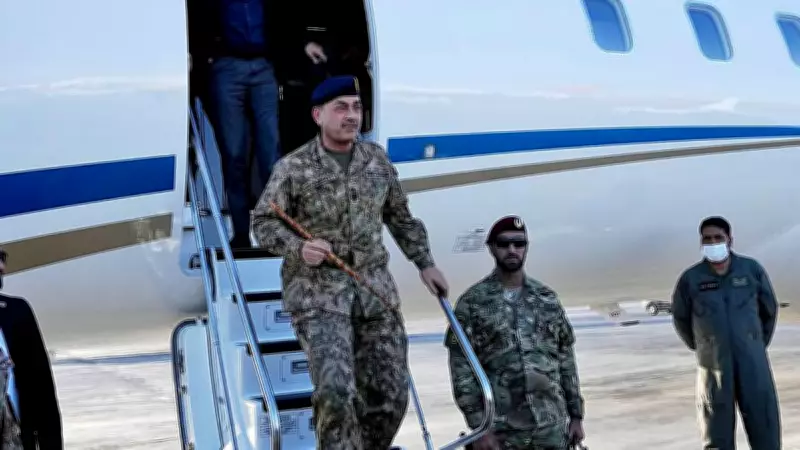
A covert oil partnership between former Pakistani intelligence chief General Asim Munir and Iran's Islamic Revolutionary Guard Corps (IRGC) reportedly played a decisive role in shielding Saudi Arabia from planned Iranian missile strikes in July 2026, according to multiple international media reports.
Background of the Venture
The arrangement, described by analysts as an unprecedented backchannel, involved a privately held oil trading company registered in the United Arab Emirates. Munir, who served as head of Pakistan's Inter-Services Intelligence (ISI) until 2022, allegedly leveraged his extensive network to facilitate crude oil purchases from IRGC-controlled entities at discounted rates. In return, the IRGC provided intelligence about imminent missile launches targeting Saudi oil infrastructure and military bases.
How the Shield Operated
Sources familiar with the matter indicated that the IRGC tipped off Saudi officials via Munir's intermediaries at least several hours before each strike. This early warning allowed Saudi air defense systems, including Patriot batteries, to intercept ballistic missiles and drones with high success rates. One Western intelligence analyst noted that the arrangement effectively created a firewall that prevented a major escalation between the two regional powers.

Impact on Regional Dynamics
The revelation has sparked intense debate about the role of private actors in state-to-state conflicts. Saudi Arabia has not officially commented, but a Gulf diplomat acknowledged that the kingdom had maintained informal communication channels with Iran through various backchannels. The Munir-IRGC venture appears to have been the most direct and effective, as it combined business interests with strategic intelligence sharing.
For Pakistan, the affair raises questions about the independence of its former intelligence chief and the potential breach of neutrality in the Iran-Saudi rivalry. The Pakistani government has not issued any statement, but analysts suggest that Munir's actions may have been tacitly approved by certain circles within the establishment to prevent a wider war that would destabilize the region.
Future Implications
The success of this private diplomacy could inspire similar covert initiatives in other conflict zones. However, critics argue that such arrangements are inherently risky, as they depend on the discretion of individuals and can be misinterpreted by adversaries. The oil venture itself is believed to have been dissolved shortly after the July standoff, with both sides returning to more formal diplomatic channels. Nonetheless, the episode underscores the evolving nature of modern geopolitics, where economic and intelligence assets are increasingly intertwined.