

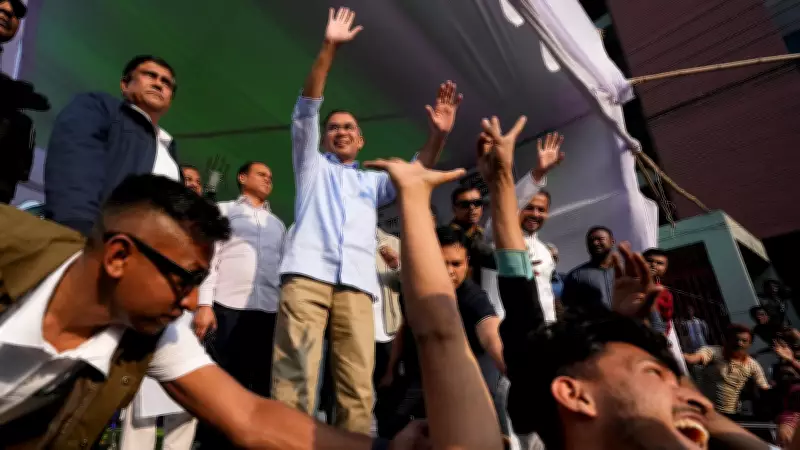
Bangladesh Elections 2026: Nation Votes Amid Political Transformation
Bangladesh is poised for a pivotal moment as the country prepares to conduct its 13th parliamentary elections on Thursday, February 12, 2026. This electoral event marks a significant juncture, occurring approximately 18 months after a widespread student-led uprising successfully ousted the administration of former Prime Minister Sheikh Hasina, who was leading the Awami League. In the aftermath, an interim government assumed control under Chief Adviser Muhammad Yunus, setting the stage for this crucial democratic exercise.
Frontrunner Emerges from Exile
At the forefront of the electoral race is Tarique Rahman, the 60-year-old son of former Prime Minister Khaleda Zia and chairman of the Bangladesh Nationalist Party (BNP). After 17 years of self-imposed exile, Rahman returned to Dhaka, where he has quickly become the widely acknowledged frontrunner. His campaign has centered on key promises, including job creation, the maintenance of law and order, and an enhanced level of freedom of speech, resonating with many voters seeking change.
Electoral Dynamics and Key Players
The election landscape is dominated by two primary political entities: the BNP and its former ally, Jamaat-e-Islami. Notably, Sheikh Hasina's Awami League has been barred from participating in the polls, shifting the competitive balance. This exclusion has positioned the BNP as the apparent frontrunner, with Rahman's leadership galvanizing support across various constituencies.

Voting Logistics and Security Measures
Voting is scheduled to commence at 7:30 AM local time across 299 parliamentary constituencies, continuing until 4:30 PM. However, the election commission has canceled voting in one constituency following the death of a candidate. A total of 50 political parties are contesting, fielding 1,755 candidates, alongside 273 independent contenders. To ensure a secure and orderly process, Bangladesh's Chief Election Commissioner AMM Nasir Uddin has confirmed the deployment of nearly 900,000 law enforcement personnel.
Simultaneous Referendum on Reforms
In addition to the parliamentary elections, voters will participate in a referendum on an 84-point reform package. This dual electoral process underscores the nation's commitment to addressing systemic changes and governance issues that have emerged in the wake of the recent political upheaval.
Historical Context and Future Implications
The 2026 elections represent a critical test for Bangladesh's democratic institutions, following the student-led uprising that catalyzed significant political shifts. With Tarique Rahman's return and the BNP's strengthened position, the outcome could reshape the country's political trajectory, influencing policies on economic development, social freedoms, and international relations.






