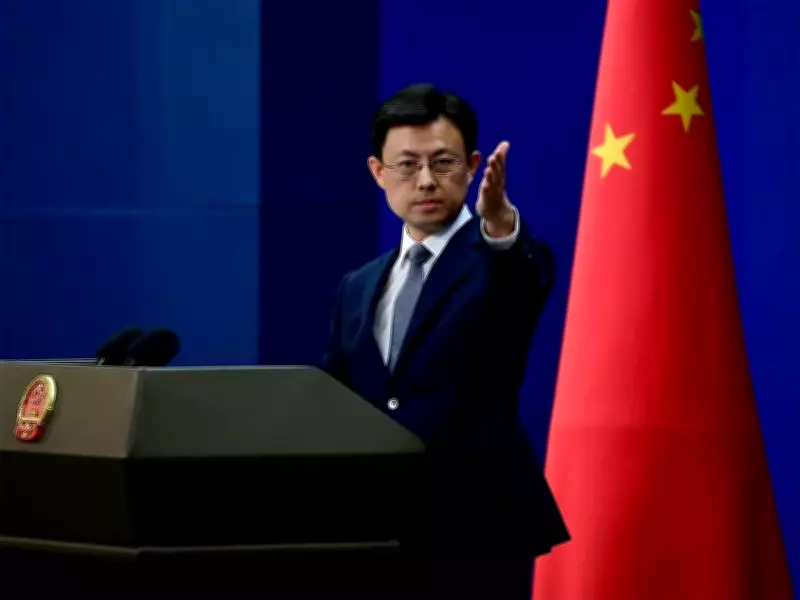
China on Friday emphasized that its cooperation with Bangladesh on the Teesta River project is not aimed at any third party and should not be influenced by external factors, responding to questions about India's concerns regarding Beijing's involvement in the river development initiative.
China's Stance on Teesta Cooperation
During a regular press conference, Chinese Foreign Ministry spokesperson Guo Jiakun stated that Beijing is ready to support Bangladesh's Teesta River comprehensive treatment and rehabilitation project, describing it as a livelihood initiative that Dhaka considers highly important. "China stands ready to seek greater synergy in development strategies with Bangladesh and step up exchange and cooperation in such areas as economy and trade, water conservancy and livelihood," Guo said. He added, "The comprehensive treatment and rehabilitation of the Teesta River is a livelihood project the Bangladeshi side attaches high importance to. China is ready to do what it can to support this project."
Addressing concerns about potential geopolitical implications, the spokesperson stressed that the partnership between Beijing and Dhaka is not directed against any country. "I would like to stress that China-Bangladesh cooperation does not target any third party and should be free from third-party influence," Guo stated.

Background of Teesta River Dispute
The Teesta River, which flows through India and Bangladesh, has been a longstanding subject of discussions between the two neighboring countries, particularly over water sharing and river management issues. Reports suggest that China and Bangladesh have reached a cooperative understanding on the Teesta River project, along with cooperation on other rivers.
Last month, Official Spokesperson for the Ministry of External Affairs, Randhir Jaiswal, clarified India's stance on Bangladesh engaging with China regarding the Teesta issue, noting that such matters are addressed under "structured bilateral mechanisms" at regular intervals with Dhaka. "Regarding Teesta, India and Bangladesh share 54 rivers. We have structured bilateral mechanisms to discuss all water-related issues, and these mechanisms continue to meet at regular intervals," he said during a press briefing.
Water Sharing Agreements and Challenges
The Ganga Water Treaty (1996) governs water sharing between India and Bangladesh during the dry season at Farakka Barrage. During lean months, Bangladesh accuses India of releasing insufficient water, impacting agriculture and livelihoods downstream. Rising concerns over climate change have intensified disputes over reduced water availability.
Bangladesh demands an equitable share of Teesta waters, but an agreement remains pending due to opposition from West Bengal, which cites its own water needs. In 2011, an attempt was made to resolve the dispute when then-Prime Minister Manmohan Singh visited Bangladesh. A proposed agreement aimed at allocating 37.5% of Teesta's waters to Bangladesh and 42.5% to India, but the West Bengal government opposed it, arguing it would harm its agricultural interests.
An ad-hoc agreement on sharing Teesta waters was reached in 1983, allocating 36% to Bangladesh and 39% to India, leaving 25% to be decided later. However, this agreement was never fully implemented.