

MoU Signed to Operationalize 1994 Yamuna Water Pact
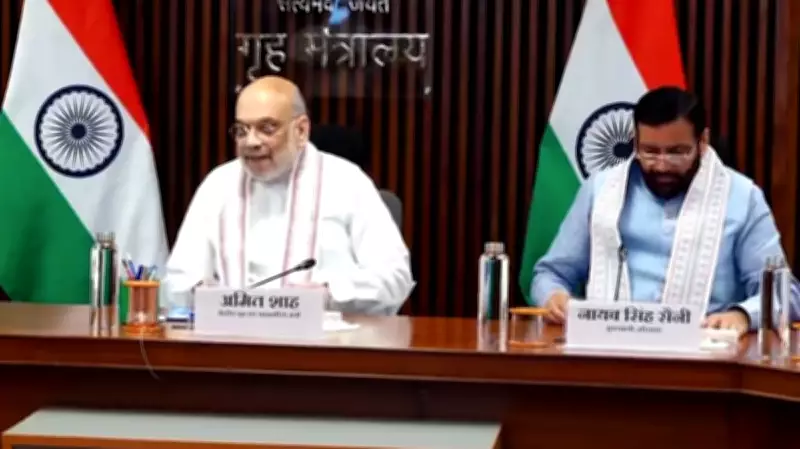
Haryana and Rajasthan have signed a Memorandum of Understanding (MoU) to implement the 1994 Yamuna water agreement, a move that will ensure Rajasthan receives its allocated share of water from the Yamuna River. The agreement was formalized in the presence of Union Home Minister Amit Shah, Haryana Chief Minister Nayab Singh Saini, and Rajasthan Chief Minister Bhajan Lal Sharma.
Under the MoU, Rajasthan will get its due water through an underground water pipeline from the Hathini Kund barrage during the monsoon months. This infrastructure is expected to streamline water delivery and reduce losses from evaporation and seepage.
Background of the 1994 Agreement
The 1994 agreement between Haryana and Rajasthan allocated specific shares of Yamuna water to each state. However, implementation faced delays due to technical and logistical challenges. The new MoU aims to resolve these issues by laying a dedicated pipeline network.

According to officials, the pipeline will carry water from Hathini Kund barrage in Haryana to the border of Rajasthan, ensuring a reliable supply during the monsoon season when the river flows are higher.
Impact and Benefits
The agreement is expected to benefit farmers and communities in Rajasthan, particularly in the arid regions that depend on Yamuna water for irrigation and drinking purposes. Haryana will also benefit from a more structured water management system.
Union Home Minister Amit Shah stated, "This MoU is a historic step towards resolving inter-state water disputes and ensuring equitable distribution of water resources." He emphasized the role of the central government in facilitating the agreement.
Haryana Chief Minister Nayab Singh Saini said, "We are committed to honoring the 1994 agreement and ensuring that Rajasthan gets its rightful share without any further delay."
Technical Details of the Pipeline
The underground water pipeline from Hathini Kund barrage is designed to transport approximately 1,200 cusecs of water during the monsoon months. The project is estimated to cost around ₹2,500 crore and will be funded jointly by the central and state governments.
Construction is expected to begin within six months and be completed in three years. The pipeline will have a capacity to carry water for both irrigation and drinking purposes, benefiting over 10 lakh people in Rajasthan.
Broader Context of Water Sharing
The Yamuna water sharing has been a contentious issue among states in the region. The 1994 agreement was signed to allocate water among Haryana, Rajasthan, Uttar Pradesh, and Delhi. However, disputes over implementation have persisted.
This MoU is seen as a model for resolving similar inter-state water disputes. It underscores the importance of infrastructure development in ensuring water security.
Officials from both states expressed optimism that the agreement will lead to better cooperation and sustainable water management in the region.






