India and Canada Forge Stronger Economic Partnership with Ambitious Trade Goals
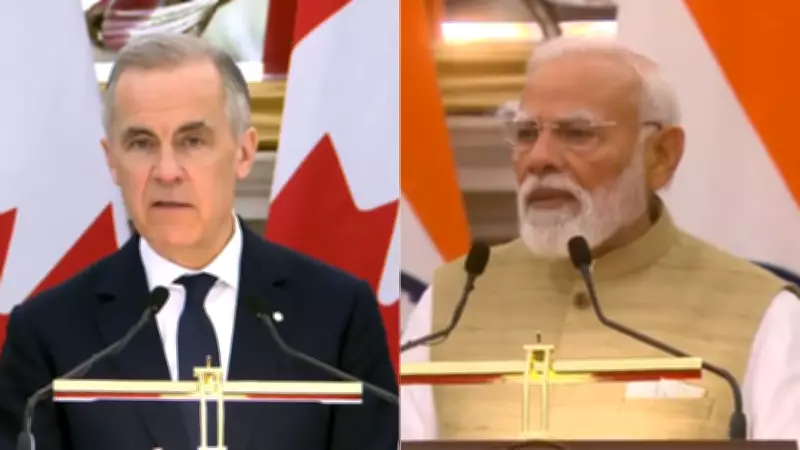
In a significant move to bolster economic relations, Prime Minister Narendra Modi and Canadian Prime Minister Mark J Carney convened at Hyderabad House in New Delhi on Monday. The leaders committed to a trade-led partnership, setting an ambitious target to elevate bilateral trade to $50 billion by the year 2030. This strategic decision underscores a mutual dedication to deepening economic ties and fostering long-term collaboration between the two nations.
Accelerating CEPA Negotiations for Enhanced Cooperation
Central to the discussions was the acceleration of negotiations for a Comprehensive Economic Partnership Agreement (CEPA). Prime Minister Modi emphasized the urgency of finalizing this agreement, stating, "Unlocking the full potential of economic cooperation is our priority. Therefore, we have decided to finalize a comprehensive economic partnership agreement soon." He highlighted that the CEPA would unlock new investment and employment opportunities across various sectors in both India and Canada, thereby catalyzing economic growth and innovation.
During the bilateral talks, the leaders exchanged Terms of Reference for the CEPA, laying a formal groundwork for future negotiations. Additionally, they explored cooperation in critical minerals, uranium procurement, maritime domain awareness, and the establishment of a defence dialogue, reflecting a comprehensive approach to bilateral engagement.

Key Agreements and Memoranda of Understanding Exchanged
Several memoranda of understanding were exchanged in the presence of the two leaders, symbolizing concrete steps towards enhanced collaboration:
- Canadian Minister of International Trade Maninder Sidhu and Union Commerce Minister Piyush Goyal exchanged documents related to the CEPA Terms of Reference and a Declaration of Intent on a Joint Pulse Protein Centre of Excellence.
- Canadian Foreign Affairs Minister Anita Anand and External Affairs Minister S. Jaishankar exchanged MoUs covering critical mineral cooperation, promotion of renewable energy use, and cultural cooperation.
- A trilateral MoU involving India, Canada, and Australia on cooperation in technology and innovation was also exchanged, highlighting the expanding scope of international partnerships.
Canadian Investment and Confidence in India's Growth
Prime Minister Modi pointed to the substantial Canadian investment in India as a testament to the strong bilateral relationship. He noted, "Canadian pension funds have invested $100 billion in India. This is a symbol of their deep belief in India's growth story." This investment underscores the confidence that Canadian entities have in India's economic potential and stability, further motivating efforts to enhance trade and cooperation.
The leaders also planned to engage with business leaders later in the day, with their recommendations expected to shape the future economic roadmap. This inclusive approach aims to incorporate private sector insights into policy-making, ensuring that the partnership addresses practical business needs and opportunities.
Historical Context and Future Prospects
Recalling their previous interaction at a G7 meeting in Canada, Prime Modi praised Carney's expertise, saying, "There are very few people in the world whose CVs include central banking leadership in two countries. Since our first meeting, our relationship has been energised, mutual trust and positivity have blossomed." This personal rapport is seen as a catalyst for the renewed focus on economic collaboration.
The visit is widely regarded as a pivotal step in the ongoing normalization of India-Canada relations, with both sides placing strong emphasis on trade, investment, and long-term economic cooperation. By targeting a $50 billion trade volume and expediting the CEPA, India and Canada are positioning themselves for a robust and mutually beneficial economic partnership in the coming decade.