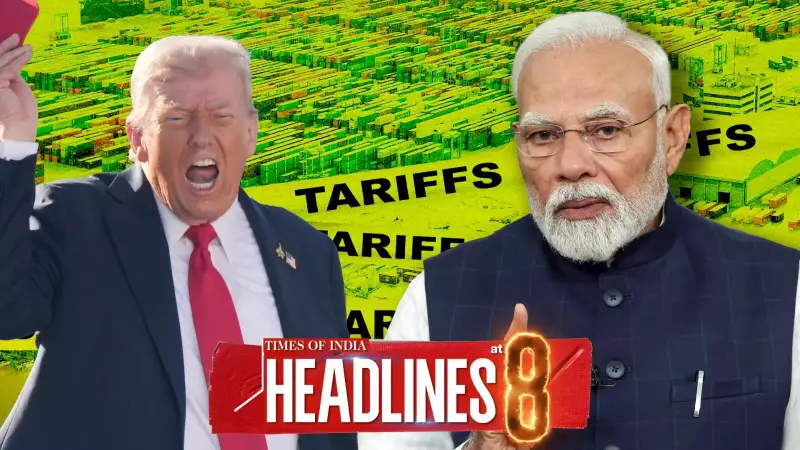
The Indian government has issued a firm rebuttal to a senior official from the former Trump administration who placed the blame for a stalled trade agreement squarely on Prime Minister Narendra Modi. The controversy erupted after US Commerce Secretary Howard Lutnick suggested the deal fell through because PM Modi did not make a crucial phone call to then-President Donald Trump.
US Official Points Finger at Indian Leadership
According to claims made by US Commerce Secretary Howard Lutnick, the much-anticipated trade deal between India and the United States could not be finalized due to a lack of initiative from the Indian side. Lutnick asserted that while the Trump administration was eager to sign an agreement at an early date, it was New Delhi that "couldn't get it done when they needed to." The implication was that a direct conversation between the two leaders was a necessary step that did not occur.
This statement, made on January 9, 2026, has added a new layer of complexity to the post-election diplomatic landscape between the two nations, recalling the often-unpredictable nature of trade negotiations during Trump's presidency.

India's Firm Denial and Diplomatic Pushback
In a swift and unambiguous response, Indian officials have labeled Lutnick's version of events as "not accurate." The Indian government has disputed the characterization that Prime Minister Modi's actions—or lack thereof—were the bottleneck in the trade talks.
This rebuttal underscores India's stance that the negotiations were multifaceted and that attributing the delay to a single missed call oversimplifies the intricate process of international trade agreements. The Indian side has consistently maintained that any deal must be balanced and in the nation's strategic economic interest.
Parallel Political Drama: TMC Protests Escalate to Delhi
Amid this diplomatic exchange, a significant domestic political confrontation unfolded. West Bengal Chief Minister Mamata Banerjee led a major protest rally in Kolkata against recent Enforcement Directorate (ED) raids on the office of Prashant Kishor, chief of the Indian Political Action Committee (I-PAC).
The political showdown quickly reached the national capital, where Members of Parliament from Banerjee's Trinamool Congress (TMC) were detained by police. They were protesting outside the office of Union Home Minister Amit Shah, amplifying their dissent against the central agency's actions, which they deem politically motivated.
These simultaneous developments highlight a day of significant political and diplomatic friction for India, dealing with critical external relations while managing heated internal political opposition.