

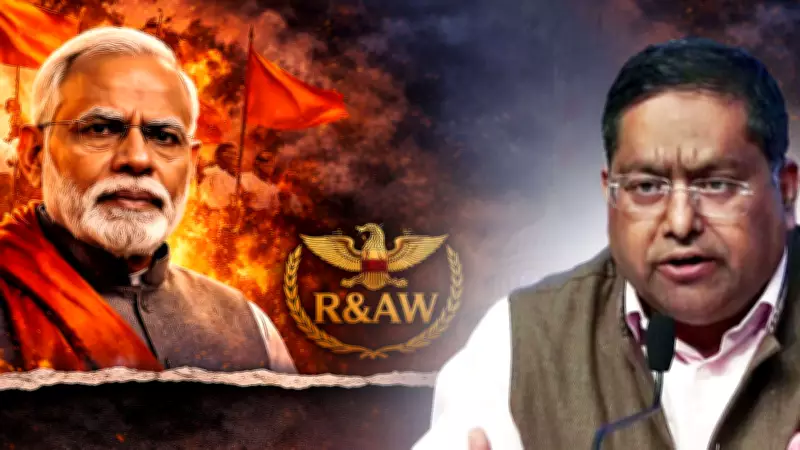
India's MEA Slams USCIRF Report as 'Biased Characterization'
The Ministry of External Affairs has issued a strong rebuttal to the 2026 report from the United States Commission on International Religious Freedom, which recommended imposing sanctions on the Rashtriya Swayamsevak Sangh and India's external intelligence agency, the Research and Analysis Wing. The report cited alleged violations of religious freedom as the basis for these measures, but India has firmly rejected these claims as unfounded and ideologically driven.
MEA Spokesperson Denounces Report as Distorted and Selective
MEA spokesperson Randhir Jaiswal stated that the USCIRF has once again presented a "distorted and selective" portrayal of India. He emphasized that the commission's findings rely on questionable sources and ideological narratives rather than objective facts. Jaiswal argued that such repeated and unsubstantiated claims significantly weaken the credibility of the commission itself, undermining its role in promoting genuine religious freedom globally.
In his response, Jaiswal highlighted the need for the USCIRF to engage in self-reflection. He pointed to incidents within the United States, including the vandalism of Hindu temples and intimidation faced by members of the Indian diaspora, as areas the commission should examine more closely. This call for introspection underscores India's stance that religious freedom issues are not confined to any single nation and require a balanced, evidence-based approach.

Report Designates India as a 'Country of Particular Concern'
The USCIRF report designated India as a "country of particular concern" over religious freedom issues, a classification that has drawn sharp criticism from Indian officials. This label is part of the commission's annual assessment, which often sparks diplomatic tensions between India and the United States. The MEA's rejection of the report reflects a broader pattern of India challenging external critiques that it views as biased or politically motivated.
India's response aligns with its longstanding position on sovereignty and non-interference in internal affairs. The government maintains that its policies and actions are in compliance with international norms and domestic laws, aimed at protecting the rights of all citizens regardless of religious affiliation. The MEA's statement serves as a reminder of India's commitment to addressing religious freedom through its own legal and social frameworks, rather than through external pressure or sanctions.
This incident highlights the ongoing complexities in India-US relations, particularly concerning human rights and religious freedom. As both nations navigate their diplomatic ties, such reports and responses are likely to continue shaping the discourse around global religious freedom standards and national sovereignty.






