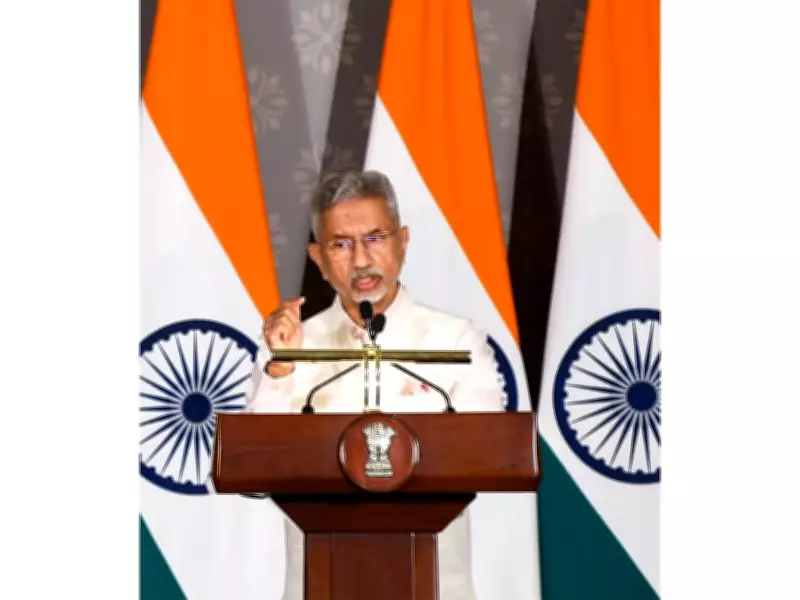
External Affairs Minister S Jaishankar on Tuesday highlighted that India has signed 28 Migration and Mobility Partnership Agreements (MMPAs) or their equivalents with 26 countries, with several others currently under negotiation. Speaking at the Human Resource Mobility Forum in New Delhi, Jaishankar emphasized that trusted mobility pathways can contribute to stronger economies, more resilient societies, and deeper international cooperation.
Global transformation and demographic shifts
Jaishankar noted that the world is undergoing a profound transformation, with demographic patterns changing sharply across continents. Technological innovation, including artificial intelligence, automation, digitalization, and the green transition, is reshaping industries at an unprecedented pace. However, challenges from yesteryears—such as health, manufacturing, construction, and agriculture—remain. Societies are becoming increasingly interconnected, and the ability of nations to think creatively will significantly influence their future prosperity.
Human resources as a critical factor
The minister stated that the movement of talent and skills has acquired increased importance against this backdrop. For much of modern history, economic discussions centered on trade, investments, and the movement of goods and capital. Now, human resources have emerged as one of the most critical factors of economic development. “Countries are increasingly recognizing that access to skilled and adaptable talent is essential for sustaining growth, fostering innovation, and maintaining productivity. In fact, we would even say, for maintaining their quality of life,” he said.

India's vision for mobility
Jaishankar explained that India's vision for mobility is not limited to facilitating overseas employment opportunities. “We view mobility as a very important pillar of international cooperation. These partnerships are based on mutual benefit, shared responsibility, and long-term sustainability. When managed effectively, such partnerships create value for the source countries, for the destination countries, for employers, for workers, for communities,” he added.
Combatting illegal migration
The minister also stressed the collective responsibility of nations to combat illegal migration, exploitative practices, fraudulent intermediaries, and human trafficking. These challenges compromise the credibility of legal mobility ecosystems and can place vulnerable individuals at risk. India's commitment to safe and legal mobility is reflected in the eMigrate platform, which has issued more than 50 lakh (5 million) emigration clearances since its inception. This digital ecosystem has become a global example of leveraging technology to protect migrant workers while facilitating mobility.
Future workforce requirements
Jaishankar noted that advances in artificial intelligence and automation are expected to transform labor markets across many geographies and sectors. While some occupations may undergo significant change, entirely new categories of employment will emerge. The green economy will create demands for new skills, but orthodox demands continue. Healthcare and caregiving services will become especially important with aging populations, making the silver economy as important as the tech one.
“These developments require governments, industry, educational institutions, and international organizations to work together much closer than they have ever done before. We must develop mechanisms that anticipate future workforce requirements. We must strengthen systems that support continuous learning and skill adaptation. We must also facilitate greater recognition of qualifications and competencies across jurisdictions. Above all, we must ensure that workers are prepared not just for today's opportunities, but also for the demands of tomorrow,” he said.
India's readiness to partner globally
The minister concluded by stating that India stands ready to work with its partners around the world in advancing its shared vision. “We believe that trusted mobility pathways can contribute to stronger economies, to more resilient societies, and to deeper international cooperation. We believe that mobility, when guided by fairness and responsibility, can really serve as a powerful force for inclusive growth and human progress,” he said.