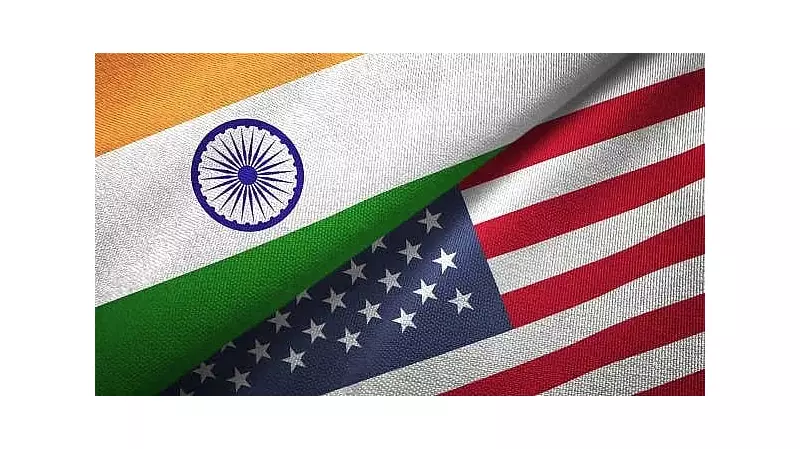
India's diplomatic stance, marked by a notable absence of comment regarding a recent military offensive by the United States, is being interpreted by analysts as a significant statement in itself. This quiet posture, observed in early January 2026, suggests a potential recalibration of New Delhi's foreign policy, where pragmatic national interests appear to be taking precedence over previously stated ideals.
Decoding the Diplomatic Quiet
The lack of an official Indian position on the US action, as noted in commentary, is not being seen as an oversight but as a deliberate choice. This strategic silence signifies a move away from a foreign policy doctrine often rooted in public pronouncements of principle. Instead, it underscores a more calculated, interest-driven approach to complex global geopolitics. The timing, with the observation made on 10 January 2026, highlights a contemporary and ongoing diplomatic calculation.
From Non-Alignment to Aligned Interests?
Historically, India's foreign policy navigated a path of strategic autonomy. The current scenario, however, points towards a nuanced form of diplomatic compliance with the actions of a major partner like the United States. This does not necessarily imply outright endorsement, but rather a conscious decision to avoid public criticism or positioning that could strain a vital bilateral relationship. The silence is thus analyzed as a tactical move to safeguard broader economic, security, and strategic interests that are closely tied to the partnership with Washington.

Implications for India's Global Stance
This evolving posture carries several implications. Firstly, it marks a clearer departure from a tradition of vocal commentary on international disputes, especially those involving major powers. Secondly, it reinforces the perception of a deepening India-US partnership where public discord is minimized on sensitive issues. Critics argue this could dilute India's independent voice on the global stage, while proponents view it as a mature and pragmatic evolution of diplomacy in a multipolar world. The key takeaway is that India's foreign policy is increasingly being shaped by a cold calculus of national interest, where silence can be as powerful as a spoken statement.
The debate ignited by this quiet stance revolves around a core question: is India drifting from its foundational ideals for the sake of realpolitik? The answer, as seen through this lens of silence, seems to be tilting towards a foreign policy framework where actions and strategic omissions speak louder than words.