

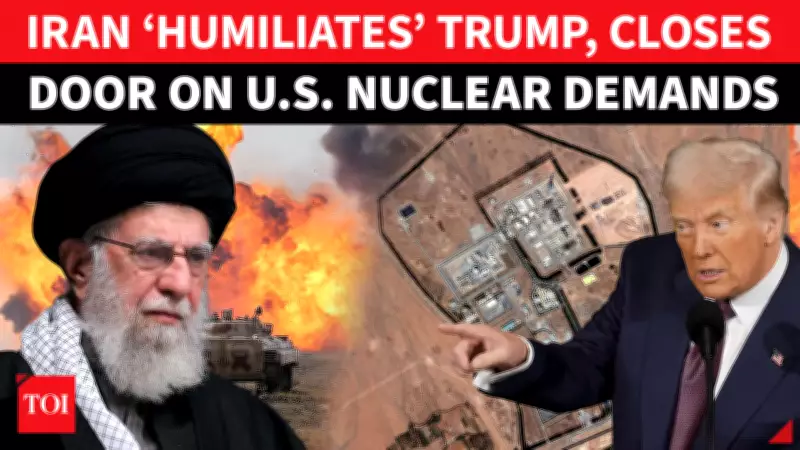
Iran Stands Firm Against US Nuclear Demands, Khamenei Dismisses Deadline
In a dramatic escalation of geopolitical tensions, Iran has categorically rejected the latest ultimatum from the United States regarding its nuclear and ballistic missile programs. The defiant stance comes as Supreme Leader Ayatollah Ali Khamenei explicitly shot down Washington's imposed deadlines, signaling Tehran's unwavering position in what appears to be a high-stakes diplomatic confrontation.
No Deal, No Surrender: Tehran's Uncompromising Position
A senior Iranian official publicly declared that Tehran will not halt its uranium enrichment activities nor curb its missile development programs—two critical conditions that the United States has tied to any potential nuclear agreement. This firm rejection underscores Iran's commitment to maintaining its strategic capabilities despite mounting international pressure.
The United States has maintained that without these fundamental concessions from Iran, continued pressure could potentially lead to military action. This warning creates a precarious situation where both nations appear to be testing each other's resolve while simultaneously expressing openness to what they term as "fair" negotiations.

Military Posturing and Diplomatic Maneuvers
As diplomatic channels strain under the weight of ultimatums, military assets are being strategically deployed to the region. The United States has positioned warships in sensitive areas, while Iran continues to bolster its defensive capabilities. This visible military buildup has prompted allies from both sides to urgently call for restraint, fearing that any miscalculation could trigger a broader conflict.
The international community watches with growing apprehension as diplomacy and threats collide in what many analysts describe as one of the most dangerous geopolitical standoffs in recent memory. Regional stability hangs in the balance, with neighboring countries particularly concerned about potential spillover effects.
Global Implications and Security Concerns
The current impasse between Washington and Tehran carries significant implications for global security architecture. A breakdown in negotiations could potentially:
- Destabilize the already volatile Middle East region
- Trigger renewed nuclear proliferation concerns
- Impact global energy markets and oil prices
- Strain international alliances and diplomatic relationships
What happens next in this tense confrontation could fundamentally reshape security dynamics not just in the Middle East but across the international system. The world now waits nervously to see whether diplomatic channels can prevail over escalating rhetoric and military posturing.






