

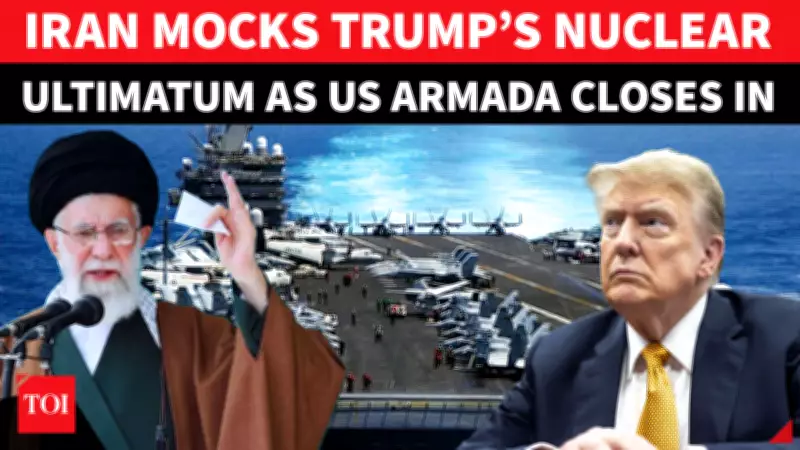
Iran has issued a strong rebuttal to U.S. President Donald Trump's recent claim that Washington had set a deadline for nuclear negotiations, labeling the notion of an ultimatum as completely unacceptable. This diplomatic snub comes at a critical juncture when American naval forces, including a formidable carrier strike group, are advancing deeper into the Middle East, significantly heightening military pressure in the region.
Military Movements and Diplomatic Disputes
Simultaneously, Tehran has taken a firm diplomatic stance by summoning European Union ambassadors to formally protest the EU's controversial decision to designate the Islamic Revolutionary Guard Corps as a terrorist organization. This move underscores Iran's growing frustration with Western policies and its determination to challenge what it perceives as unjust actions.
Escalating Regional Tensions
With public diplomacy being openly contested and military assets being quietly repositioned across the strategic landscape, regional tensions are undeniably sharpening. The visible military buildup, coupled with the diplomatic standoff, creates a volatile atmosphere where even minor miscalculations could have serious consequences.

Official Statements and Underlying Risks
Despite the escalating rhetoric and military posturing, officials from all involved parties continue to maintain that diplomatic talks remain a viable option. However, the increasing display of military force suggests that the margin for error or miscalculation is rapidly narrowing, raising concerns about potential unintended escalations.
The situation presents a complex web of diplomatic challenges and military calculations, with Iran's rejection of Trump's deadline claim adding another layer of complexity to already strained international relations in the Middle East.






