

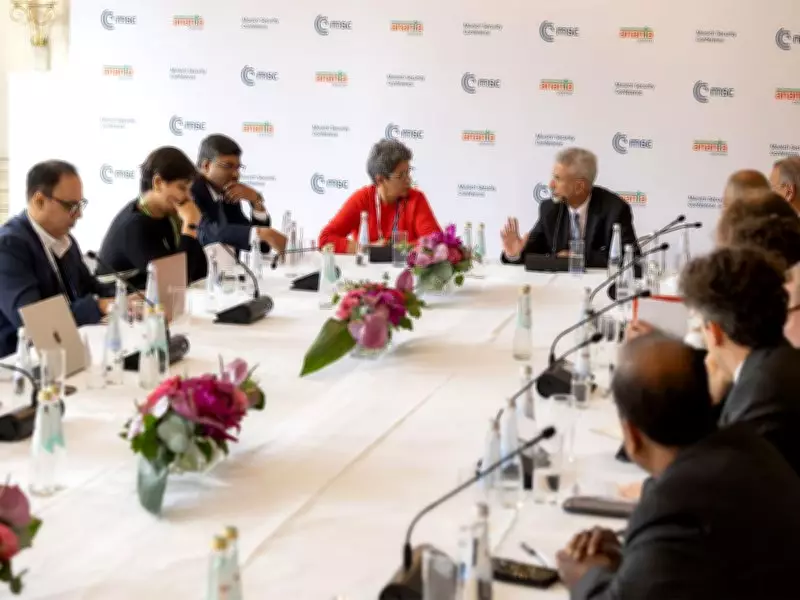
EAM Jaishankar Holds Key Talks with G7 Foreign Ministers at Munich Security Conference
External Affairs Minister Dr. S. Jaishankar participated in a series of high-level diplomatic engagements with foreign ministers from the Group of Seven (G7) nations during the prestigious Munich Security Conference. This significant meeting underscored India's proactive role in global security dialogues and its commitment to fostering international cooperation on critical geopolitical issues.
Strategic Discussions on Global Security
The interactions, which took place on the sidelines of the conference, centered on a wide array of pressing global challenges. Key topics included regional stability, counter-terrorism efforts, cybersecurity threats, and the evolving dynamics of international trade. Jaishankar emphasized India's perspective on maintaining a rules-based international order and the importance of collaborative approaches to address common security concerns.
These discussions are part of India's ongoing efforts to strengthen its diplomatic ties with major world powers and contribute to global peace initiatives. The G7, comprising Canada, France, Germany, Italy, Japan, the United Kingdom, and the United States, represents a crucial forum for coordinating policies on economic and security matters.

Enhancing Bilateral and Multilateral Cooperation
During the meetings, Jaishankar highlighted India's growing economic and strategic partnerships with G7 member states. He reiterated India's commitment to enhancing bilateral cooperation in areas such as defense, technology transfer, and climate action. The minister also discussed opportunities for deeper multilateral engagement through forums like the United Nations and other international organizations.
The Munich Security Conference, an annual gathering of global leaders, policymakers, and security experts, provided an ideal platform for these exchanges. Jaishankar's participation reflects India's active diplomacy and its aspiration to play a more influential role in shaping global security architectures.
Focus on Indo-Pacific and Regional Stability
A significant portion of the talks was devoted to the Indo-Pacific region, with Jaishankar outlining India's vision for a free, open, and inclusive Indo-Pacific. He stressed the need for ensuring maritime security, promoting economic connectivity, and upholding international law in the region. The discussions also touched upon recent developments in South Asia and the broader Asian continent, with an emphasis on peaceful conflict resolution and stability.
Jaishankar's engagement with G7 foreign ministers is expected to pave the way for enhanced coordination on regional issues and foster a more cohesive international response to emerging threats. This aligns with India's broader foreign policy objectives of promoting multilateralism and strategic autonomy.
Outcomes and Future Prospects
The meetings concluded with a mutual agreement to continue dialogue and explore concrete areas of collaboration. Jaishankar expressed optimism about the potential for strengthened partnerships that could benefit not only India and the G7 nations but also contribute to global security and prosperity.
This diplomatic initiative at the Munich Security Conference highlights India's evolving role as a key player in global affairs, capable of bridging divides and advocating for cooperative solutions to complex international challenges.






