

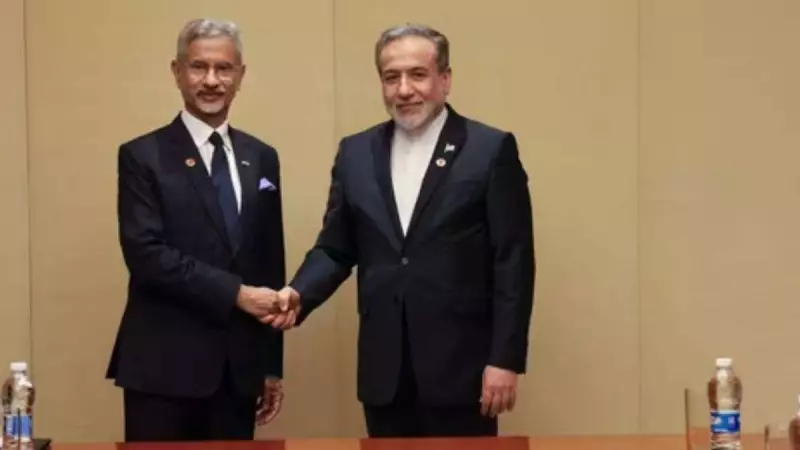
Jaishankar Holds Key Talks with Iran Foreign Minister
External Affairs Minister S. Jaishankar engaged in a significant telephone conversation with Iran's Foreign Minister. This discussion occurred against a backdrop of escalating tensions in the West Asia region. The diplomatic exchange focused on the volatile situation unfolding there.
US Initiates Military Withdrawal from the Area
Concurrently, the United States has commenced the process of pulling back its military forces from West Asia. This troop movement marks a notable shift in the regional security landscape. Observers are closely monitoring the implications of this strategic redeployment.
The timing of Jaishankar's call with the Iranian official is particularly noteworthy. It underscores India's active diplomatic role in addressing international crises. New Delhi maintains important relationships with multiple nations involved in the West Asia scenario.

Regional stability remains a primary concern for global leaders. The phone dialogue likely covered ways to de-escalate the mounting pressures. Both ministers probably explored avenues for peaceful conflict resolution.
India's external affairs ministry has not released extensive details about the private conversation. However, such high-level talks typically involve frank exchanges on security matters. The discussion may have also touched upon bilateral issues between India and Iran.
Analyzing the Broader Geopolitical Context
The US decision to withdraw troops adds another layer of complexity to the situation. American military presence has been a defining feature of West Asian dynamics for years. Its reduction could create power vacuums or opportunities for other actors.
Jaishankar's proactive outreach demonstrates India's commitment to diplomatic engagement. He has consistently emphasized dialogue as a tool for managing international disputes. This approach aligns with India's broader foreign policy objectives.
International reactions to these developments are still emerging. Various countries are assessing the potential impacts on trade routes and energy security. The Strait of Hormuz, a critical chokepoint, lies within this tense region.
Experts suggest that India's balanced diplomacy allows it to communicate with all sides. This position could enable New Delhi to play a constructive mediating role if tensions worsen further.
The coming days will reveal more about the outcomes of Jaishankar's discussion. Diplomatic channels are expected to remain active as the situation evolves. The world watches closely for any signs of escalation or de-escalation in West Asia.






