

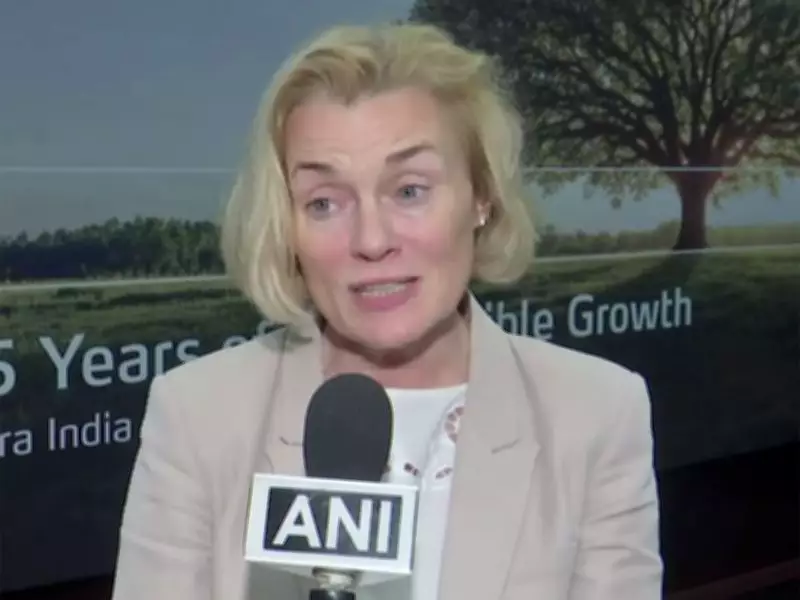
Green Strategic Partnership Reinforces Sustainable Development Goals
Norway's Ambassador to India, May-Elin Stener, has hailed the newly established 'green strategic partnership' between the two countries, describing it as a landmark that deepens their commitment to sustainable development and environmental cooperation. The partnership follows what she termed an 'almost historic' visit by Prime Minister Narendra Modi to Norway in May 2026, the first by an Indian prime minister in 43 years and the first during Modi's third term.
During the visit, which took place from May 18 to 19, 2026, Modi also participated in the India-Nordic Summit, where leaders discussed cooperation in trade, technology, energy, climate action and innovation. The visit resulted in the signing of 12 agreements and initiatives, marking a significant upgrade in bilateral ties across climate, technology, maritime, and scientific domains.
Key Agreements and Frameworks
Ambassador Stener highlighted the groundbreaking nature of the agreements, stating, 'We made a lot of groundbreaking agreements there. We now have a green strategic partnership between Norway and India.' She elaborated that the partnership reinforces ongoing collaboration on green energy, the blue economy, green maritime industries, circular economy, and sustainable growth.

A joint statement adopted during the visit focuses on climate action and circular economy initiatives, leveraging Norwegian technological expertise alongside India's scale and manufacturing strengths. According to Prime Minister Modi, these outcomes are expected to add new strength to India-Norway relations, reaffirming a forward-looking agenda centered on green growth, innovation, and strategic cooperation.
Trade and Economic Partnership with EFTA
Beyond the environmental agenda, Ambassador Stener acknowledged the importance of trade negotiations between the European Union and India. Noting that Norway is 'tightly linked' to the EU via the European Economic Area, she emphasized that the most significant current milestone for Norway is the India-EFTA Trade and Economic Partnership Agreement (TEPA).
'Norway is not a member of the European Union. We have a trade agreement with the European Union in the European Economic Area. So we are also very tightly linked with the European Union when it comes to trade. Therefore, we see the trade agreement between EU and India as also crucial and important for Norway. However, the most important for us in relation to India is the EFTA India Trade and Economic Partnership Agreement. It entered into force last year, 1st October, and it is already being implemented. So we are very happy about that. We are very happy about being among the first group of European countries that have an elevated relationship and trade relationship and also regarding investments with India,' she said.
TEPA Details and Impact
India and EFTA signed TEPA on March 10, 2024, and it took effect on October 1, 2025, marking India's first free trade agreement with four developed European nations. The pact commits USD 100 billion in investments and 1 million direct jobs over 15 years, the first binding pledge of its kind in any Indian FTA. EFTA covers 92.2% of tariff lines (99.6% of India's exports), while India covers 82.7% (95.3% of EFTA's exports), protecting key sectors like dairy, soya, coal, and agriculture. The agreement expands market access, drives manufacturing and innovation, and strengthens cooperation in technology and sustainability.
EFTA is the intergovernmental organization of Iceland, Liechtenstein, Norway, and Switzerland. The strengthened ties between India and Norway, through the green strategic partnership and TEPA, signal a new era of collaboration in sustainable development, trade, and investment.






